
Medically reviewed by Dr. Ata Ullah, MD (Medicine), Physician Consultant.
Protein is one of the three macronutrients your body needs in large amounts, alongside carbohydrates and fats. It builds and repairs muscle, supports the immune system, makes enzymes and hormones, and keeps skin, hair, and nails healthy. Yet many people — particularly older adults, vegetarians, and chronic dieters — eat less protein than they need.
A “high protein diet” simply means eating more protein than the average diet provides, usually by giving protein a central role at every meal. This guide explains how it works, what the research suggests about its benefits, the downsides to watch for, and how to do it safely.
As always, these are general guidelines. People with kidney disease, liver disease, or other medical conditions should not increase protein intake without medical advice.
What Is a High Protein Diet?
There is no single official definition. A typical diet might provide around 0.8 grams of protein per kilogram of body weight per day — the widely used baseline requirement for adults. A high protein approach usually lands somewhere around 1.2 to 2.0 grams per kilogram, depending on activity level, goals, and body composition.
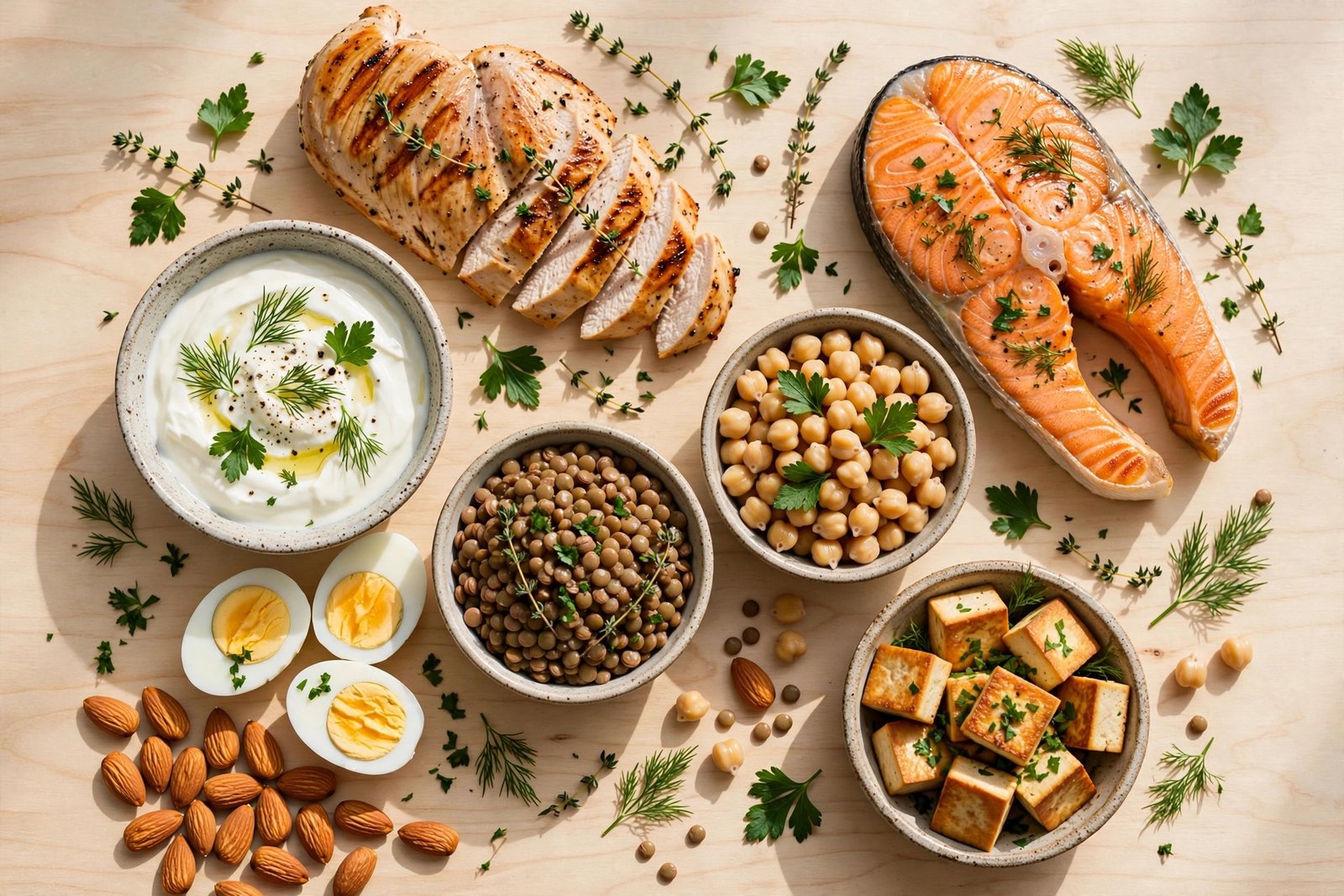
In practice, that looks like this: a plate where roughly a quarter to a third is a protein food (fish, poultry, eggs, lentils, tofu, dairy), surrounded by vegetables, whole grains, and healthy fats. It is not a license to eat only meat, nor does it require expensive supplements — ordinary foods supply plenty of protein.
How It Works
1. Stronger satiety signals
Protein is the most filling macronutrient. It increases fullness hormones and reduces the hunger hormone ghrelin more effectively than carbohydrate or fat, so protein-rich meals naturally lead to eating less overall.
2. Muscle preservation during weight loss
When people lose weight, some of what is lost is muscle — and muscle is metabolically valuable tissue. Adequate protein, combined with resistance exercise, helps the body lose fat while keeping muscle.
3. Higher thermic effect
Digesting protein costs the body more energy than digesting carbohydrate or fat. This effect is modest, but it slightly increases daily energy expenditure.
4. Blood sugar steadiness
Adding protein to a meal slows the absorption of carbohydrates, which can blunt blood sugar spikes — helpful for energy levels and, for people with insulin resistance, for glucose control.
Potential Benefits
- Weight management: Research suggests that higher-protein diets may support weight loss and make weight maintenance easier, largely through appetite control and muscle preservation.
- Muscle strength and healthy ageing: Older adults need more protein than younger ones to counteract age-related muscle loss (sarcopenia). Adequate intake supports strength, balance, and independence.
- Bone health: Despite old claims that protein harms bones, research generally links adequate protein intake with better bone density when calcium intake is sufficient.
- Recovery and performance: Active people and athletes use extra protein to repair exercise-induced muscle damage and support training adaptations.
- Metabolic health: Protein-rich meals may improve post-meal blood sugar and triglyceride responses compared with carbohydrate-heavy meals.
Downsides and Risks
A high protein diet is not risk-free, especially when taken to extremes:
- Kidney strain: In people with existing kidney disease, high protein intake can accelerate damage. Healthy kidneys generally handle higher intake, but anyone with kidney problems must get medical clearance.
- Digestive issues: A sudden jump in protein — particularly from supplements — can cause bloating, constipation, or diarrhoea. Fibre intake often drops when protein crowds out plants.
- Nutrient gaps: Diets built only around animal protein may be low in fibre, certain vitamins, and antioxidants. Variety matters.
- Heart concerns with red and processed meat: Relying heavily on red or processed meats is linked with worse cardiovascular outcomes; lean and plant proteins are preferable.
- Cost and sustainability: Large amounts of animal protein are expensive and environmentally heavy — another reason to include plant sources.
Practical Tips
Building a high protein day:
- Breakfast: eggs, Greek yoghurt, or oats with milk and nuts — instead of just toast or cereal.
- Lunch and dinner: a palm-to-fist-sized portion of fish, poultry, legumes, or tofu, plus plenty of vegetables and a whole-grain or starchy side.
- Snacks: a handful of nuts, roasted chickpeas, cottage cheese, or a boiled egg rather than biscuits.
- Spread it out: the body uses protein best when intake is distributed across meals rather than loaded into one.
- Hydrate: drink plenty of water, especially as protein intake rises.
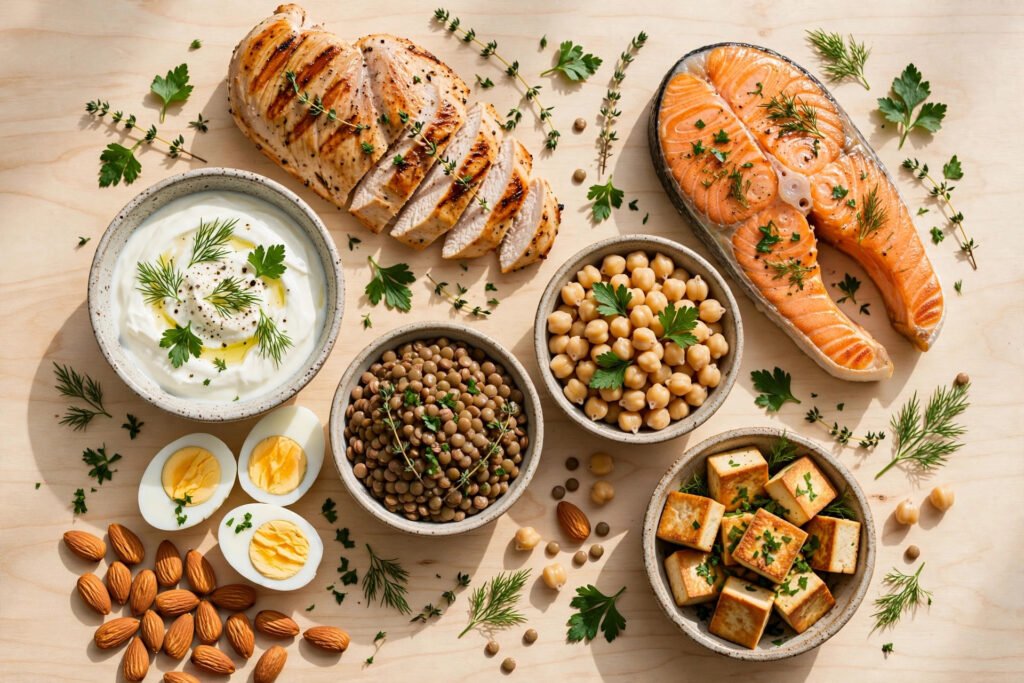
Good protein sources include fish, skinless poultry, eggs, low-fat dairy, lentils, chickpeas, beans, soy products, quinoa, nuts, and seeds. Mixing animal and plant sources gives you both complete amino acid profiles and fibre.
Who Should Be Careful
- People with chronic kidney disease or reduced kidney function
- People with liver disease or certain metabolic disorders
- Anyone with gout — high intake of certain animal proteins can raise uric acid
- People with a history of eating disorders, for whom macro-tracking can become obsessive
Frequently Asked Questions
Do I need protein powder?
No. Powders are a convenience, not a necessity — whole foods can meet high protein targets. If you use one, choose a reputable product without excessive additives.
Can too much protein damage healthy kidneys?
In people with healthy kidneys, research has not shown damage from moderately high intakes. The concern applies mainly to those with existing kidney problems.
Is plant protein as good as animal protein?
Animal proteins generally have complete amino acid profiles, but combining plant foods (e.g. rice and beans, or lentils with whole grains) across the day provides everything the body needs.
Should older adults eat more protein?
Research suggests older adults benefit from intakes above the baseline minimum to protect muscle. Spreading protein across all three meals works better than one protein-heavy dinner.
Key Takeaways
- A high protein diet means giving protein a central role at each meal — roughly 1.2 to 2.0 g per kilogram of body weight for most active goals.
- It may help with satiety, weight management, muscle preservation, and healthy ageing.
- Risks include kidney strain in vulnerable people, digestive issues, and nutrient gaps if variety is ignored.
- Use whole foods first, spread protein across meals, keep plants on the plate, and check with a doctor if you have kidney, liver, or metabolic conditions.
Disclaimer: This article is for informational purposes only and is not a substitute for professional medical advice, diagnosis, or treatment. Please consult a qualified doctor for personal health concerns.