
Medically reviewed by Dr. Ata Ullah, MD (Medicine), Physician Consultant.
Creatine monohydrate modestly improves strength and power in short, intense exercise when combined with resistance training. It is not a steroid, it does not build muscle on its own, and in healthy adults it is generally considered safe at standard doses.
This guide gives a balanced, evidence-based look at creatine: what it is, what research suggests it can and cannot do, its side effects and risks, and who should think twice before trying it. As with any supplement, the information here is general — talk to your doctor or pharmacist before starting, especially if you have a medical condition or take medication.

What Is Creatine?
Creatine is a naturally occurring compound made in the liver, kidneys, and pancreas from amino acids. About 95% of the body’s creatine is stored in skeletal muscles, mostly in a form called phosphocreatine. Its job is energy recycling: during short, intense efforts — lifting a heavy weight, sprinting — muscles burn through their quick-access energy currency (ATP) within seconds. Phosphocreatine donates a phosphate group to rebuild ATP rapidly, extending how long muscles can work at high intensity.
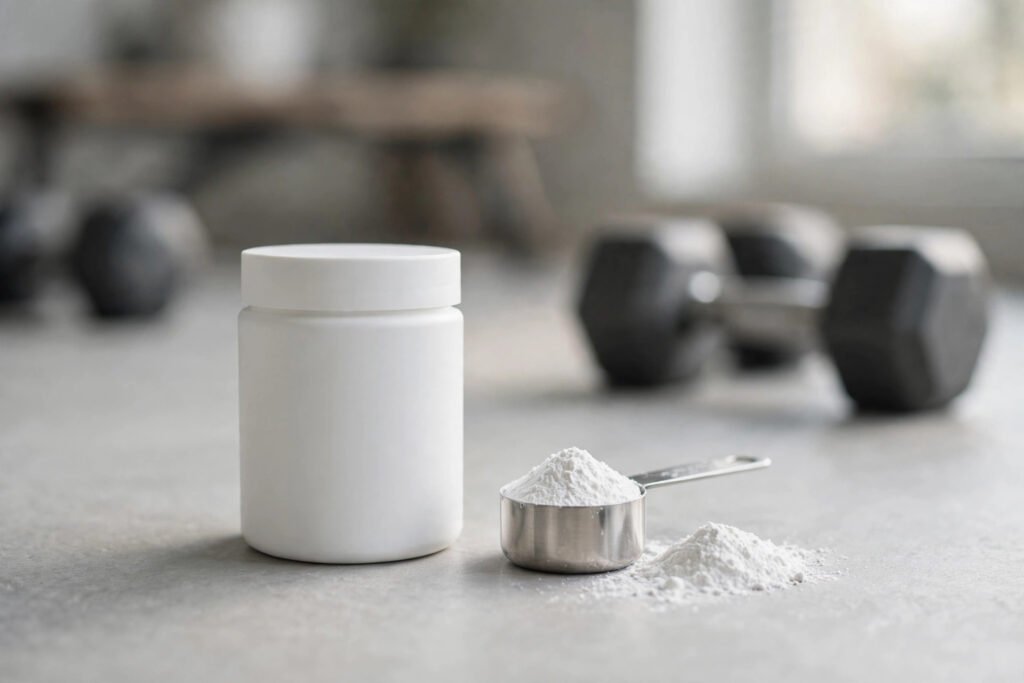
The body produces roughly 1–2 grams of creatine per day and obtains more from animal foods, particularly red meat and fish. Vegetarians and vegans typically have lower muscle creatine stores because their diets lack these sources, which is one reason researchers have studied whether they might respond more noticeably to supplementation. Creatine supplements are usually sold as creatine monohydrate, a white powder mixed with water or juice — the most researched and least expensive form.
What the Evidence Says — and What It Doesn’t
Creatine monohydrate is among the most thoroughly researched supplements in sports nutrition, with hundreds of clinical trials behind it. The most consistent finding is that it can increase muscle creatine stores and support performance in high-intensity, short-duration exercise — things like weightlifting, sprinting, and repeated bursts of effort. It may also help with recovery between sets and sessions.
Researchers have also investigated other possible effects. Some studies suggest creatine may support muscle mass gains when combined with resistance training, and there is growing interest in its potential roles for older adults at risk of muscle loss (sarcopenia) and in brain-related functions such as mental fatigue — but the evidence in these areas is more preliminary and mixed. Importantly, creatine is not a steroid, does not contain hormones, and does not directly build muscle on its own; any gains in strength or size come from being able to train harder and recover better.
| Claim | Evidence level |
|---|---|
| Strength and power in short, intense efforts | Strong — the most consistent finding |
| Muscle mass gains, combined with resistance training | Moderate |
| Recovery between sets and sessions | Moderate |
| Preserving muscle in older adults who strength-train | Early / mixed |
| Brain and memory benefits | Weak — intriguing but far from conclusive |
| Kidney damage in healthy people | Not supported by research at standard doses |
| Works without exercise | No — benefits are tied to consistent training |
Possible Benefits
- Strength and power: May modestly improve maximal strength and power output in short, intense efforts such as lifting and sprinting.
- Muscle mass with training: When combined with a proper resistance-training programme and adequate protein, may support greater gains in lean muscle mass over time.
- Recovery: May help muscles recover between intense bouts of exercise.
- Older adults: Some research suggests it could help preserve muscle when combined with strength training in ageing adults, which matters for mobility and fall prevention.
- Potential cognitive interest: Early research on brain benefits is intriguing but far from conclusive — treat bold brain-health claims with scepticism.
Keep expectations realistic: effects vary between individuals, and the benefits are typically modest improvements on top of good training and nutrition — not dramatic transformations.
Who Benefits Most?
People doing regular resistance training see the clearest benefit, because creatine supports the short, intense efforts that training is built on. Vegetarians and vegans may notice more, since their diets provide little creatine and their muscle stores start lower. If you do not train regularly, creatine is unlikely to do much for you.
Side Effects and Risks
In healthy adults, creatine monohydrate at standard doses is considered relatively safe in the short to medium term, with one of the better safety records among supplements. The most common side effects are mild: stomach cramping or discomfort, nausea, and water retention. The water retention mostly occurs inside muscle cells (not under the skin), and the small weight gain some users notice — typically 1–2 kilograms — is largely water, not fat.
A persistent myth is that creatine damages the kidneys. Research in healthy individuals has not shown kidney damage at recommended doses, though creatine can raise blood levels of creatinine — a waste product that doctors use as a marker of kidney function — which can make kidney test results look worse than they are. This is why people with kidney disease should not use creatine without medical supervision. There is also limited long-term safety data beyond a few years of use, and supplement quality varies between brands.
How to Use It Safely
Most research has studied doses of around 3–5 grams of creatine monohydrate per day for maintenance, sometimes preceded by a short “loading” phase of higher doses. There is no universally agreed “right” dose, and higher is not necessarily better. General safety pointers:
- Choose creatine monohydrate from a reputable brand with third-party testing, since supplement manufacturing quality varies.
- Stay well hydrated while using it.
- Mix with water or juice and take it with a meal if it upsets your stomach.
- Do not exceed label directions or combine multiple creatine products.
- These are general notes, not personal medical advice — ask your doctor or pharmacist what is appropriate for you.
Who Should Avoid Creatine
- People with kidney disease or impaired kidney function (unless a doctor specifically approves).
- Children and teenagers, except under medical supervision.
- People who are pregnant or breastfeeding (insufficient safety data).
- Anyone with a medical condition or on medication that affects the kidneys or fluid balance, without first checking with a doctor.
- People expecting steroid-like effects or instant results — creatine only helps alongside consistent training.
Frequently Asked Questions
Is creatine a steroid?
No. Creatine is a natural compound involved in muscle energy metabolism. It contains no hormones and does not work like anabolic steroids.
Will creatine make me gain weight?
It often causes a small gain of 1–2 kilograms, mostly from water drawn into muscle cells rather than fat. Not everyone experiences this.
Does creatine damage the kidneys?
Research in healthy people has not shown kidney damage at standard doses, but creatine raises blood creatinine, which can confuse kidney test results. People with kidney disease should avoid it unless a doctor approves.
How long does it take for creatine to work?
Muscle stores build up over a few weeks of steady daily use; a loading phase reaches the same point faster, but it is a matter of speed, not a requirement.
Is creatine safe for women?
The research in healthy adults applies to women as well as men, and there is no evidence of hormone effects. As with anyone, talk to your doctor first if you are pregnant, breastfeeding, or have a medical condition.
Key Takeaways
- Creatine is a natural compound that helps muscles recycle quick energy during intense effort.
- Research suggests it may modestly improve strength, power, and recovery in high-intensity exercise when combined with training.
- It is not a steroid, not a stimulant, and does not work without exercise.
- Common side effects are mild (stomach discomfort, water retention); people with kidney disease should avoid it unless medically approved.
- Talk to your doctor or pharmacist before starting — especially with existing conditions or medications.
Disclaimer: This article is for informational purposes only and is not a substitute for professional medical advice, diagnosis, or treatment. Please consult a qualified doctor for personal health concerns.
Online Consultation: Dr. Ata Ullah (MBBS, MD Medicine), Physician Consultant / Medical Specialist — WhatsApp: 0315 7148181 — Consultation Fees: $30