
Medically reviewed by Dr. Ata Ullah, MD (Medicine), Physician Consultant.
Healthy aging is not about avoiding birthdays — it is about protecting the strength, independence, and joy that make later life worth living. After 60, the body changes in predictable ways: muscles shrink a little each year, bones lose density, metabolism slows, and chronic conditions become more common. None of this is destiny, though. Research consistently shows that older adults who stay active, eat well, keep up with preventive care, and stay socially connected live longer, healthier, and more independent lives.
This guide is a practical roadmap for senior health: what changes to expect, the screenings and vaccinations that matter, how to eat and move safely, how to manage medicines, and when to ask for help — written for older adults and the family members who care for them.

What It Is: Health After 60
Aging brings gradual physiological changes. Muscle mass and strength decline (a process called sarcopenia), joints stiffen, bone density falls, vision and hearing often weaken, and the immune system’s response slows. Metabolism and digestion change, sleep patterns shift toward lighter sleep, and the brain processes information a little more slowly. These changes are normal — but they raise the stakes for prevention, because small problems (a fall, dehydration, a missed medicine) can have bigger consequences in older age.
Why It Matters
The goal of senior health care is not just adding years to life but adding life to years — preserving independence, mobility, and mental sharpness. Falls are a leading cause of injury and hospitalization in older adults, yet many are preventable. Chronic diseases such as high blood pressure, diabetes, arthritis, and heart disease are common after 60, but their complications can often be delayed or reduced with good management. And social isolation, which affects many older adults, is itself a health risk — linked in research to worse outcomes across body and mind. A proactive approach pays off at every age.
Key Facts and Guidance
Preventive care and screening
- Regular check-ups: see your doctor at least annually for blood pressure, cholesterol, blood sugar, weight, and a general review.
- Recommended screenings: ask your doctor about colorectal cancer screening, bone density testing (especially for women), vision and hearing checks, and skin examinations.
- Vaccinations: stay current on influenza, COVID-19 boosters as advised, pneumococcal, shingles, and tetanus vaccines per your doctor’s guidance.
- Dental and eye care: regular dental check-ups and eye exams catch problems early — poor vision is a major fall risk.
Eating well in later life
- Prioritize protein (fish, poultry, eggs, legumes, dairy) to slow muscle loss, and calcium and vitamin D for bones.
- Eat plenty of vegetables, fruits, and whole grains; keep salt and added sugars moderate.
- Stay hydrated — thirst sensation weakens with age, so drink water regularly rather than waiting to feel thirsty.
- Discuss supplements with your doctor rather than self-prescribing; some interact with medicines.
Moving safely
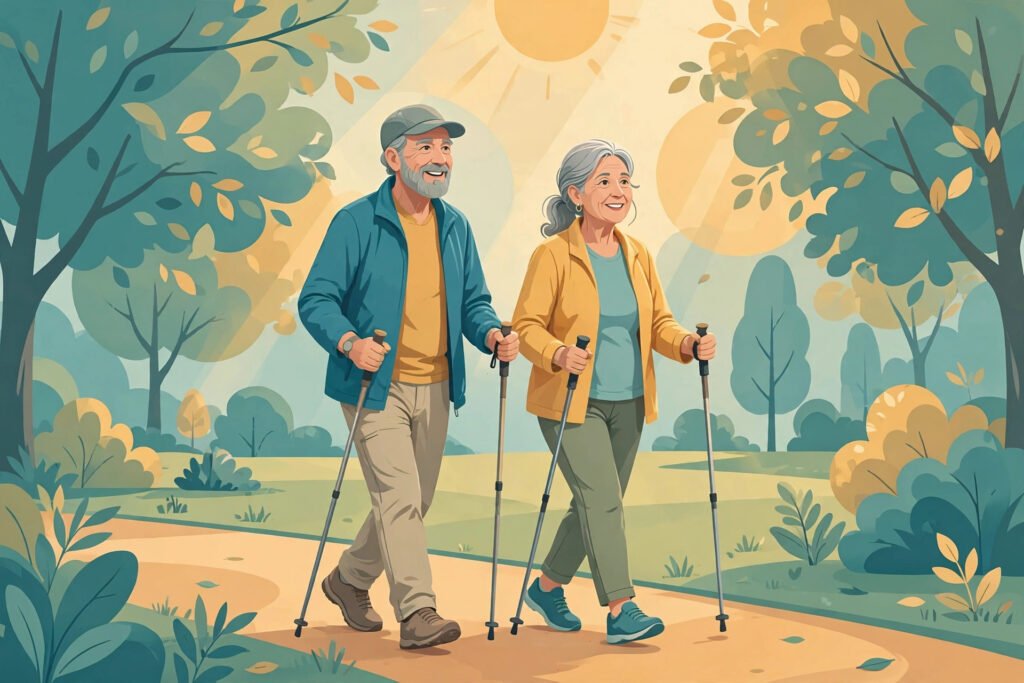
- Aim for a mix of aerobic activity (walking, swimming), strength exercises (light weights or resistance bands), balance training (tai chi, heel-to-toe walking), and flexibility work.
- Start gently and build gradually; get medical clearance before beginning a new exercise program if you have chronic conditions.
- Fall-proof the home: good lighting, handrails on stairs, grab bars in bathrooms, non-slip mats, and removing loose rugs and cords.
- Have vision, footwear, and medicines reviewed — all three affect balance.
Managing medicines
Many older adults take several medicines, which raises the risk of interactions and side effects. Keep an updated list of everything you take — including over-the-counter drugs and supplements — and review it with your doctor or pharmacist at least once a year. Use a pill organizer, take medicines at the same times daily, and never stop or adjust doses without medical advice.
Brain, mood, and connection
- Stay mentally active with reading, puzzles, learning, or volunteering.
- Nurture social connections — regular contact with family, friends, and community protects both mood and cognition.
- Take low mood seriously: depression in older adults is common and treatable, not a normal part of aging.
- Prioritize sleep: keep a consistent schedule and discuss persistent insomnia or loud snoring with your doctor.
Practical Steps: A Senior Health Checklist
- Schedule your annual check-up and catch up on vaccinations.
- Ask your doctor which screenings you are due for.
- Review all medicines with your pharmacist.
- Walk most days; add strength and balance exercises twice a week.
- Make one fall-safety improvement at home this month.
- Arrange regular social contact — a weekly call, a club, a community activity.
- Plan for the future: discuss advance care preferences with family while everyone is well.
Risks and Limitations
Exercise and lifestyle changes should be adapted to individual ability — what is safe for one 70-year-old may not suit another, especially with heart disease, joint replacements, or neurological conditions. Supplements marketed to seniors are often unproven and can interact with prescriptions. Be wary of anyone selling “anti-aging” cures. And while independence is valuable, recognizing when help is needed — with driving, cooking, or managing medicines — is a sign of wisdom, not weakness.
Frequently Asked Questions
Is it too late to start exercising at 70?
No. Research shows older adults — even in their 80s and 90s — can gain strength and balance with appropriate exercise. Start gently and get medical guidance first.
How much protein do older adults need?
Needs are individual and higher than many people expect, because aging bodies use protein less efficiently. Ask your doctor or a dietitian what is right for you.
Are memory lapses normal at my age?
Occasional forgetfulness (misplacing items) is common. Memory problems that interfere with daily life — getting lost, repeating questions, poor judgment — deserve medical evaluation.
Should I take vitamins “just in case”?
Not without reason. Some nutrients (like vitamin D or B12) are commonly low in older adults, but testing first and supplementing on medical advice is safer than guessing.
How can I help an aging parent from far away?
Schedule regular video calls, help organize medical appointments and medicine lists, arrange local support services, and visit when possible to assess safety at home.
Key Takeaways
- Healthy aging is built on movement, good nutrition, preventive care, and social connection.
- Strength and balance exercise plus fall-proofing the home prevent the injuries that threaten independence.
- Review medicines yearly and keep vaccinations and screenings current.
- Low mood and memory problems are not “just aging” — both deserve medical attention.
Disclaimer: This article is for informational purposes only and is not a substitute for professional medical advice, diagnosis, or treatment. Please consult a qualified doctor for personal health concerns.