

What Does Strep Throat Look Like? Signs, Symptoms & Treatment
A sore throat can be caused by dozens of things — a cold virus, allergies, dry air, or shouting at a match. But when the throat is severely painful, the tonsils are swollen, and white patches appear, many people wonder: is this strep throat? Knowing what strep throat looks like helps you decide when home care is enough and when a doctor’s visit is needed.
This guide describes the visible signs of strep throat, how it differs from a viral sore throat, its causes and risk factors, how doctors confirm the diagnosis, the treatments that work, and how to prevent it spreading through your household.
Medically reviewed by Dr. Ata Ullah, MD (Medicine), Physician Consultant.
What Is Strep Throat?
Strep throat is a throat and tonsil infection brought on by the bacterium Streptococcus pyogenes, better known as group A Streptococcus (GAS). Unlike most sore throats — which are viral and resolve on their own — strep throat is a bacterial infection that benefits from antibiotic treatment.
Strep throat is most common in children aged 5 to 15, but adults can get it too, especially parents of school-age children, teachers, and anyone in close contact with an infected person. It spreads through respiratory droplets and shared items, and it peaks in late winter and early spring.
Why identifying strep matters: Leaving strep throat untreated can open the door to dangerous complications — such as rheumatic fever, which can injure the heart, and inflammation of the kidneys. Prompt diagnosis and a full course of antibiotics prevent these outcomes almost entirely.
What Does Strep Throat Look Like?
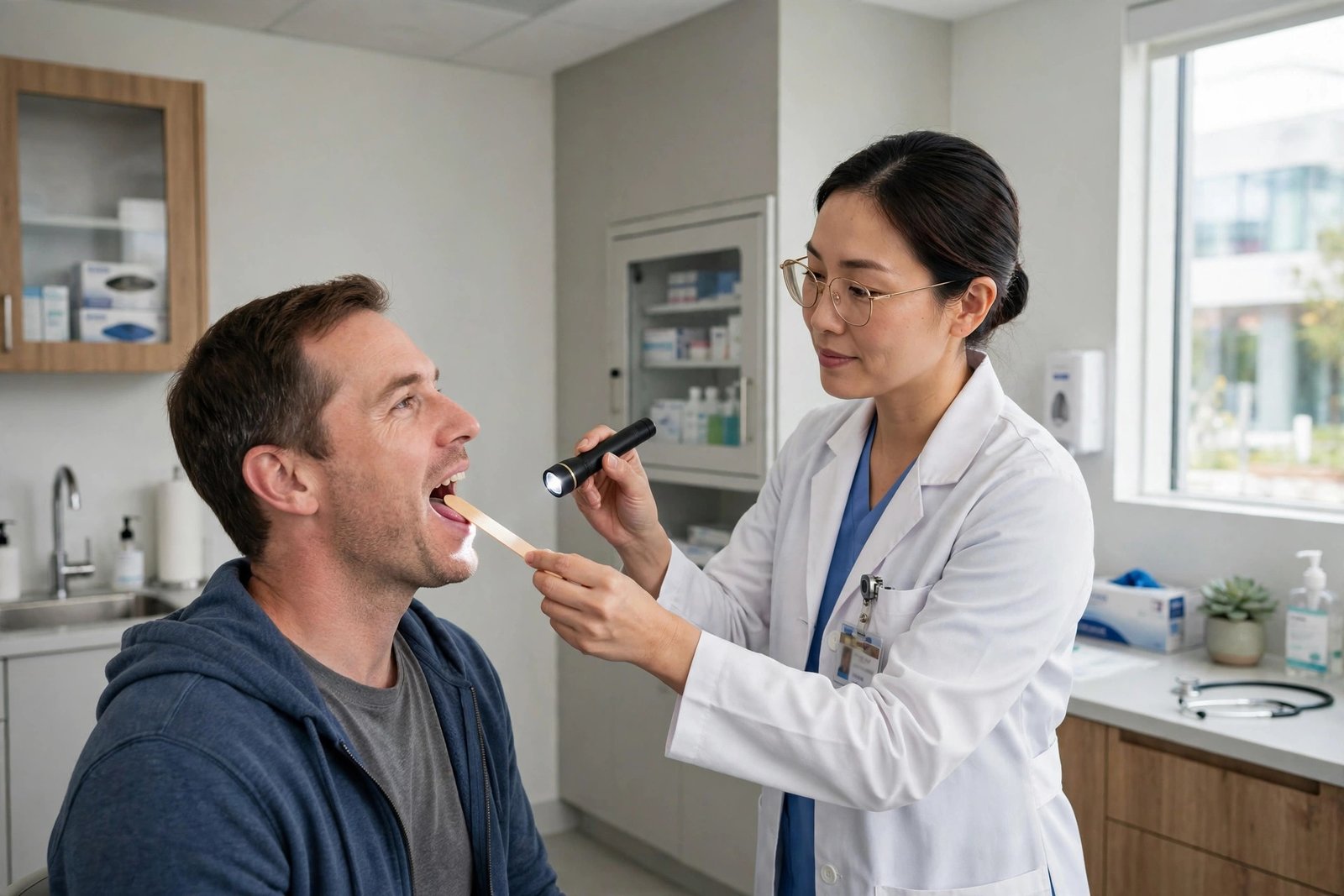
When you look inside the mouth of someone with strep throat (using a torch and, gently, a clean spoon handle to press the tongue down), you may see a combination of these signs:
- Red, swollen tonsils — the tonsils at the back of the throat look inflamed and enlarged.
- White patches or streaks of pus on the tonsils — one of the most characteristic signs.
- Tiny red spots (petechiae) on the roof of the mouth (soft palate).
- A red, inflamed throat extending beyond the tonsils to the back wall of the throat.
- Swollen, tender lymph nodes in the front of the neck — often felt rather than seen.
- A red rash in some cases — the sandpaper-like rash of scarlet fever, which is caused by the same bacteria.
Strep throat vs. viral sore throat
Several clues point toward strep rather than a virus:
- Sudden, severe throat pain and pain when swallowing
- Fever, often 101°F (38.3°C) or higher
- White patches or pus on the tonsils
- Swollen neck glands
- No cough, runny nose, or hoarseness — when these typical cold symptoms are missing, a bacterial cause becomes more likely
However, appearance alone cannot confirm strep throat — the signs overlap with other conditions such as infectious mononucleosis (glandular fever) and viral tonsillitis. Only a laboratory test can confirm the diagnosis.
Causes & Risk Factors
Cause
Group A Streptococcus bacteria cause strep throat. The bacteria spread through:
- Respiratory droplets from coughing, sneezing, or talking
- Sharing food, drinks, utensils, or toothbrushes
- Touching contaminated surfaces and then the mouth or nose
Without antibiotics, someone with strep throat can keep passing the bacteria to others for two to three weeks; once antibiotics are started, people are usually no longer contagious after about 24 hours.
Risk factors
- Age 5 to 15 years
- Close contact with someone who has strep throat
- Crowded settings — schools, daycare centres, dormitories, military barracks
- Late winter and early spring season
Symptoms of Strep Throat
- Sore throat that comes on suddenly and is severe
- Painful swallowing
- Fever
- Red and swollen tonsils, sometimes with white patches or pus
- Tiny red spots on the soft palate
- Swollen, tender lymph nodes in the neck
- Headache
- Rash (scarlet fever)
- Nausea, vomiting, or stomach ache — especially in children
- Body aches and general fatigue
Notably, cough, runny nose, and hoarseness usually suggest a viral illness rather than strep — their presence makes strep throat less likely.
Tests & Diagnosis
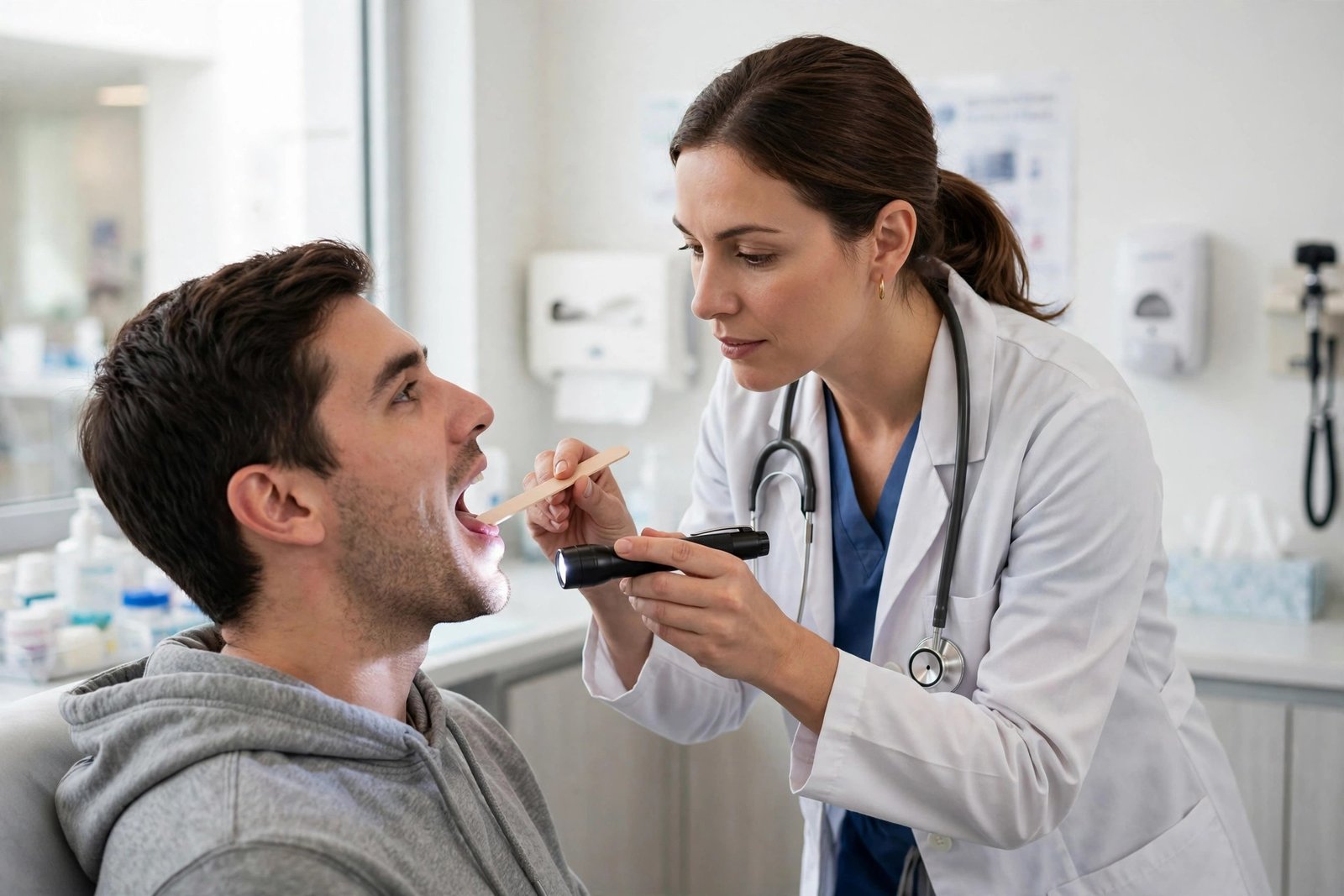
- Physical examination: The doctor examines the throat, tonsils, and neck lymph nodes and asks about symptoms.
- Rapid strep test: A swab of the throat is tested for group A Streptococcus antigens, with results in minutes. It is very specific but can occasionally miss an infection.
- Throat culture: A throat swab is sent to a laboratory where bacteria are grown and identified over 24–48 hours. This is the most accurate test and is often used to confirm a negative rapid test in children.
- Molecular (PCR) tests: Increasingly available point-of-care tests that detect strep DNA rapidly and accurately.
Treatment Options
Antibiotics — the cornerstone
Strep throat is treated with antibiotics to kill the bacteria, shorten the illness, prevent spread, and — most importantly — prevent complications such as rheumatic fever:
- Penicillin or amoxicillin are the first-choice treatments, typically taken for 10 days.
- For people allergic to penicillin, alternatives such as cephalosporins, clindamycin, or macrolides (azithromycin, clarithromycin) may be prescribed.
- Take the full course even after feeling better — stopping early risks relapse and complications.
- Symptoms usually improve within 24–48 hours of starting antibiotics, and contagiousness typically ends within a day of the first dose.
Symptom relief
- Over-the-counter pain relievers such as paracetamol (acetaminophen) or ibuprofen for throat pain and fever
- Warm salt-water gargles
- Warm teas with honey, cold foods, or throat lozenges to soothe the throat
- Plenty of fluids and rest
- A cool-mist humidifier to ease throat dryness
Treating complications
Most people recover fully, but untreated strep can occasionally lead to peritonsillar abscess (a pocket of pus near the tonsils requiring drainage), scarlet fever, post-streptococcal kidney inflammation (glomerulonephritis), or rheumatic fever. Recurrent strep throat may prompt an ear, nose, and throat (ENT) referral to discuss tonsillectomy in selected cases.

Lifestyle Management & Prevention
- Hand hygiene: Wash hands frequently with soap and water.
- Don’t share: Avoid sharing utensils, cups, food, and toothbrushes — swap in a fresh toothbrush once antibiotic treatment has begun.
- Cover coughs and sneezes and dispose of tissues.
- Stay home: Children and adults should stay home from school or work until they have been on antibiotics for at least 24 hours and are fever-free.
- Clean surfaces: Disinfect doorknobs, phones, and shared items during illness.
- Finish all medication and keep follow-up appointments if symptoms return.
When to See a Doctor
See a doctor promptly if you or your child has:
- A severe sore throat lasting more than 48 hours
- Difficulty swallowing or breathing
- Drooling (in children) — a sign of severe throat swelling
- Fever above 101°F (38.3°C)
- White patches or pus on the tonsils
- A rash accompanying the sore throat
- Bloody mucus or severe neck stiffness
- Symptoms that improve with antibiotics and then return
Key Takeaways
- Strep throat typically looks like red, swollen tonsils with white patches or streaks of pus, sometimes with tiny red spots on the palate and swollen neck glands.
- The absence of cough and runny nose points toward strep; their presence points toward a virus.
- Only a rapid strep test or throat culture can confirm the diagnosis — appearance alone is not enough.
- Penicillin or amoxicillin for a full 10 days cures the infection and prevents serious complications like rheumatic fever.
- You stop being contagious within about 24 hours of starting antibiotics — but finish the whole course.
Frequently Asked Questions
Can strep throat go away on its own?
Symptoms may ease without treatment, but the bacteria can linger and cause serious complications — antibiotics are strongly recommended.
How long is strep throat contagious?
Without treatment, two to three weeks; with antibiotics, usually no longer than 24 hours after the first dose.
Can adults get strep throat?
Yes, though it is most common in children aged 5–15. Adults in close contact with infected children are at higher risk.
Reviewed by Dr. Ata Ullah
Dr. Ata Ullah — MBBS, MD Medicine, Physician Consultant. Dr. Ata Ullah is a Senior Medical Officer with extensive experience in internal medicine, dedicated to helping patients understand their health through clear, evidence-based guidance.
“Your Health, Our Responsibility.”
Medical Disclaimer: This article is for informational purposes only and is not a substitute for professional medical advice, diagnosis, or treatment. Always seek the advice of your physician or another qualified health provider with any questions you may have regarding a medical condition. Never disregard professional medical advice or delay seeking it because of something you have read on this site.
Online Consultation: Dr. Ata Ullah (MBBS, MD Medicine), Physician Consultant / Medical Specialist — WhatsApp: 0315 7148181 — Consultation Fees: $30