
When Do You Ovulate? How to Know Your Fertile Window
Medically reviewed by Dr. Ata Ullah, MD (Medicine)
Whether you are trying to conceive, trying to avoid pregnancy, or simply want to understand your body better, knowing when you ovulate is one of the most useful pieces of reproductive knowledge you can have. Ovulation — the release of an egg from the ovary — is the brief event around which your entire fertile window revolves.
This guide explains what ovulation is in plain language, when it typically happens in the menstrual cycle, the signs your body gives you, the methods used to track or confirm it (from calendar math to hormone tests), how to manage common ovulation-related discomfort, and when irregular ovulation deserves a doctor’s visit.
What Is Ovulation?
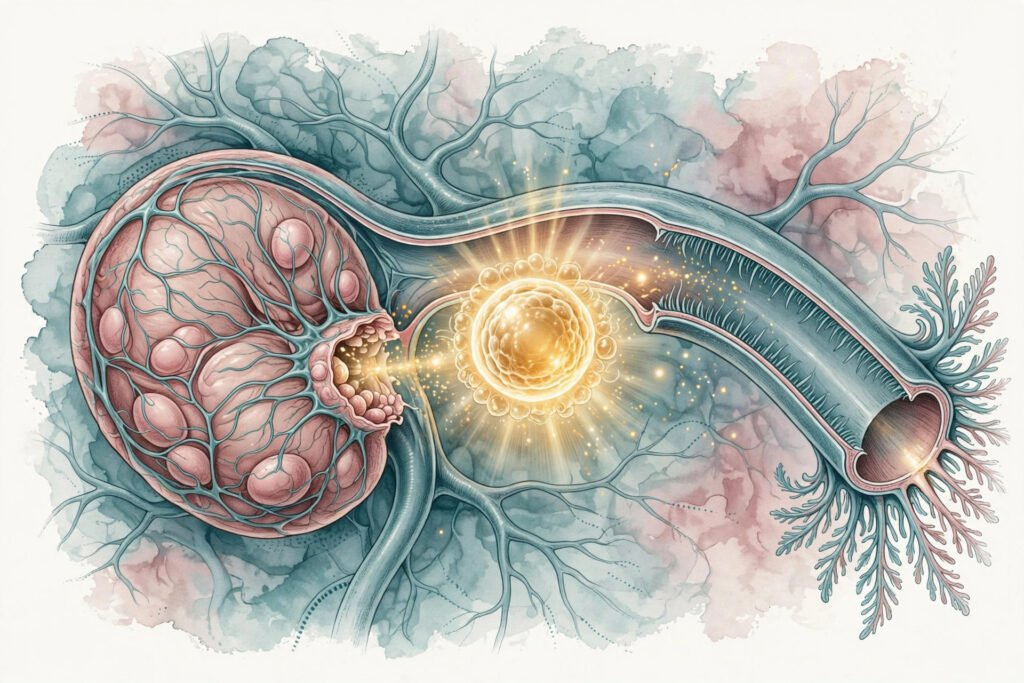
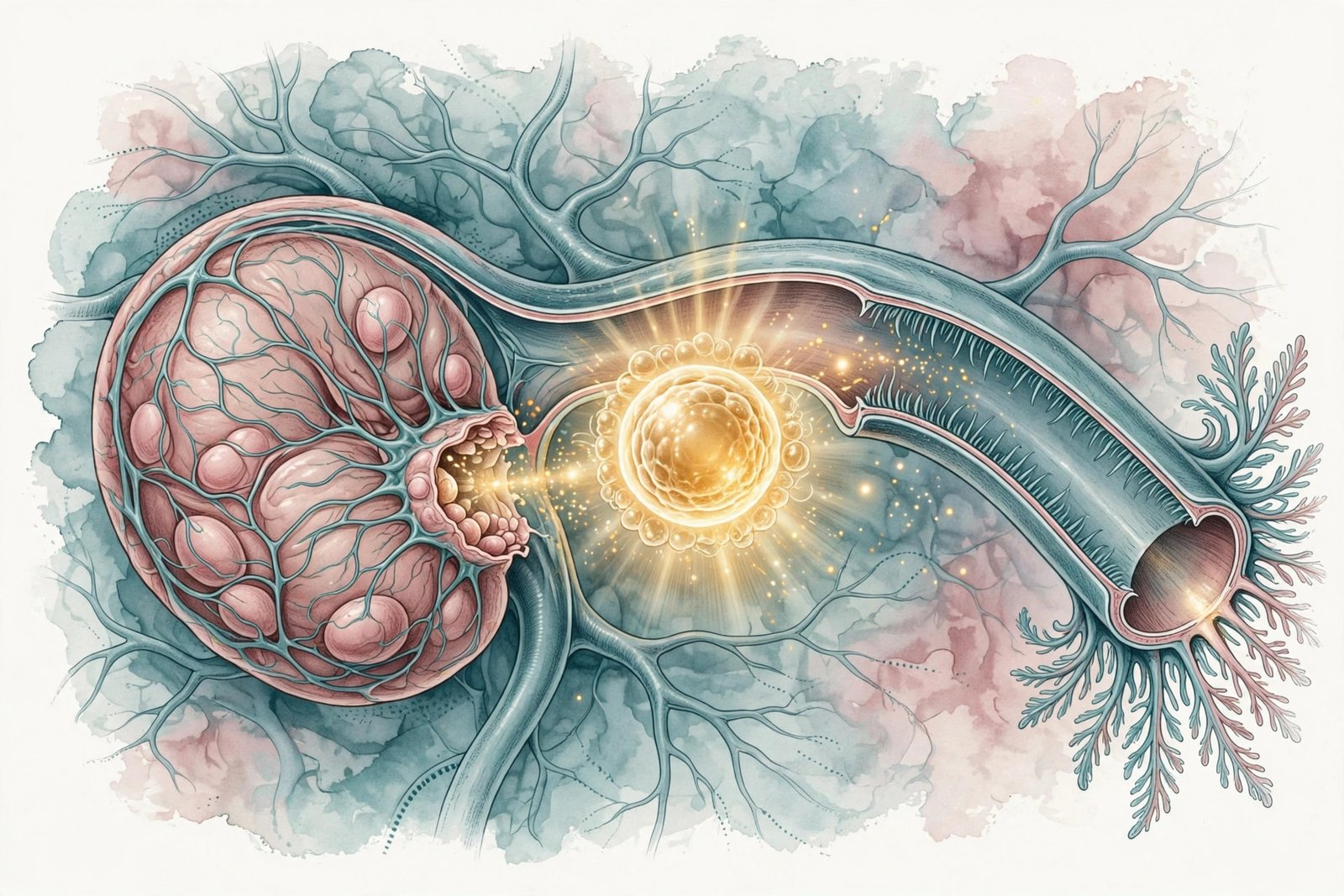
Ovulation is the moment a mature egg is released from one of the ovaries into the fallopian tube, where it can be fertilised by sperm. It is triggered by a surge of luteinising hormone (LH) from the brain, and it happens once per menstrual cycle in most women. The released egg survives for about 12 to 24 hours; sperm, however, can survive in the reproductive tract for up to 5 days. That is why your “fertile window” — the days when intercourse can lead to pregnancy — spans roughly the 5 days before ovulation plus the day of ovulation itself.
In a textbook 28-day cycle, ovulation occurs around day 14, counting the first day of your period as day 1. But cycles vary: what matters most is not the calendar day but the timing relative to your next period — the egg is usually released roughly two weeks before your next period begins, since the post-ovulation (luteal) phase is the most consistent part of the cycle. So in a 35-day cycle, ovulation is likely around day 21, not day 14.
Key fact: You are most fertile in the 2–3 days leading up to ovulation. Having intercourse in that window gives the highest chance of conception; after the egg’s 24-hour lifespan passes, pregnancy is not possible until the next cycle.
Causes & Risk Factors (What Affects Ovulation Timing)
Ovulation timing is governed by a delicate hormonal conversation between the brain and the ovaries, and many things can shift it:
- Cycle length: Longer cycles usually mean later ovulation; shorter cycles mean earlier ovulation.
- Stress and illness: Significant physical or emotional stress can delay ovulation or cause a cycle without ovulation (anovulation).
- Weight changes: Very low body weight, rapid weight loss, or significant weight gain can disrupt the hormones that trigger ovulation.
- Intense exercise: Heavy endurance training without enough nutrition can suppress ovulation.
- Polycystic ovary syndrome (PCOS): The most common medical cause of irregular or absent ovulation.
- Thyroid disorders: Both underactive and overactive thyroid can disturb ovulation.
- Perimenopause: Ovulation becomes erratic in the years before menopause.
- Breastfeeding: Prolactin suppresses ovulation, though it is not reliable contraception on its own.
- Hormonal contraception: The pill, patch, ring, injection, and hormonal IUD work largely by preventing ovulation.
- Coming off contraception: It can take a few cycles for regular ovulation to resume after stopping hormonal birth control.
Symptoms: Signs That You Are Ovulating
Many women notice physical clues around ovulation:
- Cervical mucus changes: Around the fertile days, discharge turns clear, slippery and stretchy — much like raw egg white — a pattern many clinicians rank among the most dependable clues.
- Mittelschmerz: A mild one-sided lower-abdominal ache or twinge at ovulation, lasting minutes to a day or two.
- Slight rise in basal body temperature: Resting temperature rises by about 0.3–0.5°C after ovulation and stays up until the next period.
- Light spotting: A small amount of mid-cycle spotting occurs in some women.
- Breast tenderness and mild bloating around ovulation.
- Increased libido and heightened sense of smell are commonly reported in the fertile window.
- Cervix changes: The cervix feels higher, softer, and more open during fertile days (detectable with practice).
Tests & Diagnosis: How to Confirm Ovulation
- Calendar method: For regular cycles, subtract 14 days from your expected next period to estimate ovulation day. Simple but approximate — best combined with other signs.
- Ovulation predictor kits (OPKs): Urine test strips that detect the LH surge, usually turning positive 12 to 36 hours before ovulation. One of the most practical home methods.
- Basal body temperature (BBT) charting: Taking your temperature each morning before getting up; a sustained rise confirms ovulation happened (it predicts poorly but confirms well).
- Cervical mucus monitoring: Tracking the egg-white mucus pattern across the cycle.
- Fertility tracking apps and wearables: Convenient for recording signs, though their predictions are only as good as the data entered.
- Blood progesterone test: A doctor can order a progesterone blood test about a week after suspected ovulation — a raised level confirms ovulation occurred.
- Pelvic ultrasound: Used in fertility clinics to watch follicle growth and confirm egg release directly.
Combining two methods — for example, OPKs plus cervical mucus tracking — is more reliable than any single method alone.
Treatment Options (For Ovulation Problems)
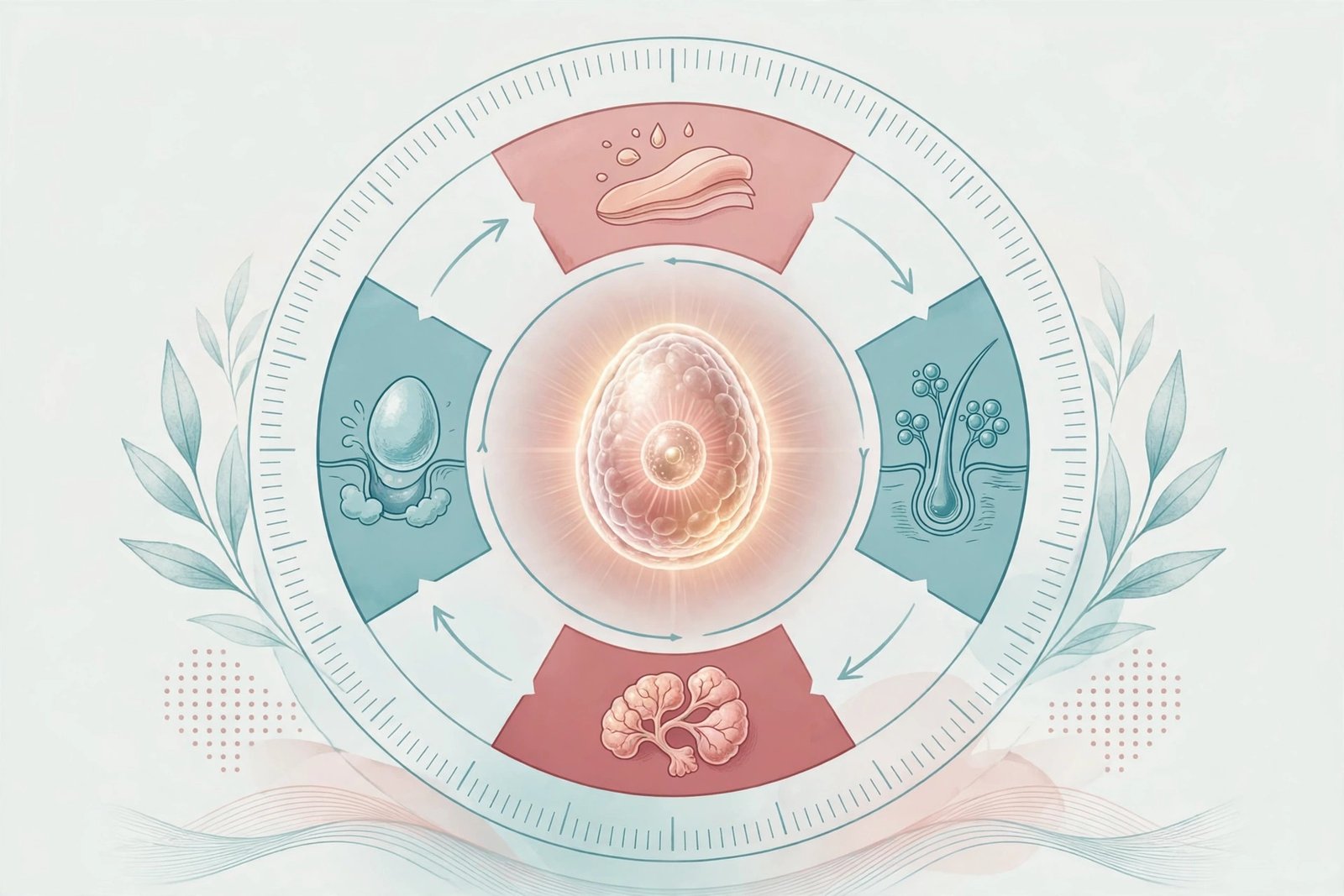
Most women ovulate normally and need no treatment. When ovulation is absent or irregular and pregnancy is desired — or when it causes troublesome symptoms — doctors may offer:
- Treat the underlying cause: Thyroid treatment, PCOS management (lifestyle measures plus medicines such as metformin where appropriate), or adjusting medicines that suppress ovulation.
- Lifestyle correction: Restoring healthy weight, reducing excessive exercise, and managing stress can restart ovulation naturally.
- Ovulation-inducing medicines: Fertility specialists may prescribe medicines such as clomiphene or letrozole to stimulate ovulation, with ultrasound monitoring.
- Referral to a fertility specialist: Recommended if you are under 35 and have tried to conceive for a year, over 35 and trying for 6 months, or have known ovulation problems.
- Mid-cycle pain relief: Mittelschmerz usually needs only short-term pain relief and reassurance.
Note on “natural family planning”: Tracking ovulation can support pregnancy planning, but as a contraceptive method it requires careful instruction and has a higher failure rate than hormonal or barrier methods. Discuss reliable contraception with your doctor.

Lifestyle Management & Prevention
- Track your cycles: Record period dates, mucus changes, and symptoms for at least three months to learn your personal pattern.
- Maintain a healthy weight: Both underweight and overweight status can disturb ovulation.
- Manage stress and sleep well: Chronic stress and poor sleep disrupt reproductive hormones.
- Exercise moderately: Regular activity supports hormonal balance; avoid extreme training without adequate nutrition.
- Limit alcohol and don’t smoke: Both can impair fertility in women and men.
- Eat a balanced diet rich in whole foods; severe restrictive dieting can stop ovulation.
When to See a Doctor
Book an appointment if:
- Your cycles are consistently shorter than 21 days or longer than 35 days, or very unpredictable
- You have no periods for three months or more and are not pregnant or breastfeeding
- You suspect you are not ovulating (no mucus changes, no temperature shift, consistently negative OPKs)
- You have signs of PCOS: excess facial or body hair, acne, weight gain with irregular periods
- Mid-cycle pain is severe or accompanied by heavy bleeding
- You have been trying to conceive for 12 months (under 35) or 6 months (35 or older) without success
- You have thyroid symptoms, significant hair loss, or unexplained weight changes alongside cycle changes
Key Takeaways
- Ovulation is the release of an egg from the ovary, happening about 12–16 days before your next period.
- Your fertile window covers roughly the 5 days before ovulation plus ovulation day, because sperm survive longer than the egg.
- Egg-white cervical mucus, a positive LH ovulation test, and a post-ovulation temperature rise are the most reliable signs.
- Stress, weight changes, PCOS, thyroid disorders, and hormonal contraception can all shift or suppress ovulation.
- A progesterone blood test or ultrasound can medically confirm ovulation.
- See a doctor for persistently irregular cycles, absent ovulation, or difficulty conceiving within the expected timeframes.
Reviewed by Dr. Ata Ullah
Dr. Ata Ullah — MBBS, MD Medicine, Physician Consultant
“Your Health, Our Responsibility.”
This article is for informational and educational purposes only and is not a substitute for professional medical advice, diagnosis, or treatment. Always seek the advice of your doctor or another qualified health provider with any questions you may have about a medical condition. Never disregard professional medical advice or delay seeking it because of something you have read on this website.
Online Consultation: Dr. Ata Ullah (MBBS, MD Medicine), Physician Consultant / Medical Specialist — WhatsApp: 0315 7148181 — Consultation Fees: $30