
Medically reviewed by Dr. Ata Ullah, MD (Medicine), Physician Consultant.
Cold plunges and saunas have moved from elite-athlete locker rooms to mainstream wellness culture. Social media is full of people sitting in ice baths at dawn and sweating in cedar saunas at dusk, crediting the practice with everything from faster recovery to a stronger immune system. But which claims are supported by evidence, and which are hype? And — critically — are these practices safe?
This guide explains what cold plunges and saunas actually are, how they affect the body, what research suggests about their benefits and risks, and how to approach them safely if you choose to try. It is general information only — people with heart conditions or other medical issues should talk to a doctor first.

What Cold Plunges and Saunas Are
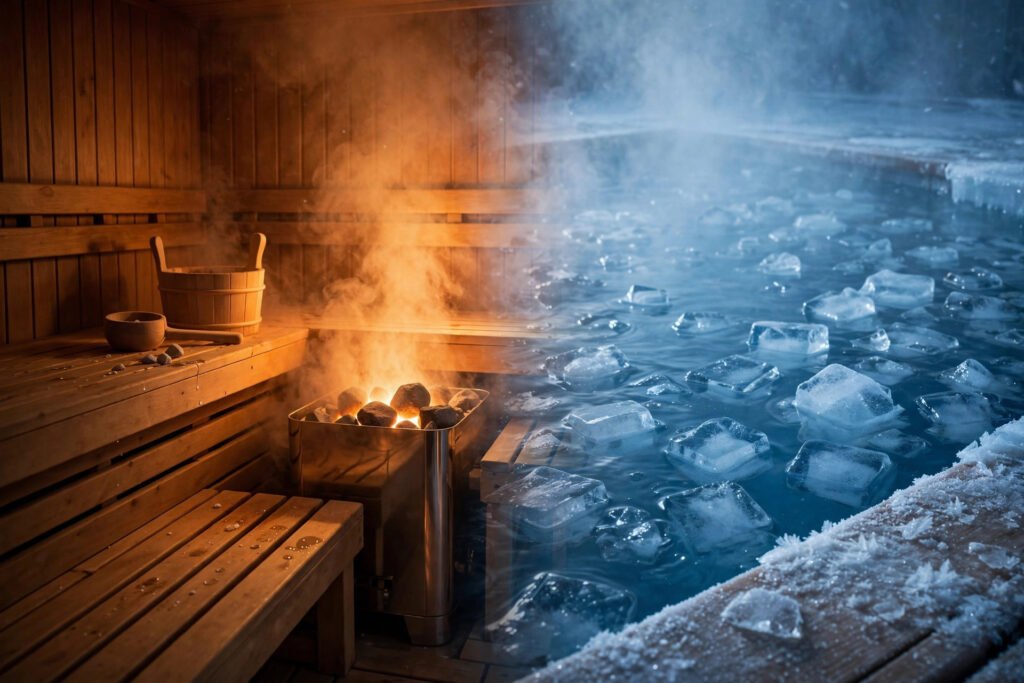
A cold plunge (or ice bath) means immersing the body in cold water — typically between about 10 and 15°C (50–59°F), sometimes colder — for a few minutes. A sauna is the opposite: sitting in dry heat, usually 70–100°C (158–212°F), for 10–20 minutes. Many enthusiasts alternate the two, a practice sometimes called contrast therapy.
Both are forms of deliberate thermal stress: brief, controlled exposure to an extreme temperature that the body must adapt to. The idea is that this short stress triggers adaptive responses — improved circulation, alertness, and resilience — similar in principle to how exercise stresses muscles to make them stronger. Traditional sauna bathing has centuries of history in Finland and other Nordic countries; the modern ice-bath trend is newer and less studied.
How They Affect the Body
Cold water immersion triggers an immediate shock response: heart rate and blood pressure spike, breathing quickens, and stress hormones surge. Blood vessels constrict, pushing blood toward the core. As the body adapts over minutes, it begins generating heat through shivering and metabolic activity. After exiting, vessels dilate and blood rushes back to the limbs — the “afterdrop” and rewarming phase.
Sauna heat does roughly the reverse: heart rate climbs substantially (it can approach levels seen in moderate exercise), blood vessels dilate widely, sweating pours out to cool the body, and blood pressure typically dips during the session before normalising. Repeated sauna use appears to train the cardiovascular system somewhat like exercise does — improving vascular function and heat tolerance over time.
What the Evidence Says
For saunas, the evidence is the stronger of the two. Large observational studies from Finland link frequent sauna use with lower rates of cardiovascular disease and dementia — but these are associations, and sauna users may differ in other healthy habits. Smaller trials suggest sauna sessions can improve vascular function and may modestly lower blood pressure over time. The evidence is promising but not conclusive.
For cold plunges, the evidence is thinner. Small studies suggest cold-water immersion may reduce perceived muscle soreness after intense exercise and speed the subjective feeling of recovery — though interestingly, regular cold immersion right after strength training may slightly blunt muscle growth, because it dampens the inflammatory signals that drive adaptation. Claims about “boosting immunity” rest mostly on small, short-term studies of uncertain clinical meaning; there is no strong evidence that ice baths prevent colds or infections. Mood and alertness effects are real for many people but largely subjective and short-lived. The honest summary: saunas have moderately encouraging cardiovascular evidence; cold plunges have modest recovery benefits and a great deal of unproven hype.
Practical Guidance
If you try cold plunges
- Start with cool — not ice-cold — water, and keep sessions short (1–3 minutes at first).
- Enter gradually, control your breathing, and never plunge alone.
- Warm up naturally afterward; avoid jumping straight into very hot water.
- Avoid cold immersion immediately after strength workouts if muscle growth is your goal.
If you try saunas
- Start with 10–15 minutes at moderate heat and build up gradually.
- Hydrate before, during, and after — you lose significant fluid through sweat.
- Cool down gradually afterward; rest before driving or exercising hard.
- Two to four sessions per week is the range most often studied.
General rules for both
- Never use either while intoxicated or severely dehydrated.
- Listen to your body: dizziness, nausea, chest discomfort, or feeling faint means stop immediately.
- More extreme is not more beneficial — moderate, regular exposure beats occasional heroic sessions.
Risks and Who Should Be Careful
Both practices stress the cardiovascular system, and that stress can be dangerous for the wrong person. Cold water immersion can trigger dangerous heart rhythm disturbances in susceptible people and carries a risk of cold shock, hypothermia, and drowning if done carelessly. Saunas can cause dehydration, dangerous drops in blood pressure, fainting, and overheating.
People who should be especially cautious — and get medical clearance first — include those with heart disease, uncontrolled high blood pressure, heart rhythm disorders, a history of stroke, epilepsy, diabetes with complications, kidney disease, and anyone who is pregnant. Children and older adults are more vulnerable to temperature extremes. People on medications affecting blood pressure, heart rate, or fluid balance should also check with their doctor.
Frequently Asked Questions
Do cold plunges boost the immune system?
There is no strong evidence that they prevent illness. Small studies show short-term changes in some immune markers, but whether that translates into fewer infections is unproven.
Are saunas good for the heart?
Observational research links regular sauna use with better cardiovascular outcomes, and small trials show improved vascular function. It is promising, but saunas are not a substitute for exercise or medical treatment.
Should I do ice baths after every workout?
Probably not after strength training, where regular cold immersion may slightly reduce muscle gains. For endurance athletes seeking faster perceived recovery between sessions, occasional use is more defensible.
Can cold plunges help with weight loss?
Cold exposure does burn some extra calories through shivering and heat production, but the effect is small and not a meaningful weight-loss strategy on its own.
Is contrast therapy (alternating hot and cold) better than either alone?
Many athletes swear by it for recovery, but high-quality evidence comparing contrast therapy to either method alone is limited. Treat enthusiastic claims with scepticism.
Key Takeaways
- Saunas have moderately encouraging evidence for cardiovascular health; cold plunges have modest evidence for perceived recovery and much unproven hype.
- Both are acute thermal stressors — benefits, if any, come from the body’s adaptation, not from extremes.
- Start gently, keep sessions short, hydrate, and never do either alone or while intoxicated.
- Regular cold immersion after strength training may slightly blunt muscle growth.
- People with heart conditions, uncontrolled blood pressure, or who are pregnant must get medical clearance first — and stop immediately if warning symptoms appear.
Disclaimer: This article is for informational purposes only and is not a substitute for professional medical advice, diagnosis, or treatment. Please consult a qualified doctor for personal health concerns.