
Medically reviewed by Dr. Ata Ullah, MD (Medicine), Physician Consultant.
Ultra-processed foods are everywhere: soft drinks, packaged snacks, instant noodles, sugary cereals, frozen ready-meals, reconstituted meat products, and most things that come in a shiny wrapper with a long ingredient list. They are designed to be cheap, convenient, and extremely tasty — and that combination has quietly reshaped how the world eats.
This article explains what ultra-processed food actually is, how it affects the body and brain, what the research suggests about its harms, and how to reduce it without turning your kitchen into a full-time job.
The goal is not perfection or fear. Plenty of processed foods — milk, tinned beans, frozen vegetables, plain yoghurt — are perfectly healthy. The concern is specifically with ultra-processed products: industrial formulations made mostly from extracts, additives, and flavourings rather than whole foods.
What Is Ultra-Processed Food?
Nutrition researchers commonly use the NOVA classification, which groups foods by how much processing they undergo. Ultra-processed foods (NOVA group 4) are industrial products typically containing five or more ingredients, including substances rarely used in home cooking: flavour enhancers, emulsifiers, artificial sweeteners, colourings, preservatives, and refined starches, sugars, and hardened oils.
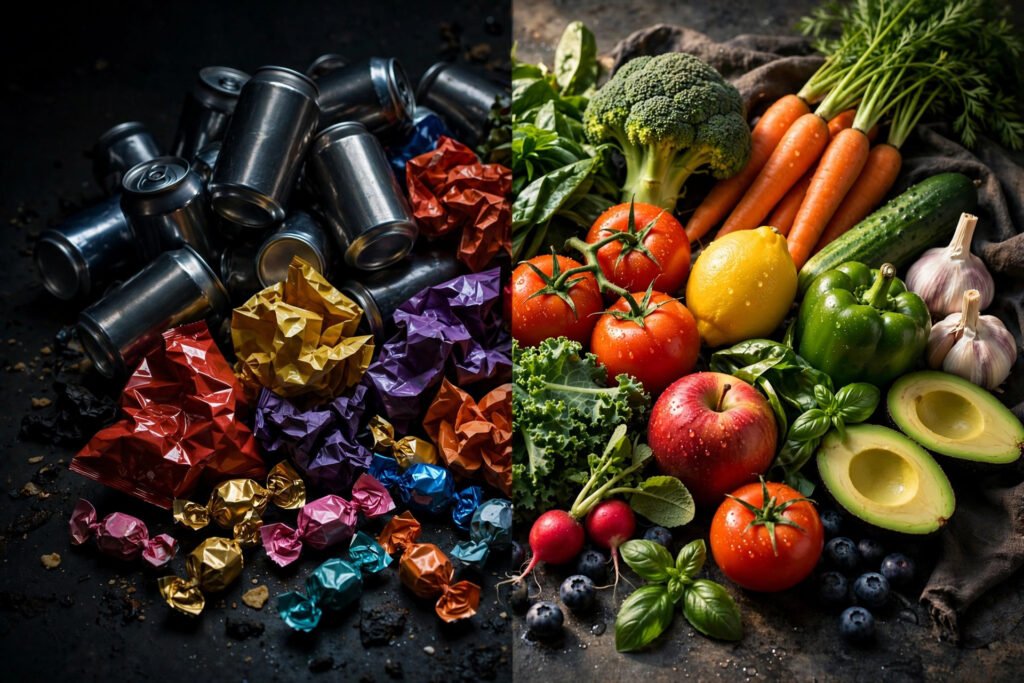
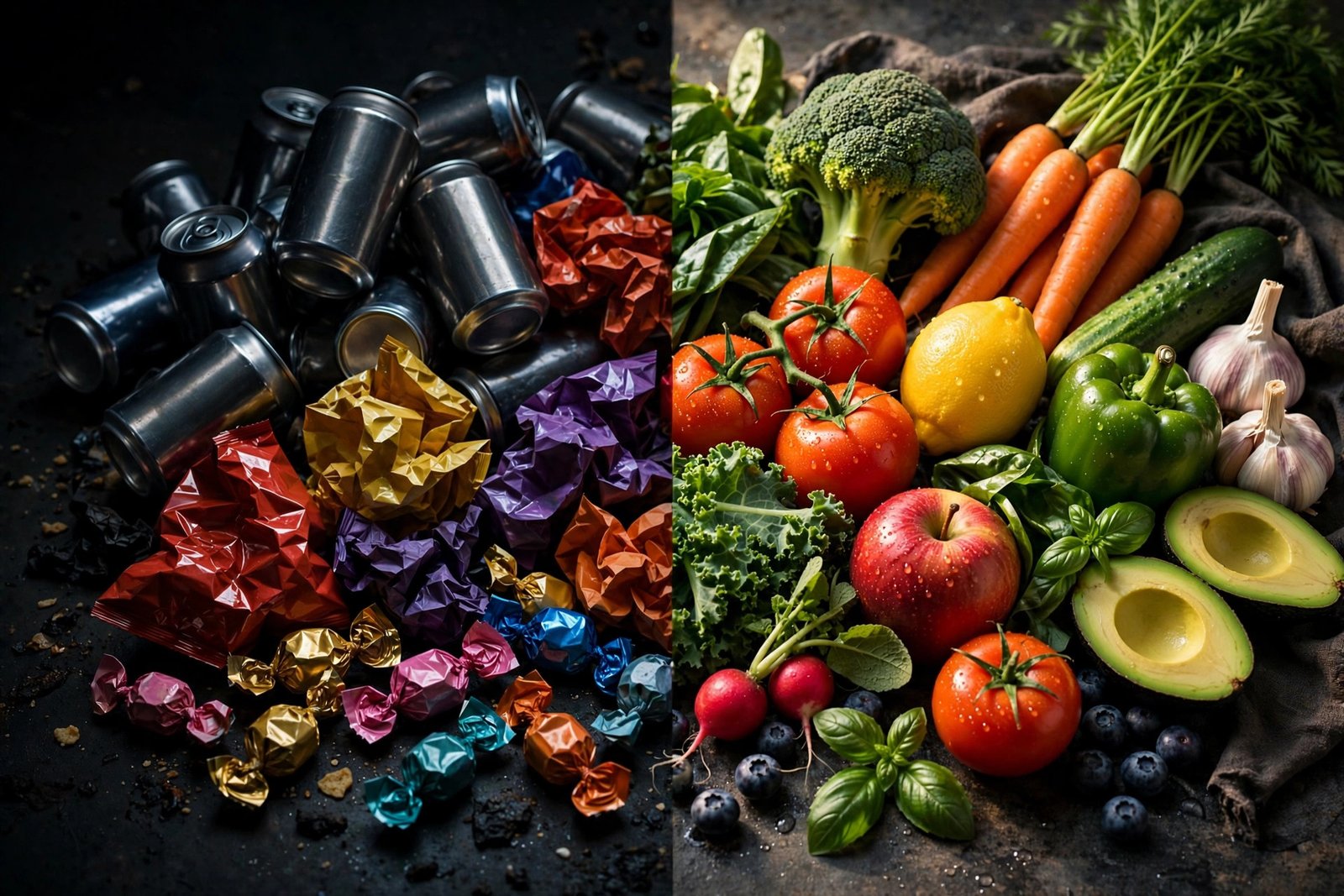
Common examples include fizzy drinks, energy drinks, packaged crisps and biscuits, confectionery, instant soups and noodles, sweetened breakfast cereals, frozen pizza and ready meals, sausages and chicken nuggets, and flavoured yoghurts and desserts.
How Ultra-Processed Food Affects the Body
1. Engineered for overeating
Ultra-processed products are formulated with precise combinations of sugar, salt, and fat — plus flavourings and textures — that hit the brain’s reward system hard. Research suggests these foods can be eaten faster, in larger amounts, and with less fullness than whole foods, promoting passive overeating.
2. Blood sugar spikes and crashes
Refined starches and added sugars are absorbed quickly, causing sharp rises in blood glucose followed by crashes that trigger renewed hunger — a cycle that encourages repeated snacking.
3. Low in fibre and micronutrients
Processing strips away much of the fibre, vitamins, and minerals found in whole foods. A diet dominated by ultra-processed products can meet calorie needs while falling short on nutrition.
4. Gut and metabolic effects
Emerging research is exploring how emulsifiers, artificial sweeteners, and low fibre intake may affect the gut microbiome and metabolic health. Findings are still developing, but the direction of concern is consistent.
Potential Harms Suggested by Research
Large observational studies have associated high consumption of ultra-processed foods with increased risks of several conditions. It is important to note these are associations, not proof of cause — people who eat lots of ultra-processed food also tend to differ in other lifestyle factors. With that caution, the research suggests links with:
- Obesity and weight gain: higher intake is consistently associated with greater calorie consumption and weight gain over time.
- Type 2 diabetes: diets rich in sugary drinks and refined products are linked with higher diabetes risk.
- Heart disease and stroke: some large studies associate high ultra-processed intake with worse cardiovascular outcomes.
- Certain digestive and mental-health patterns: researchers are investigating associations with gut disorders and with symptoms of depression and anxiety.
- Dental problems: sugary processed foods and drinks are a leading contributor to tooth decay worldwide.
Downsides of Cutting Them Out Completely
A realistic note: eliminating all ultra-processed food overnight can backfire. Extreme restriction often leads to cravings, social stress, and rebound eating. Some minimally processed convenience foods (tinned fish, frozen vegetables, plain oats) make healthy eating affordable and practical — they are not the enemy. The aim is reduction of the worst offenders, not dietary purity.
Practical Tips to Eat Less Ultra-Processed Food
Simple swaps that work:
- Swap sugary drinks for water, sparkling water with lemon, or unsweetened tea.
- Swap packaged snacks for fruit, nuts, or plain popcorn.
- Swap sugary cereals for oats, eggs, or plain yoghurt with fruit.
- Cook one extra portion at dinner and eat it for lunch the next day — the cheapest “ready meal” there is.
- Read the ingredient list: if it reads like a chemistry experiment, treat it as an occasional food, not a daily one.
- Keep a few whole-food staples always stocked: eggs, lentils, rice, frozen vegetables, tinned fish.
Who Should Be Careful
- People with diabetes should be especially cautious with sugary drinks and refined snacks, which spike blood glucose rapidly.
- People with high blood pressure should watch the very high salt content of processed meats, instant noodles, and ready meals.
- Parents may want to limit children’s exposure, since taste preferences formed early tend to persist.
- Anyone with food additive sensitivities should read labels carefully.
Frequently Asked Questions
Is all processed food bad?
No. Pasteurised milk, tinned beans, frozen vegetables, and plain yoghurt are processed but nutritious. The concern is with ultra-processed formulations high in sugar, salt, fat, and additives.
Can I eat ultra-processed food occasionally?
Yes — an occasional treat within an otherwise balanced diet is fine. The health concern is about these foods forming a large share of daily calories.
Are “diet” or “low-fat” versions healthier?
Not necessarily. They are often still ultra-processed, with sugar or additives replacing fat. Check the ingredient list, not just the marketing claims.
Is cooking from scratch expensive?
Basic whole foods — lentils, beans, rice, eggs, seasonal vegetables — are usually cheaper than packaged products. The main cost is time, which batch cooking can minimise.
Key Takeaways
- Ultra-processed foods are industrial formulations designed for taste and convenience, not nutrition.
- Research associates heavy consumption with obesity, diabetes, heart disease, and other health problems.
- You do not need to eliminate them entirely — focus on reducing the biggest sources like sugary drinks and packaged snacks.
- Simple swaps, label reading, and basic home cooking are the most effective long-term strategies.
Disclaimer: This article is for informational purposes only and is not a substitute for professional medical advice, diagnosis, or treatment. Please consult a qualified doctor for personal health concerns.