

How to Get Rid of Dandruff: Causes, Treatments & Prevention
Those white flakes on your shoulders are more than a cosmetic nuisance — they are a sign that the ecosystem of your scalp is out of balance. The good news is that dandruff is one of the most treatable scalp conditions there is. This guide explains what really causes dandruff, how to tell it apart from look-alike conditions, the treatments dermatologists actually recommend, and the habits that keep flakes from coming back.
Medically reviewed by Dr. Ata Ullah, MD (Medicine)
What Is Dandruff?
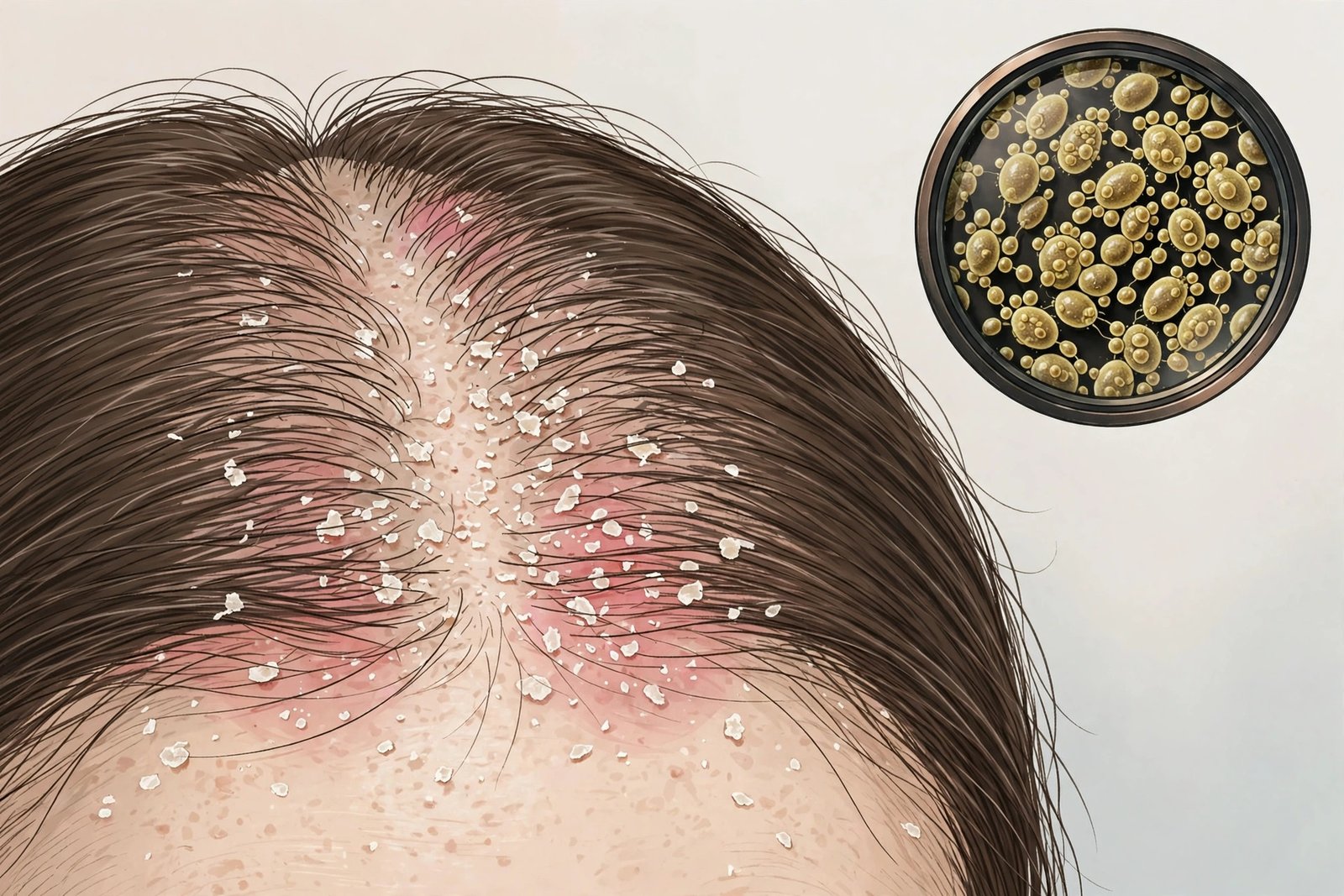
Dandruff is a common scalp condition in which dead skin cells shed as visible white or yellowish flakes, often accompanied by itching. It is considered the mildest form of seborrheic dermatitis, an inflammatory skin condition that can also affect the eyebrows, ears, and chest when it is more severe.
The central player is Malassezia, a yeast-like fungus that lives naturally on everyone’s scalp. In most people it exists quietly, feeding on sebum (scalp oil) without causing trouble. In dandruff-prone individuals, it multiplies excessively, breaks sebum down into irritating fatty acids, and provokes an inflammatory response. The scalp answers by shedding skin cells far faster than normal — and those clumped, hurried cells are the flakes you see.
Dandruff is not contagious, it is not a sign of poor hygiene, and it is not dangerous. But it can be persistent: for many people it is a chronic, recurring condition that needs ongoing maintenance rather than a one-time cure.
Causes & Risk Factors
Dandruff rarely has a single cause. It usually results from a combination of biology and habits:
- Malassezia overgrowth — the most common driver, especially on oilier scalps, since the yeast feeds on sebum.
- Oily skin and scalp — more oil means more food for the yeast.
- Dry skin — cold, dry weather can produce smaller, drier flakes that are easily confused with true dandruff.
- Infrequent shampooing — oil and dead skin accumulate, giving yeast more to feed on.
- Sensitivity to hair products — fragrances and harsh ingredients can cause contact dermatitis that mimics dandruff.
- Age — dandruff often begins in young adulthood and can continue through middle age.
- Neurological conditions — people with Parkinson’s disease and some other neurological disorders develop dandruff and seborrheic dermatitis at higher rates, for reasons still being studied.
- Weakened immunity — dandruff is more common and more severe in people with compromised immune systems.
- Stress and fatigue — many people notice flare-ups during stressful periods.
Several other conditions can look like dandruff but need different treatment: scalp psoriasis (thicker, silvery scales), tinea capitis (ringworm of the scalp, with patchy hair loss), and eczema. If your flakes do not fit the classic dandruff picture, a dermatologist can tell them apart.
Symptoms to Watch
Classic dandruff is easy to recognize, but noting the details helps you choose the right treatment:
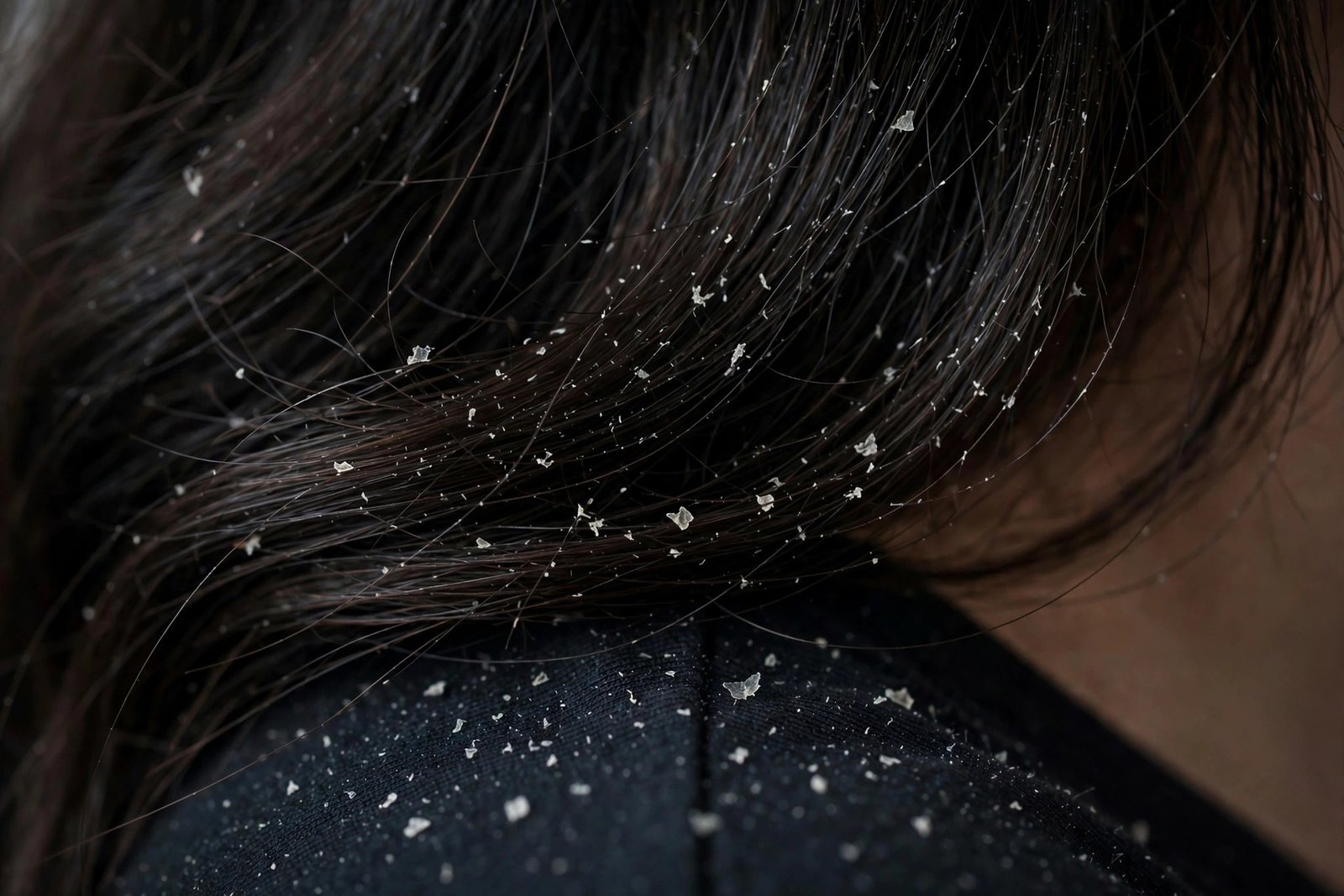
- White or yellowish flakes on the scalp, in the hair, and on the shoulders of dark clothing.
- Itchy scalp, ranging from mild to intense — worse with sweat and heat.
- Greasy-feeling flakes that cling to the scalp (a sign of true dandruff rather than simple dryness).
- Red, irritated patches on the scalp in more inflamed cases.
- Flakes that return quickly even right after washing.
Dry-scalp flakes, by contrast, are usually smaller, whiter, and powdery, and the itching often improves with moisturizing — the opposite pattern. If you are unsure which you have, the response to an anti-dandruff shampoo is itself a useful test.
Tests & Diagnosis
Dandruff is diagnosed by visual examination — no blood test or lab work is needed. A dermatologist or general physician will inspect the scalp, note the flake type and distribution, and ask about your hair-care routine and any other skin symptoms.
Testing is only considered when the picture is unclear:
- Skin scraping or fungal culture — occasionally used to rule out tinea capitis (ringworm) when there is patchy hair loss.
- Skin biopsy — very rarely needed, reserved for cases where psoriasis or another disorder is strongly suspected.
- Patch testing — if contact dermatitis from hair products is suspected, to identify the offending ingredient.
The most important part of the “diagnosis” is really differentiation: psoriasis, eczema, and ringworm each require different treatment, so flakes that do not respond to standard dandruff care deserve a professional look.
Treatment Options
Effective dandruff treatment targets the yeast, the oil, and the accelerated skin turnover. Over-the-counter medicated shampoos are the first line, and they work — provided you use them correctly.
Anti-dandruff shampoo ingredients
Look for one of these active ingredients on the label (brands vary by country):
- Zinc pyrithione — antibacterial and antifungal; gentle enough for regular use.
- Selenium sulfide — slows skin-cell turnover and fights the yeast; can discolor blond or gray hair, so rinse well.
- Ketoconazole — a broad-spectrum antifungal; often the most effective OTC option for stubborn cases.
- Salicylic acid — loosens and lifts built-up scale so other ingredients can work.
- Coal tar — slows how fast scalp cells multiply; can make the scalp more sun-sensitive.
How to use them for best results
- Massage the shampoo into the scalp (not just the hair) and leave it on for 3–5 minutes before rinsing, so the active ingredient has time to work.
- Use the medicated shampoo two to three times a week at first; use a gentle regular shampoo on other wash days.
- Rotate if it stops working. The scalp can seem to develop tolerance to one active ingredient. Switching to a shampoo with a different active for a few weeks often restores the effect.
- If the medicated shampoo dries your hair, apply conditioner only to the mid-lengths and ends — keep it off the scalp.
When OTC is not enough
If several weeks of proper OTC use bring no improvement, see a dermatologist. Prescription options include stronger ketoconazole shampoo, topical corticosteroid lotions or foams for inflamed seborrheic dermatitis, and prescription antifungal creams. These are short-term tools used under medical supervision, not permanent replacements for a maintenance routine.
A note on natural remedies: tea tree oil has modest evidence from a single well-known trial, but it is far less studied than the ingredients above. Coconut oil and other heavy oils can actually feed Malassezia and worsen dandruff — moisturizing is the wrong strategy for a yeast-driven problem.
Lifestyle Management & Prevention
Because dandruff tends to recur, long-term habits matter as much as the shampoo you choose:
- Wash regularly — for oily scalps, washing every day or every other day prevents the oil buildup that feeds yeast. Skipping washes usually makes dandruff worse, not better.
- Rinse thoroughly — product residue left on the scalp can irritate it.
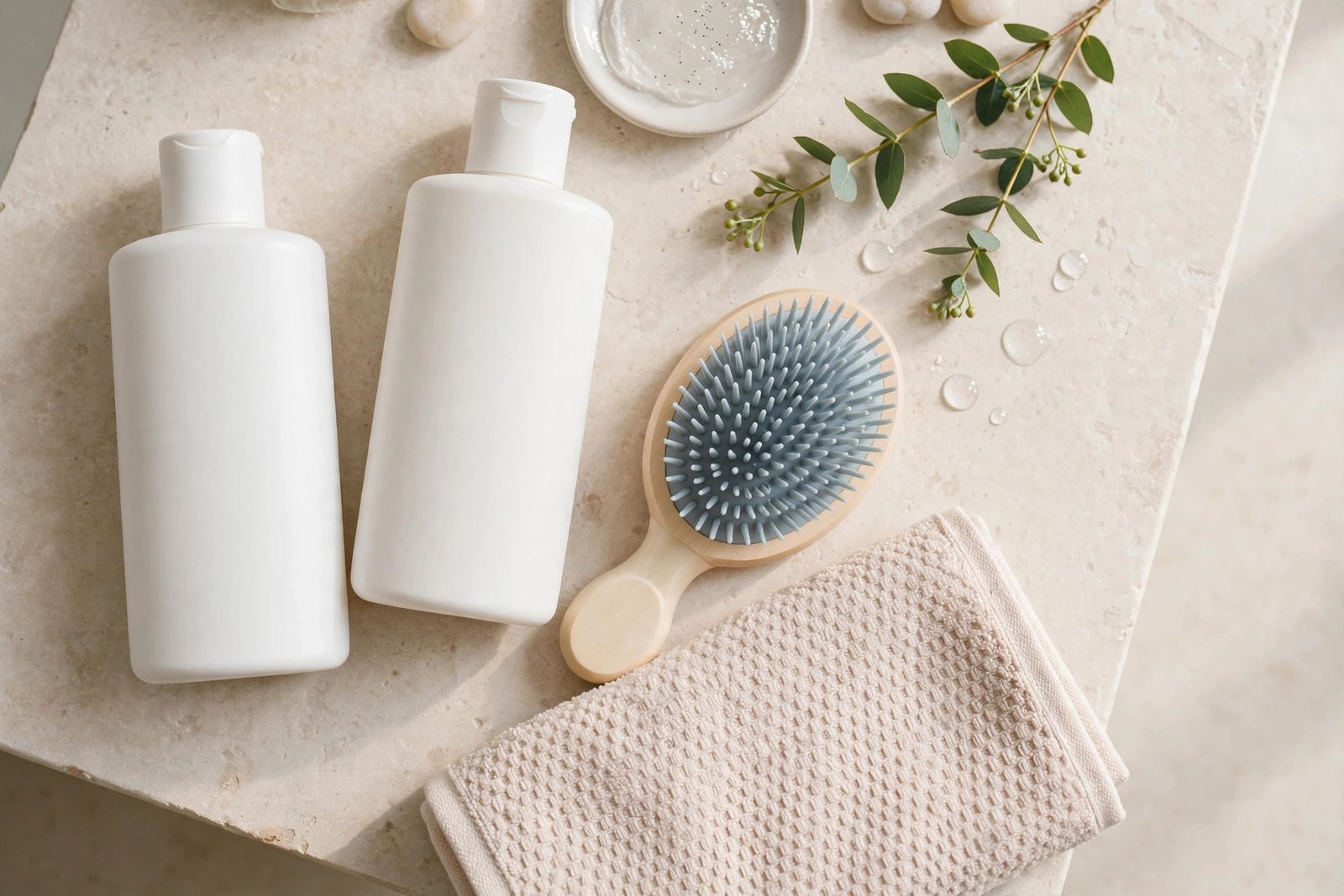
- Brush your hair daily — gentle brushing helps distribute oils and shed loose flakes.
- Manage stress — stress does not cause dandruff, but flare-ups commonly follow stressful periods; sleep and exercise help.
- Go easy on styling products — gels, waxes, and sprays build up on the scalp; choose lighter formulas and wash them out regularly.
- Get some sunlight — moderate sun exposure can calm seborrheic dermatitis for some people (with usual sun protection for the skin).
- Eat a balanced diet — no food cures dandruff, but adequate B vitamins and zinc support general skin health.
When to See a Doctor
- No improvement after 2–4 weeks of correct OTC treatment
- Severe itching, redness, or swelling that does not settle
- Crusting, oozing, or pus on the scalp (possible infection)
- Patchy hair loss or bald spots
- Flakes and redness spreading beyond the scalp — to the face, ears, eyebrows, or chest
- Thick, silvery scales that look different from ordinary dandruff (possible psoriasis)
Key Takeaways
- Dandruff is driven by an overgrowth of Malassezia yeast feeding on scalp oil — it is not contagious and not caused by poor hygiene.
- Medicated shampoos with zinc pyrithione, selenium sulfide, ketoconazole, or salicylic acid are the proven first-line treatment.
- Massage into the scalp, leave on for several minutes, and use 2–3 times weekly for best results.
- If one shampoo stops working, rotate to a different active ingredient.
- Regular washing, stress management, and minimal product buildup keep flakes from returning.
- See a dermatologist if OTC treatment fails after a few weeks or if hair loss, crusting, or spreading occurs.
Is dandruff contagious?
No. You cannot catch dandruff from someone else — Malassezia already lives on everyone’s scalp.
Does dandruff cause hair loss?
Dandruff itself does not destroy hair follicles. However, intense scratching can break hair and irritate the scalp, and severe untreated inflammation can cause temporary shedding. Treating the dandruff resolves this.
Can I ever stop using anti-dandruff shampoo?
Most people need ongoing maintenance. After the flaking settles, a weekly or occasional medicated wash is usually enough to keep it that way.
“Your Health, Our Responsibility.”
Medical Disclaimer: This article is for informational purposes only and is not a substitute for professional medical advice, diagnosis, or treatment. Always seek the advice of your physician or another qualified health provider with any questions you may have regarding a medical condition. Never disregard professional medical advice or delay seeking it because of something you have read on this site.
Online Consultation: Dr. Ata Ullah (MBBS, MD Medicine), Physician Consultant / Medical Specialist — WhatsApp: 0315 7148181 — Consultation Fees: $30