
Introduction
Shingles is one of those illnesses people have heard of but rarely understand — until it arrives. It begins with a strange burning or tingling on one side of the body, and within days a band of painful blisters follows the path of a nerve. It is the chickenpox virus, waking up after decades of silence. About one in three people will develop shingles in their lifetime, and the risk rises sharply after the age of 50. This guide explains what causes shingles, how it develops, how to recognise it early, which tests confirm it, and how it is treated — including the vaccine that prevents more than 90 percent of cases. Medically reviewed by Dr. Ata Ullah, MD (Medicine).
There is also new reason to pay attention. A large study published in Nature Medicine in August 2026 found that adults over 60 who received the modern shingles vaccine, Shingrix, had a 9 percent lower burden of heart problems over seven years than those given the older vaccine — ischaemic heart disease down 10 percent, heart failure down 12 percent. The study was observational, so it cannot prove the vaccine caused the difference, and two randomised trials are now underway. The finding is not yet proof — but it adds weight to a simple message: shingles is preventable, and prevention may protect more than your skin. Read the Harvard summary here and the full report here.
What Causes Shingles
Shingles is caused by the varicella-zoster virus — the same virus that causes chickenpox. After a childhood chickenpox infection, the virus does not leave the body. It retreats into clusters of nerve cells near the spinal cord and the brain, where it sleeps for decades. Shingles happens when that sleeping virus wakes up and travels back down a nerve to the skin. Anyone who has had chickenpox can develop shingles, including people who do not remember having it — in many countries nearly everyone over 50 has been exposed.
The virus usually wakes when the immune system weakens. Age is the biggest trigger: the immune system’s memory of the virus fades with time, which is why the risk climbs steeply after 50. A weakened immune system raises the risk further — cancer treatment, organ transplantation, HIV, long-term steroid use, and medicines that suppress immunity all make reactivation more likely. Shingles after the chickenpox vaccine is possible, but it is much less likely and usually milder. You cannot catch shingles from another person. What can spread is chickenpox itself: fluid from a shingles blister can give chickenpox to someone who has never had it and has never been vaccinated.
How Shingles Develops in the Body
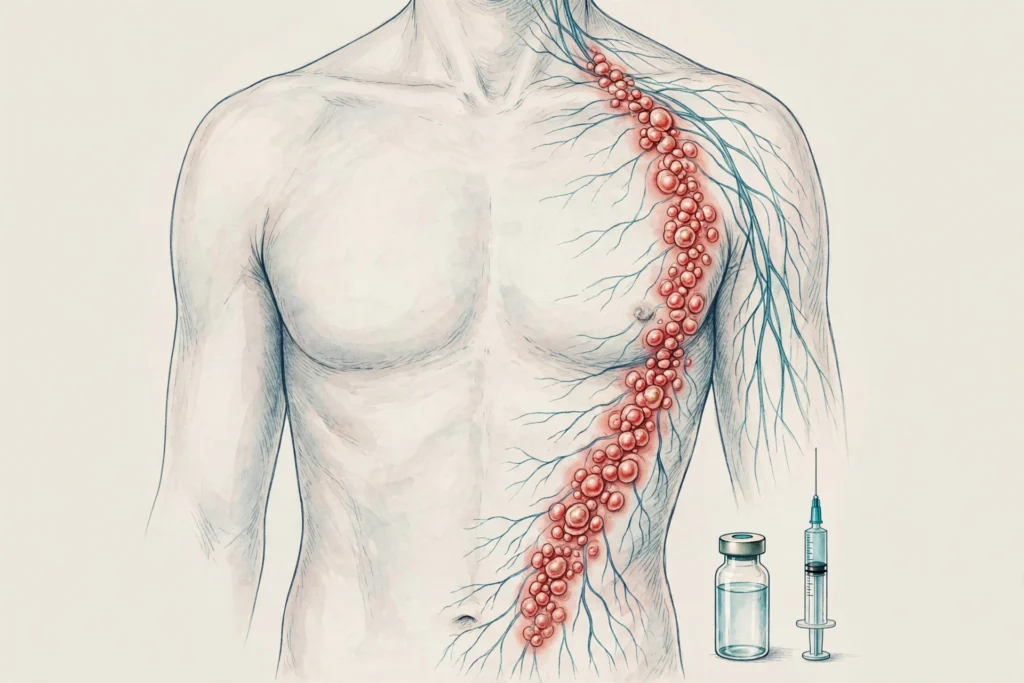
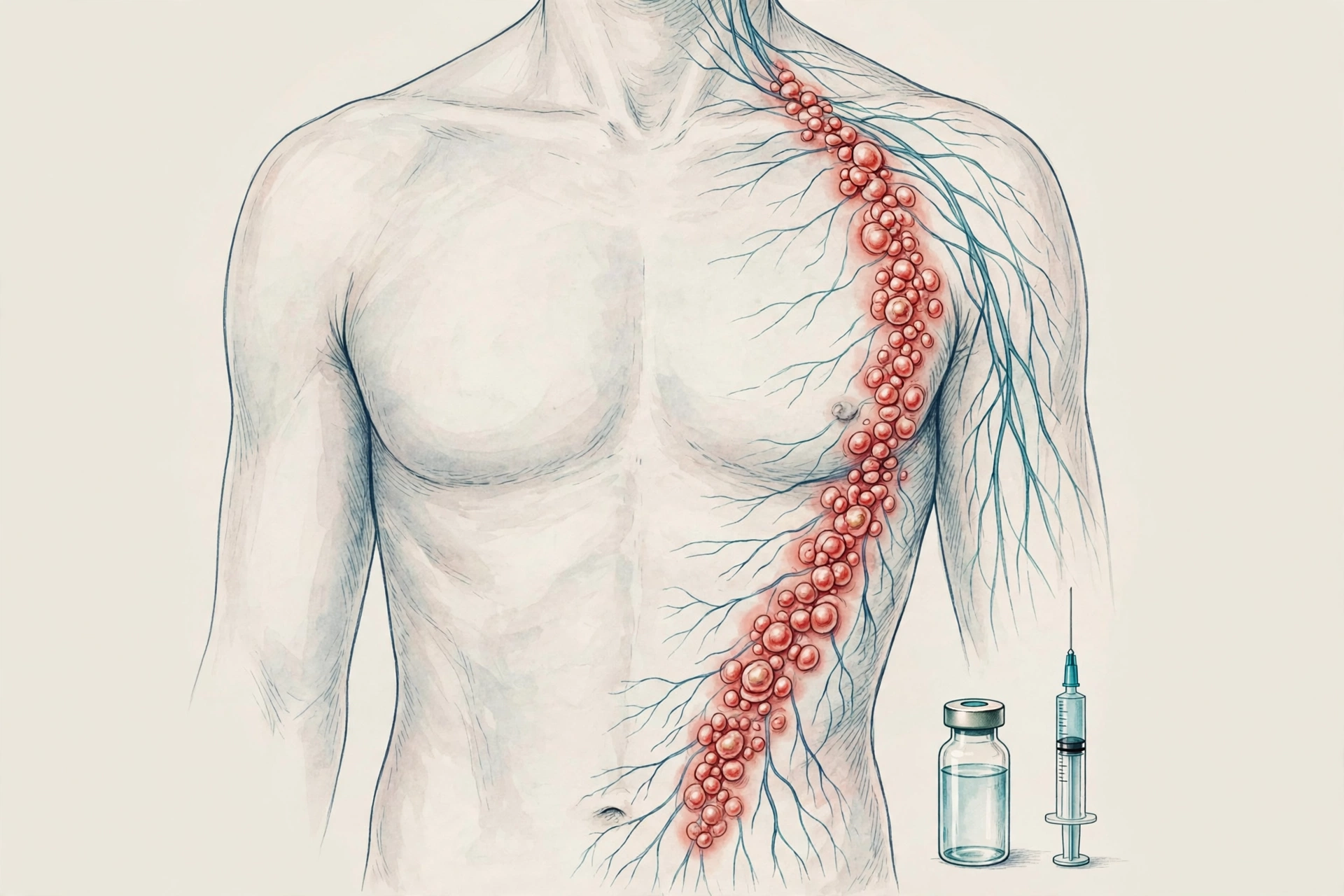
When the varicella-zoster virus reactivates, it copies itself inside a nerve cluster and travels along the sensory nerve that carries feeling from one patch of skin. That is why the pain comes first: the nerve itself is inflamed before anything is visible on the skin. The affected patch — called a dermatome — is the strip of skin supplied by that one nerve, which is why shingles almost always stays on one side of the body and does not cross the middle line.
As the virus reaches the skin, it infects the surface cells and raises the familiar blisters. The blisters fill with fluid that contains live virus, then dry out and form scabs. Meanwhile the immune system responds with inflammation, which clears the virus over two to four weeks. In most people the story ends there, but the nerve can be left damaged. When the pain continues for three months or more after the skin has healed, doctors call it postherpetic neuralgia — the most common complication, affecting 10 to 18 percent of people with shingles. Eye involvement can threaten sight, and in people with a badly weakened immune system the virus can spread beyond one patch.
Prevention: The Shingrix Vaccine and Everyday Protection
The only reliable way to prevent shingles is vaccination. The vaccine recommended today is Shingrix, a recombinant vaccine — it is made from a single viral protein, so it contains no live virus and can safely be given to people with weakened immune systems. The CDC recommends two doses of Shingrix for all adults aged 50 and older, given two to six months apart, and for adults aged 19 and older whose immune systems are weakened by disease or treatment. There is no upper age limit. No blood test is needed first, and you should get Shingrix even if you have already had shingles or the older live vaccine, Zostavax — not available in the United States since November 2020.
Shingrix works well. In clinical trials it was about 97 percent effective at preventing shingles in healthy adults aged 50 to 69, and about 91 percent effective in adults aged 70 and older. Protection against postherpetic neuralgia was 91 percent in adults 50 and older, and effectiveness stayed above 85 percent for at least the first four years. The most common side effects are a sore arm, fatigue, muscle aches, headache and fever, usually for a day or two. Good sleep, regular movement and good diabetes control also help the immune system stay strong. If you live with someone who has active shingles blisters, avoid touching the rash until it has fully crusted over if you have never had chickenpox or the chickenpox vaccine.
Symptoms and Identification: How to Recognise Shingles Early
Shingles usually announces itself before any rash appears. For one to five days, one patch of skin burns, tingles, itches or aches — sometimes with a shooting pain that feels like a pulled muscle or a pinched nerve. Headache, tiredness and sensitivity to light may join it. Because there is nothing to see yet, this stage is often mistaken for a muscle strain or a heart problem when the pain sits on the chest. Then, two to three days later, the rash arrives in exactly that patch: red skin covered with small fluid-filled blisters, arranged in a stripe or cluster that stays on one side of the body. The torso is the most common site, but shingles can appear on the face, neck, arm or leg. Children who have had chickenpox can develop shingles too, though it is uncommon before the age of 10, and when it happens the illness is usually milder.
The blisters usually scab over within seven to ten days, and the rash clears within two to four weeks. The pain, however, can be severe — many people describe it as burning or stabbing, so intense that even clothing brushing the skin hurts. If the rash appears near the eye, with eye pain, redness or any change in vision, that is an emergency: shingles in the eye can damage sight if not treated the same day. Ear pain with weakness on one side of the face or new hearing trouble also needs same-day care. Postherpetic neuralgia — pain that continues for three months or more after the skin heals — affects 10 to 18 percent of people, and it is more common and more severe with age. Seek care urgently if the rash spreads widely or you are immunocompromised.
Tests and Diagnosis: How Doctors Confirm Shingles
Most cases of shingles are diagnosed by sight. A painful, blistering rash that follows one nerve on one side of the body is so characteristic that an experienced doctor usually needs no test at all. A test matters when the rash is unusual — very few blisters, blisters on both sides, or a rash in someone with a weakened immune system — or when another condition must be ruled out.
The most accurate test is a polymerase chain reaction (PCR) test on fluid taken from a blister. It detects the DNA of the varicella-zoster virus directly, and it works even after the blisters have begun to dry. A swab of the blister fluid is collected in the clinic and sent to the laboratory; results usually come back within a day or two. An older test, the direct fluorescent antibody test, can give an answer within hours, while the Tzanck smear is now rarely used because it cannot tell shingles apart from herpes simplex.
Blood tests are not usually helpful: almost every adult already carries antibodies from childhood chickenpox. If the eye is involved, an ophthalmologist examines the eye with a slit lamp to check the cornea. When shingles is suspected before the rash appears, there is no test that can confirm it — the doctor must rely on the pattern of pain and wait for the rash. That is why the first days matter — see a doctor the same day the rash appears.
Treatment: Antivirals, Pain Relief and When to Act Fast
There is no cure that removes the virus, but treatment started early changes the course of the illness. The main medicines are antivirals — acyclovir, valacyclovir and famciclovir — which slow the virus from copying itself. They shorten the illness and lower the chance of postherpetic neuralgia, but only if started quickly: the benefit is greatest within 72 hours of the rash appearing, so the day the blisters show up is the day to call a doctor.
Pain is treated in layers: simple painkillers such as paracetamol and anti-inflammatory medicines for the early pain, and medicines that calm overactive nerves — the gabapentinoid class, such as gabapentin and pregabalin, or a low-dose tricyclic antidepressant, such as amitriptyline — for nerve pain that does not respond. For lingering pain after the rash heals, lidocaine patches or capsaicin cream can help. Keep the rash clean and dry, cover blisters loosely, and use cool compresses or calamine lotion for itching.
From the Clinic: What a Physician Would Tell You
The mistake doctors see most often is waiting. People wait to see whether the pain is “just a pulled muscle”, and by the time the blisters appear, the best window for antivirals is closing. If burning pain is followed by blisters, be seen the same day.
Emergency Medicines Guide
The classes below are what doctors use for shingles — always as prescribed. Dosage must come from your doctor or pharmacist.
| Symptom | Medicine class |
|---|---|
| Rash just appeared | Antivirals (acyclovir, valacyclovir, famciclovir) |
| Nerve pain | Gabapentinoids (gabapentin, pregabalin) |
| Lingering nerve pain (PHN) | Tricyclics (amitriptyline) or lidocaine |
| Itching | Antihistamines or calamine |
| Eye shingles | Antivirals + urgent eye care, same day |
See our pneumonia vaccine, mRNA flu vaccine and measles/MMR guides for the other adult vaccines worth discussing.
What to Eat
Food cannot cure shingles, but it can support the body while the immune system fights the virus. Protein is the priority: the immune system builds its defences from it, and the skin repairs itself with it. Eggs, yoghurt, lentils, beans, well-cooked chicken and fish are good choices, eaten in small, frequent meals if pain or tiredness has taken your appetite. Fluids matter just as much — water, clear broth and herbal tea — because fever and poor sleep dry the body out. Keep a water bottle nearby and sip through the day, especially if a fever is present. Warm soups and stews are ideal: they give fluid, salt and protein in one bowl.
Vitamin C from oranges, bell peppers and tomatoes supports the immune cells that clear the virus, and vitamin A from sweet potatoes, carrots and leafy greens helps the skin heal once the blisters crust over. Zinc, found in pumpkin seeds, chickpeas and yoghurt, is involved in wound repair. Oily fish such as salmon and sardines provide omega-3 fats, which help calm inflammation. A handful of nuts or seeds makes a useful snack between meals. Eat regularly even when you do not feel hungry — the body heals faster when it is fuelled.
What to Avoid
Do not scratch or burst the blisters. Broken skin invites bacterial infection, slows healing, and spreads virus-filled fluid to people who have never had chickenpox. Keep the rash covered loosely with a clean dressing and avoid tight clothing rubbing over it. Do not use steroid creams or antibiotic ointments on the rash unless a doctor tells you to.
Until the blisters have crusted over, avoid close contact with pregnant women, newborn babies, and anyone with a weakened immune system, and do not share towels, bedding or clothing. Do not cover the rash with heavy creams or powders, which can trap moisture and slow healing. Do not drink alcohol while you are ill: it disturbs sleep, weakens the immune response and can clash with the medicines used for pain. Above all, do not wait out the rash at home — delaying care past the first 72 hours makes shingles harder to treat.
Frequently Asked Questions
Is shingles contagious?
No — shingles does not pass from person to person the way a cold does. It comes from a virus already sleeping in your own nerves since childhood chickenpox. What can spread is chickenpox: fluid from a shingles blister can give chickenpox to a person who has never had chickenpox or the vaccine. Avoid close contact with pregnant women, newborns and people with weakened immune systems until the blisters have crusted over.
How long does shingles last?
The rash usually clears within two to four weeks: blisters scab over in seven to ten days and the skin heals after that. The pain often lasts longer. Mild pain may fade within a few weeks, but nerve pain that continues for three months or more after the skin heals is called postherpetic neuralgia, and it can last months or years. Early antiviral treatment lowers that risk.
Should I get the shingles vaccine if I already had shingles or the old vaccine?
Yes. The CDC recommends Shingrix for all adults aged 50 and older, even if you have already had shingles, and even if you received the older live vaccine, Zostavax. Wait until the shingles rash has completely healed before getting vaccinated. Shingrix is a two-dose course given two to six months apart, and it is more than 90 percent effective at preventing shingles and nerve pain.
What is postherpetic neuralgia, and can it be treated?
Postherpetic neuralgia is nerve pain that continues for three months or more after the shingles rash has healed. It affects 10 to 18 percent of people with shingles and is more common with age. The pain feels like burning, stabbing or electric shocks, and even light touch can hurt. It can be treated with gabapentinoid medicines, low-dose tricyclic antidepressants, lidocaine patches and capsaicin cream.
Does the shingles vaccine really protect the heart?
A large study published in Nature Medicine in August 2026 found that adults over 60 given Shingrix had a 9 percent lower burden of heart problems over seven years than those given the older vaccine — ischaemic heart disease down 10 percent, heart failure down 12 percent. But the study was observational, so it cannot prove the vaccine caused the difference, and two randomised trials are now underway.
A Final Word
Shingles is painful, but it is also highly preventable. If you are 50 or older, ask your doctor about Shingrix — two doses that stop more than nine in ten cases. And if burning pain is followed by blisters on one side of your body, see a doctor the same day.
Medical Reviewer
Dr. Ata Ullah, MBBS, MD (Medicine) — Physician Consultant, Senior Medical Officer at DHQ Hospital, Layyah, Pakistan.
Motto: “Your Health, Our Responsibility.”
Online Consultation: Dr. Ata Ullah (MBBS, MD Medicine), Physician Consultant / Medical Specialist — WhatsApp: 0315 7148181 — Consultation Fees: $30