
Medically reviewed by Dr. Ata Ullah, MD (Medicine), Physician Consultant.
Snacking has a bad reputation — but the problem is rarely snacking itself. It is what most snacks are: ultra-processed, high in sugar, salt, and refined starch, and engineered to be eaten far beyond the point of fullness. Chosen well, snacks can steady energy, control hunger between meals, and add valuable nutrition to your day.
This guide explains what makes a snack genuinely healthy, the benefits of smart snacking, the traps to avoid, and dozens of practical ideas for home, work, school, and travel.
The golden rule is simple: a good snack combines protein, fibre, or healthy fat — the nutrients that keep you full — with minimal added sugar and salt.
What Makes a Snack Healthy?
A healthy snack does three things: it satisfies hunger for a reasonable time, it delivers some real nutrition (protein, fibre, vitamins, minerals, or healthy fats), and it does not derail the rest of your eating. In practical terms, aim for snacks in the range of roughly 100 to 250 calories, with a short, recognisable ingredient list.
The snacks to limit are the usual suspects: crisps, biscuits, confectionery, pastries, sugary cereal bars, and fizzy drinks. They deliver quick energy followed by a crash, and they rarely satisfy hunger for long — which is precisely why a second packet tends to follow the first.
How Healthy Snacking Works for Your Body
1. Hunger management
Well-chosen snacks prevent the extreme hunger that leads to overeating at the next meal. A mid-afternoon snack with protein and fibre can be the difference between a sensible dinner and an uncontrolled one.
2. Blood sugar steadiness
Pairing carbohydrate with protein or fat slows absorption and avoids the spike-and-crash cycle of sugary snacks, supporting steadier energy and concentration.
3. Nutrient gaps filled
Snacks are an easy way to add the foods most people under-eat: fruit, vegetables, nuts, legumes, and fermented dairy.
Potential Benefits of Smart Snacking
- Better weight control: planned, portion-aware snacks may reduce overall daily intake by preventing ravenous overeating later.
- Steadier energy and focus: balanced snacks support concentration through long afternoons at work or school.
- Improved nutrition: snack time is an opportunity for an extra serving of plants, protein, or calcium-rich foods.
- Exercise support: a small carbohydrate-plus-protein snack before or after activity can fuel performance and recovery.
- Better adherence to healthy eating: allowing satisfying snacks makes the overall diet easier to sustain.
Downsides and Risks
- Mindless grazing: eating from large packets while distracted is the fastest route to excess calories. Portion snacks into bowls or small containers.
- “Health halo” products: many granola bars, flavoured yoghurts, and smoothie-shop drinks are essentially desserts. Check sugar content and ingredient lists.
- Dental health: frequent sugary or acidic snacking increases tooth decay risk; finish with water and avoid constant sipping of sweet drinks.
- Allergies: nuts are a common allergen — keep nut-free options available for shared spaces like schools.
Practical Tips and Snack Ideas
Healthy snack ideas by category:
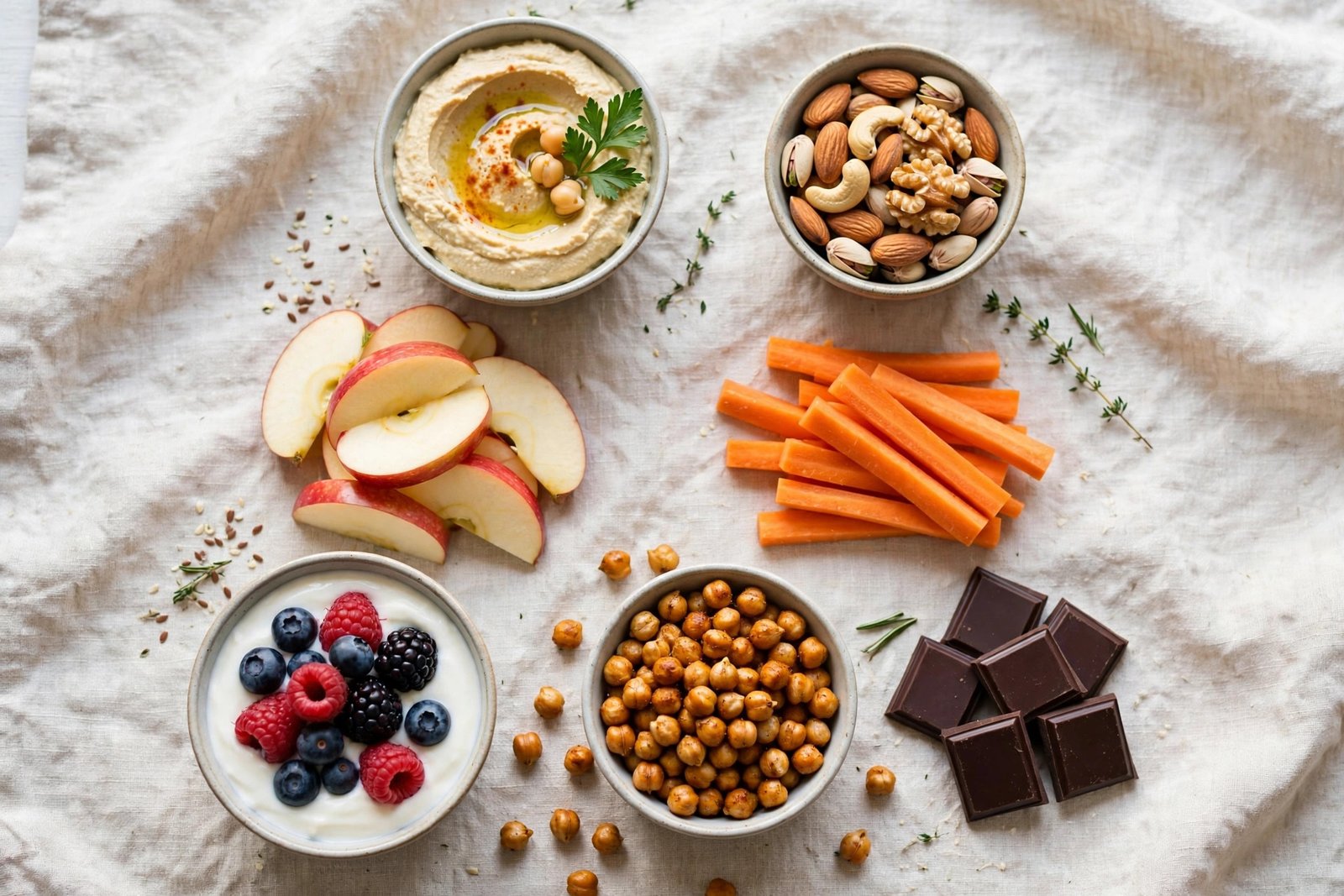
- Protein-rich: boiled eggs, Greek yoghurt, cottage cheese, roasted chickpeas, edamame, a small handful of nuts.
- Fruit and vegetables: apple slices with peanut butter, carrot and cucumber sticks with hummus, banana, berries, cherry tomatoes.
- Whole-grain: oatcakes with cheese, whole-grain toast with avocado, plain popcorn, a small bowl of unsweetened oatmeal.
- On the go: a piece of fruit plus a handful of nuts, a small yoghurt, a boiled egg, vegetable sticks in a container.
- Sweet cravings: a few squares of dark chocolate, frozen banana blended into “nice cream”, dates stuffed with nut butter.
- For kids: fruit kebabs, yoghurt with berries, cheese cubes with whole-grain crackers, smoothies made with milk and fruit.
Winning the snack battle starts with preparation, not willpower: keep cut vegetables, fruit, boiled eggs, and portioned nuts visible and ready, and keep the less-healthy options out of the house or out of sight.
Who Should Be Careful
- People with diabetes should choose snacks with protein or fibre and watch carbohydrate portions; pairing carbs with protein helps.
- People with nut, dairy, or other food allergies need to read labels on packaged snacks.
- People with kidney disease may need to limit high-potassium or high-protein snacks — follow medical advice.
- Parents should supervise young children with whole nuts, grapes, and other choking hazards (cut them appropriately).
Frequently Asked Questions
Is late-night snacking bad?
A small, balanced snack is fine if you are genuinely hungry. Regular heavy late-night eating is linked with poorer sleep and extra calories — keep evening snacks light.
How many snacks per day are okay?
One to two planned snacks between meals suits most people. Constant grazing all day makes it hard to track intake and gives teeth no rest.
Are protein bars healthy?
Some are reasonable; many are candy bars with added protein. Look for short ingredient lists, moderate sugar, and at least a few grams of fibre.
What is the best snack before exercise?
Something light with easily digested carbohydrate plus a little protein — a banana, a small yoghurt, or toast with peanut butter — eaten 30 to 60 minutes beforehand.
Key Takeaways
- Healthy snacks combine protein, fibre, or healthy fat with minimal added sugar and salt.
- Smart snacking can control hunger, steady energy, and fill nutrient gaps.
- Watch out for mindless grazing, “health halo” products, and sugary drinks.
- Preparation is the secret: keep good options visible and ready, and portion them out.
Disclaimer: This article is for informational purposes only and is not a substitute for professional medical advice, diagnosis, or treatment. Please consult a qualified doctor for personal health concerns.