

How Many Weeks Pregnant Am I? How to Calculate Pregnancy Weeks
One of the first questions after a positive pregnancy test is also one of the most confusing: “How many weeks pregnant am I?” Doctors count pregnancy in a way that surprises many people — the clock starts before conception even happens. This guide explains how pregnancy weeks are calculated, why the number can be confusing, the tests that pin it down most accurately, and what to do once you know your dates.
Medically reviewed by Dr. Ata Ullah, MD (Medicine)
How Pregnancy Weeks Are Counted
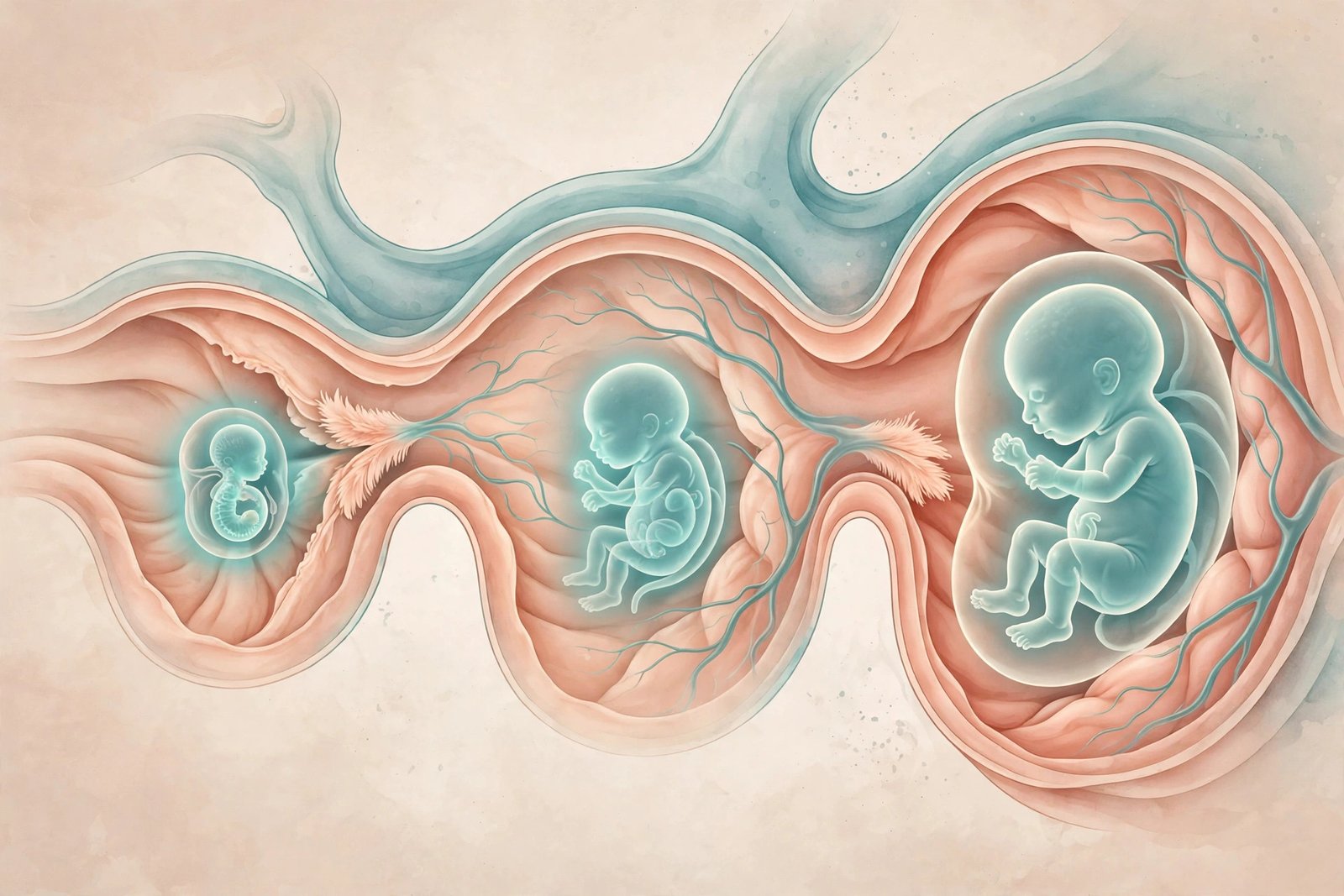
Pregnancy is measured in gestational age, which begins on the first day of your last menstrual period (LMP) — not the day you conceived. This convention exists because the start of a period is a date most people can remember, while the exact moment of conception usually cannot be known.
Here is the part that confuses everyone: ovulation and conception typically happen about two weeks after the first day of the last period. That means at the moment of conception, you are already considered about two weeks pregnant by gestational age. A “six-week” pregnancy, for example, involves an embryo that is only about four weeks old in developmental terms (this younger figure is called the fetal age).
A full-term pregnancy is counted as 40 weeks (280 days) from the first day of the LMP. In practice, a normal pregnancy can last anywhere from 37 to 42 weeks. Pregnancy is divided into three trimesters:
- First trimester: weeks 1–13
- Second trimester: weeks 14–27
- Third trimester: weeks 28–40 and beyond
Knowing your gestational age matters far beyond curiosity: it determines when screening tests are offered, how your baby’s growth is judged, and when doctors consider induction if the pregnancy goes past term.
Why Dating a Pregnancy Can Be Confusing
Counting from the last period works beautifully when cycles are textbook-regular — but many are not. Several common situations make LMP dating unreliable:
- Irregular periods: if your cycle varies in length, ovulation may not have happened on day 14, shifting everything by days or even weeks.
- Recent hormonal contraception: coming off the pill, patch, or injection can make the first few cycles unpredictable.
- Breastfeeding: nursing can delay the return of ovulation and periods, so the “last period” may be months before conception.
- Implantation bleeding: light spotting when the embryo attaches to the uterine wall — usually 6–12 days after ovulation — is often mistaken for a light period, giving a false LMP date.
- Conditions like PCOS: polycystic ovary syndrome commonly causes long, irregular cycles, making calendar dating little more than a guess.
- Simply not remembering: studies suggest only about half of women can recall their LMP date with real precision.
If any of these apply to you, do not be surprised if your dating scan gives a different answer than your calendar math — the scan is usually right.
Signs That Hint at How Far Along You Are
Symptoms cannot date a pregnancy precisely, but they follow a rough timeline that can offer clues:
- Weeks 1–4: usually no noticeable symptoms; implantation spotting may occur around week 4.
- Weeks 4–6: the missed period, breast tenderness, fatigue, and a heightened sense of smell.
- Weeks 6–8: nausea (“morning sickness”) often begins, along with more frequent urination and mood changes.
- Around weeks 6–7: a transvaginal ultrasound can usually detect the embryo’s heartbeat.
- Weeks 18–25: first fetal movements (“quickening”), more often felt earlier in a second pregnancy.
These milestones vary widely between individuals, so treat them as rough signposts rather than a calendar. Every pregnancy — and every body — runs on its own schedule.
Tests & Diagnosis: How Doctors Date a Pregnancy
Several methods are used, from simple calendar math to precise measurements. In practice, your provider will combine them and let the most reliable one win.
1. Naegele’s rule (LMP dating)
The classic formula: take the first day of your last menstrual period, add seven days, subtract three months, and add one year. For example, an LMP of January 10 gives a due date of October 17. This assumes a regular 28-day cycle with ovulation on day 14 — the further your cycle strays from that pattern, the less accurate the result.
2. Home urine pregnancy test (hCG)
Urine tests detect human chorionic gonadotropin (hCG), the hormone produced after implantation. They are most reliable from the first day of a missed period, when hCG is usually high enough to register. Testing with first-morning urine, which is more concentrated, reduces the chance of a false negative. A negative result with a still-missing period deserves a retest a few days later.
3. Blood beta-hCG test
A blood test at a clinic or lab can detect pregnancy about six to eight days after ovulation — several days before a home urine test. There are two types: a qualitative test (a simple yes/no) and a quantitative test that measures the exact hCG level. When blood samples taken a couple of days apart show hCG about doubling every two to three days, it suggests the pregnancy is progressing normally.
4. Ultrasound dating (the gold standard)
A first-trimester ultrasound is the most accurate dating method available. Between roughly 7 and 13 weeks, the sonographer measures the crown-rump length (CRL) — the distance from the top of the embryo’s head to its bottom. At this stage, embryos grow at a remarkably consistent rate, so the measurement estimates gestational age to within about five to seven days. Later scans (measuring the head, abdomen, and thigh bone) are less precise for dating, because individual growth rates begin to diverge.
If the ultrasound date and the LMP date differ significantly, professional guidelines generally recommend using the ultrasound date. After about 22 weeks, ultrasound is no longer considered reliable for dating.

What to Do Once You Know Your Weeks
A due date is an estimate, not an appointment — only a small percentage of babies arrive exactly on it. What matters is using your gestational age to plan proper care:
- Book your first prenatal visit for around 8–10 weeks, or earlier if you have medical conditions, a history of miscarriage, or concerning symptoms.
- Start folic acid (400–800 micrograms daily) if you have not already — it is most protective against neural tube defects in the earliest weeks, often before you even know you are pregnant.
- Review your medications with your doctor or pharmacist, since some drugs are unsafe in pregnancy.
- Know your screening schedule: dating affects the timing of the nuchal translucency scan (11–13 weeks), the anatomy scan (18–22 weeks), and glucose testing (24–28 weeks).
- Track milestones by week, not by month — providers, apps, and screening windows all run on gestational weeks.
Lifestyle Management During Pregnancy
Once you know you are pregnant, the fundamentals of a healthy pregnancy apply from the very first weeks:
- Eat well: focus on fruits, vegetables, whole grains, and protein; avoid alcohol entirely and limit caffeine.
- Stay active: moderate exercise such as walking or prenatal yoga is safe for most pregnancies — confirm with your provider.
- Rest: fatigue is intense in the first trimester; short naps and earlier bedtimes are entirely reasonable.
- Avoid tobacco and recreational drugs, and ask your doctor about any prescription or over-the-counter medicines.
- Stay hydrated and attend every scheduled prenatal appointment — early, regular care is one of the strongest predictors of a healthy outcome.
When to See a Doctor
Book prenatal care as soon as pregnancy is confirmed — early care gives you the most accurate dating and the best start. Seek prompt medical attention if you experience:
- Heavy vaginal bleeding (soaking through a pad in an hour) or passing tissue
- Severe abdominal or pelvic pain, especially sharp pain on one side
- Severe, persistent nausea and vomiting with signs of dehydration
- Fever over 38°C (100.4°F) that does not come down
- Severe headache, vision changes, or sudden swelling of the face and hands
- Dizziness or fainting, or noticeably reduced fetal movement later in pregnancy
Sharp one-sided pain with bleeding in early pregnancy can signal an ectopic pregnancy — a medical emergency. When in doubt, call your provider or go to urgent care.
Key Takeaways
- Pregnancy is counted from the first day of your last period — you are considered about two weeks pregnant at conception.
- A full-term pregnancy is 40 weeks; 37–42 weeks is the normal range.
- Naegele’s rule (LMP + 7 days − 3 months + 1 year) gives a quick due-date estimate for regular cycles.
- A first-trimester ultrasound measuring crown-rump length is the most accurate dating method (within ~5–7 days).
- Blood beta-hCG detects pregnancy about 6–8 days after ovulation; home urine tests are most reliable from the missed period.
- Start folic acid early and book prenatal care by 8–10 weeks.
What if I don’t know the date of my last period?
Your provider will date the pregnancy with an early ultrasound, which is accurate even without any LMP information. The earlier the scan, the more precise the dating.
Is the baby’s age the same as my weeks pregnant?
Not exactly. Gestational age (from LMP) runs about two weeks ahead of fetal age (from conception). Doctors, scans, and screening schedules all use gestational age.
Can stress or travel change my due date?
No. The due date is set by biology and dating measurements; stress, travel, or activity do not move it — though they can affect how you feel along the way.
“Your Health, Our Responsibility.”
Medical Disclaimer: This article is for informational purposes only and is not a substitute for professional medical advice, diagnosis, or treatment. Always seek the advice of your physician or another qualified health provider with any questions you may have regarding a medical condition. Never disregard professional medical advice or delay seeking it because of something you have read on this site.
Online Consultation: Dr. Ata Ullah (MBBS, MD Medicine), Physician Consultant / Medical Specialist — WhatsApp: 0315 7148181 — Consultation Fees: $30