
Medically reviewed by Dr. Ata Ullah, MD (Medicine), Physician Consultant.
Inflammation has a bad reputation — but in its acute form, it is one of the body’s most important defenses. When you cut your finger, the redness, warmth, and swelling that follow are inflammation at work: immune cells rushing in to fight infection and start repairs. The problem begins when inflammation becomes chronic — a low-grade, persistent immune activation that simmers for months or years.
Chronic inflammation is linked to many of the world’s most common diseases, from heart disease and type 2 diabetes to arthritis and certain cancers. While no single diet can “cure” inflammation, research suggests that overall eating patterns can either fuel it or help calm it. This guide explains how the anti-inflammatory diet works and how to put it into practice.

How It Works: Inflammation and Food
Every meal sends signals to your immune system. Diets high in refined sugars, processed meats, trans fats, and excessive alcohol tend to raise levels of inflammatory markers in the blood — molecules like C-reactive protein that indicate immune activation. Over years, this dietary pattern keeps the immune system in a mildly heightened state.
An anti-inflammatory eating pattern works in the opposite direction. It emphasizes foods rich in antioxidants, fiber, omega-3 fatty acids, and plant compounds called polyphenols. These nutrients help neutralize unstable molecules (free radicals), feed beneficial gut bacteria that regulate immunity, and provide the building blocks for inflammation-resolving compounds the body makes itself. The effect is not about any single “superfood” — it is the cumulative pattern of eating that matters.
Evidence-Based Benefits
Research on anti-inflammatory eating — most famously the Mediterranean-style pattern — suggests several benefits:
- Heart health: dietary patterns rich in vegetables, fruits, whole grains, fish, and olive oil are associated with lower markers of inflammation and reduced cardiovascular risk in large observational studies.
- Metabolic health: these eating patterns are linked to better blood sugar control and lower risk of developing type 2 diabetes.
- Joint comfort: some studies suggest people with arthritis who adopt anti-inflammatory eating report modest improvements in pain and stiffness, though results vary.
- Brain health: long-term adherence to plant-rich dietary patterns is associated with slower cognitive decline in aging populations.
- Gut health: fiber-rich eating supports a diverse microbiome, which helps regulate immune responses.
It is important to be honest about the limits: diet is one factor among many, and an anti-inflammatory diet does not replace medication for inflammatory diseases like rheumatoid arthritis or inflammatory bowel disease.
Practical Steps: Building the Plate
Eat more of these
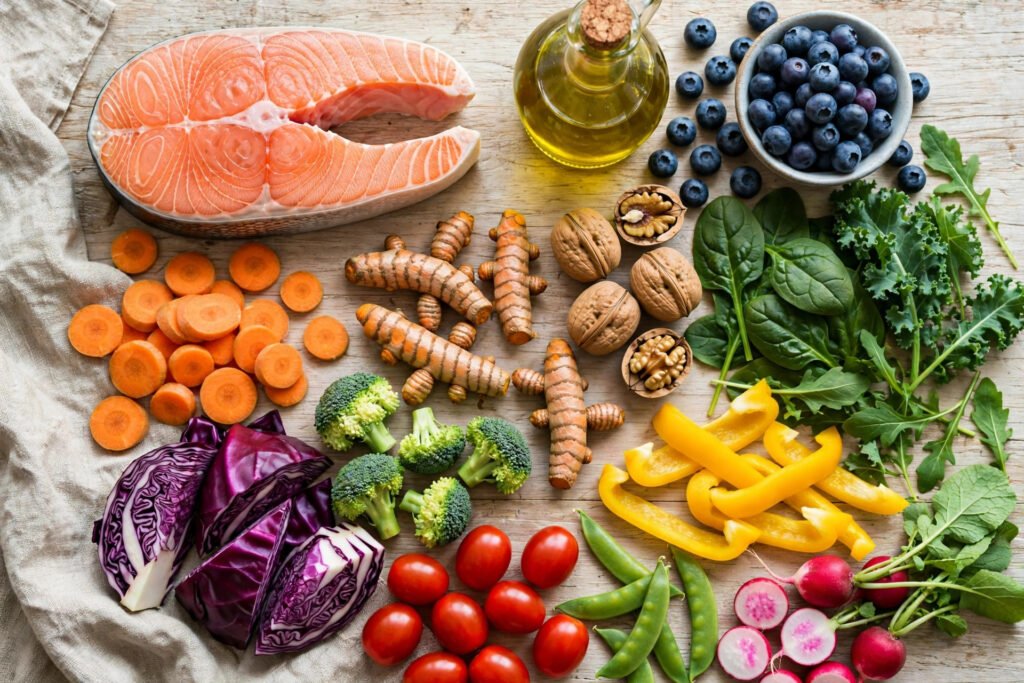
- Vegetables and fruits: aim for variety and color — leafy greens, berries, tomatoes, peppers, cruciferous vegetables. Each color represents different protective compounds.
- Whole grains: oats, brown rice, quinoa, barley, and whole wheat instead of refined versions.
- Healthy fats: olive oil as the main cooking fat; fatty fish (salmon, sardines, mackerel) a couple of times a week; nuts and seeds daily in small amounts.
- Legumes: lentils, chickpeas, and beans — rich in fiber and plant protein.
- Herbs and spices: turmeric, ginger, garlic, cinnamon, and rosemary contain concentrated plant compounds.
- Fermented foods: yogurt, kefir, and other fermented foods support gut microbial diversity.
A simple day of eating
Breakfast: warm porridge made with rolled oats, stirred through with plain yogurt and topped with mixed berries and crushed walnuts. Lunch: lentil and vegetable soup with whole-grain bread and olive oil. Snack: an apple with a small handful of almonds. Dinner: baked fish or chickpea stew with brown rice and a large mixed salad. Drinks: water and unsweetened tea.
Tip: You don’t need to overhaul everything at once. Pick one swap per week — olive oil instead of butter, berries instead of a sugary dessert, fish instead of processed meat — and let the pattern build gradually.
What to Avoid or Limit
- Added sugars: sugary drinks, sweets, and pastries are among the strongest dietary drivers of inflammatory markers.
- Refined carbohydrates: white bread, white rice, and processed snacks in large amounts.
- Processed and red meats: sausages, bacon, and frequent large servings of red meat are linked to higher inflammation.
- Trans fats and heavily processed foods: check labels for “partially hydrogenated oils” and keep ultra-processed snacks occasional.
- Excess alcohol: heavy drinking promotes inflammation throughout the body.
- Deep-fried foods: frequent consumption of foods fried in reused oils.
Note the framing: “limit,” not “never.” An anti-inflammatory pattern is about the overall balance, not perfection at every meal.
When to talk to a doctor: If you have an inflammatory condition (such as rheumatoid arthritis, lupus, or inflammatory bowel disease), discuss dietary changes with your doctor — diet complements but does not replace prescribed treatment. Also seek care for persistent joint pain and swelling, unexplained fatigue, or digestive symptoms that don’t improve, as these need proper evaluation.
Frequently Asked Questions
How quickly does an anti-inflammatory diet work?
Some people notice better energy and digestion within weeks, but meaningful changes in inflammatory markers and disease risk build over months of consistent eating. Think of it as a long-term pattern, not a quick fix.
Is the anti-inflammatory diet the same as the Mediterranean diet?
They overlap heavily. The Mediterranean pattern is the most studied example of anti-inflammatory eating, but any cuisine built on vegetables, whole grains, legumes, fish, and healthy oils follows the same principles.
Can this diet cure arthritis or autoimmune disease?
No. It may help manage symptoms and support overall health, but autoimmune and inflammatory diseases require proper medical treatment. Never stop prescribed medication in favor of diet alone.
Are nightshade vegetables (tomatoes, peppers, potatoes) inflammatory?
For most people, no — they are nutritious and fit well in an anti-inflammatory pattern. A small number of individuals feel they worsen joint symptoms; if you suspect this, discuss it with your doctor rather than eliminating whole food groups on your own.
Do I need anti-inflammatory supplements like turmeric pills?
Food-first is the better approach. Supplements are less studied, doses vary, and they can interact with medications (turmeric with blood thinners, for example). Talk to your doctor before starting any supplement.
Key Takeaways
- Chronic low-grade inflammation is linked to heart disease, diabetes, arthritis, and other common conditions; diet is one lever that influences it.
- An anti-inflammatory pattern emphasizes vegetables, fruits, whole grains, legumes, fish, olive oil, nuts, and spices — and limits added sugars, processed meats, and ultra-processed foods.
- The overall pattern matters more than any single food; gradual swaps beat dramatic overhauls.
- Diet complements — but never replaces — medical treatment for inflammatory diseases.
- Talk to your doctor before making major dietary changes if you have a chronic condition or take regular medication.
Disclaimer: This article is for informational purposes only and is not a substitute for professional medical advice, diagnosis, or treatment. Please consult a qualified doctor for personal health concerns.