
Introduction
Yes — humans can get rabies, and it is the deadliest viral infection known to medicine. Rabies is a viral disease of the brain and spinal cord, spread through an infected animal’s saliva. Once symptoms appear, it is virtually 100 percent fatal — yet it is also one of the most preventable diseases on earth. A bite, a wash, and a vaccine in time stop it completely. Medically reviewed by Dr. Ata Ullah, MD (Medicine).
The World Health Organization estimates rabies kills about 59,000 people every year, mostly in Africa and Asia, and about 40 percent of victims are children under 15. Dogs cause up to 99 percent of human cases worldwide. In the United States fewer than 10 people die each year, bats are now the main source, and more than 100,000 people receive preventive treatment after bites.
Rabies returned to the headlines in November 2026: an Idaho organ donor who died in December 2024 of a supposed heart attack had rabies from an unreported skunk scratch. His donated kidney infected the recipient, who died, and corneal tissue recipients needed emergency treatment with first-ever antibody injections around the eye. Eye banks tightened screening in June 2025; the transplant network voted on stronger rules on 19 November 2026. Full account here.
What Causes Rabies
Rabies is caused by the rabies virus, a member of the lyssavirus family. It infects mammals — dogs, cats, livestock and wild animals — and spreads to people through saliva, almost always by a bite. A scratch carrying infected saliva into the skin, or saliva reaching the eyes, mouth or an open wound, can also transmit it. The virus cannot pass through unbroken skin, and does not spread through blood, urine or faeces. Human-to-human transmission has never been confirmed — the one proven exception is infected donated organs and tissue, as the 2024 Idaho case showed.
Worldwide, dogs cause up to 99 percent of human cases, which is why the disease is heaviest in Africa and Asia, where dog vaccination is patchy. In the Americas, where dog rabies is mostly controlled, bats are now the main source, followed by raccoons, skunks and foxes. Bites from rodents are not known to transmit rabies. Children are the most exposed: they play outdoors, they are less likely to report a small bite, and they are shorter, so bites land closer to the head. Travellers to places where dog rabies is common, veterinarians, animal handlers and cave explorers face the highest risk.
How Rabies Develops in the Body
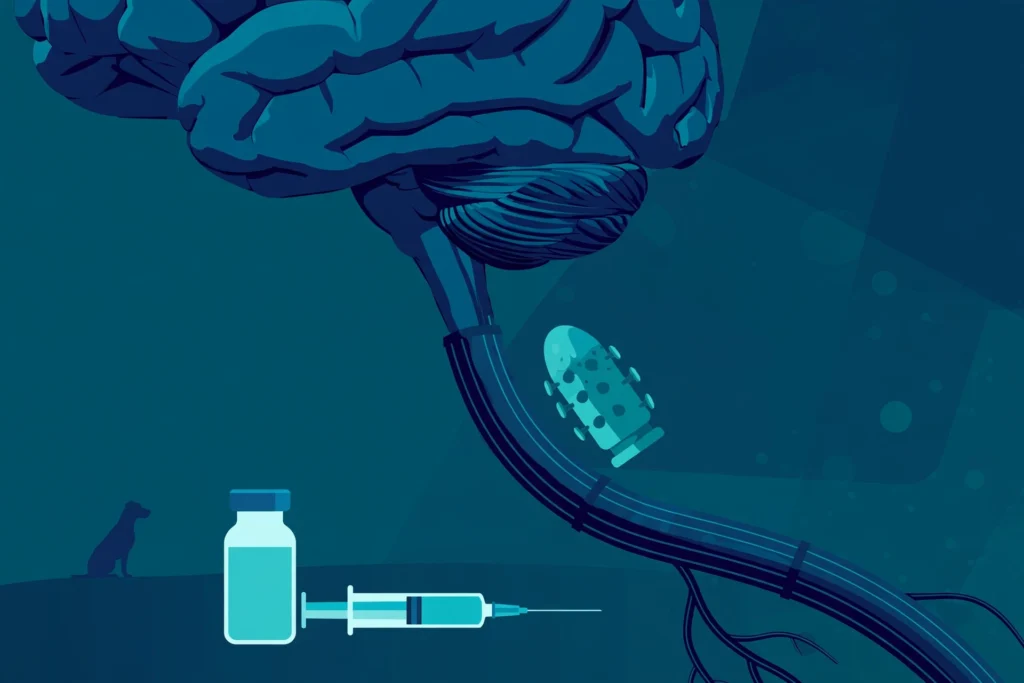
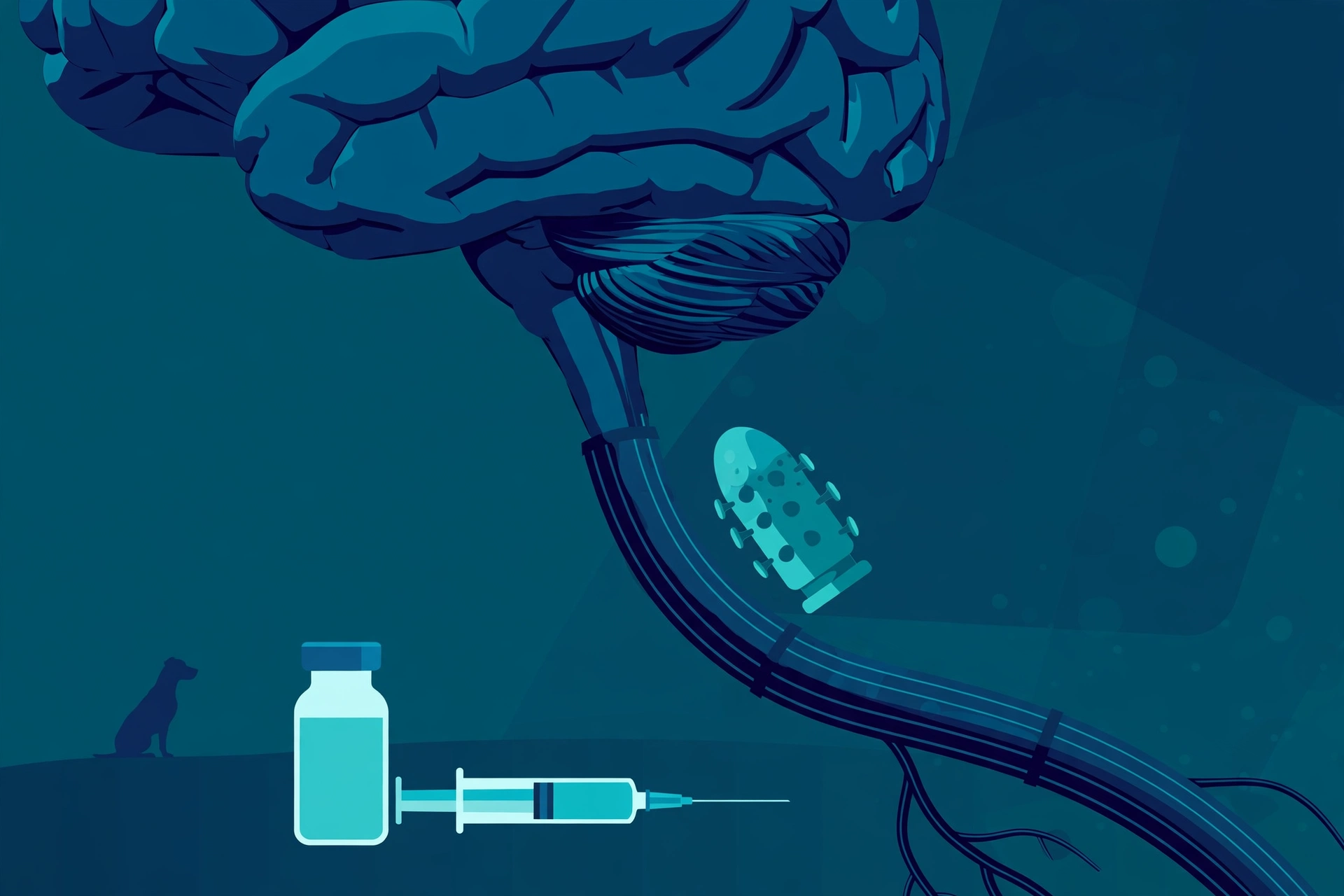
After a bite, the rabies virus does not rush into the bloodstream as many infections do. It stays near the wound, copying itself in muscle and skin cells, then attaches to nerve endings at the site. From there it travels backwards along the peripheral nerves toward the brain, millimetre by millimetre, hidden from the immune system inside the nerve fibres. This slow journey is the incubation period — and the reason rabies can be stopped after exposure: the virus is still travelling when the vaccine builds immunity.
The incubation period is typically two to three months, but ranges from one week to one year. It depends mainly on where the virus entered: a bite on the face or neck can show symptoms within weeks, a bite on the leg may take months. Once the virus reaches the brain and spinal cord, it multiplies rapidly and causes progressive, fatal inflammation of the brain and spinal cord. From the brain it spreads outward again — to the salivary glands, making the animal’s saliva infectious, and to the skin and eyes. By the time symptoms appear, the virus holds the central nervous system, and treatment after that point almost never works.
Prevention: Washing the Wound, Vaccination, and Staying Away from Risk
Prevention starts in the first minutes after a bite. The World Health Organization advises washing the wound with soap and water for at least 15 minutes, then an antiseptic such as povidone-iodine or alcohol if available — then medical care the same day, even for a small bite or scratch. Washing alone removes much of the virus from the wound — the single most important first-aid step. Do not close the wound yourself, apply home remedies, or wait to see if the animal looks sick.
The second layer of prevention is vaccination — of animals and of people. Vaccinating dogs is the most effective way to stop human rabies; the World Health Organization aims to end human deaths from dog-mediated rabies by 2030. Keep your pets vaccinated and report stray or sick animals to the local authorities. People at high risk — veterinarians, animal handlers, laboratory workers, and travellers where dog rabies is common — can receive a short two-dose pre-exposure course given a week apart. For everyone else: never approach a wild animal, never handle a bat, even a dead one, and teach children never to touch stray dogs or hide a bite from an adult. A bat in a bedroom counts as a possible exposure even with no visible bite — bat bites can be tiny and painless. After the 2024 donor case, eye banks updated screening in June 2025 to defer donors with animal-contact history. See our shingles vaccine guide for another adult vaccine worth discussing.
Symptoms and Identification: How to Recognise Rabies Early
Rabies is silent for weeks or months, and that silence is dangerous. The first warning sign is usually at the bite site: an unusual tingling, pricking, burning or itching sensation where the wound has already healed. Fever, headache, muscle aches and tiredness often join it — symptoms so ordinary they are easily mistaken for flu. That early stage lasts a few days — the last window in which the disease can still be stopped, because once the virus reaches the brain, survival becomes almost impossible.
About two in three people then develop “furious” rabies: agitation and restlessness, confusion, hallucinations, aggression, muscle twitching, a racing heart, fast breathing, and excessive salivation. The most famous sign is hydrophobia — a fear of water that is really a spasm: trying to drink, or even seeing water, triggers painful throat contractions, so the person cannot swallow. A similar fear of drafts or air blown on the face is called aerophobia. Fever and difficulty swallowing even saliva often join the picture. These episodes come in waves, with calmer periods in between.
About one in three people develop “paralytic” rabies instead. It begins with weakness, often starting where the bite was and spreading outward, with tingling, neck stiffness and headache. The weakness turns into paralysis, and the person slips into a coma. Paralytic rabies is easier to miss because it looks like other neurological illnesses, which is one reason cases are sometimes diagnosed late. In both forms, death usually follows within days of the first neurological symptoms, most often from breathing or heart failure. Any bite from an unknown animal, any bat contact, or unexplained tingling at an old bite site with fever is a medical urgency — see a doctor the same day and mention the bite.
Tests and Diagnosis: How Doctors Confirm Rabies
There is no single simple test for rabies in a living person. Diagnosis starts with the story: an animal bite or contact, tingling at the old wound, and the pattern of symptoms. A doctor who suspects rabies sends several specimens to a specialised laboratory: no one test is sensitive enough alone, a negative result on one test does not rule the disease out, and tests are usually repeated over several days.
The most useful antemortem test is a reverse transcription polymerase chain reaction (RT-PCR) test on saliva. It can miss the virus early on, so samples are collected repeatedly. A second test is a small skin biopsy from the nape of the neck, where hair follicles are rich in nerve endings, examined with a direct fluorescent antibody test that lights up rabies virus antigen in the nerves. A third line of evidence comes from blood and spinal fluid: antibody tests look for rabies-neutralising antibodies in serum and cerebrospinal fluid taken by lumbar puncture. Antibodies appear late, so a positive result in someone never vaccinated is strong evidence, but an early negative result means little.
After death, the diagnosis is confirmed by the direct fluorescent antibody test on brain samples. Animals are tested the same way, so a suspected animal must be put down for testing; there is no test for rabies in a live animal. Testing is not done on people without symptoms; exposed people receive preventive treatment straight away. The tests confirm the disease, but exposure alone is enough to start treatment.
Treatment: Post-Exposure Prophylaxis and What Happens Once Symptoms Start
There is no cure for rabies once symptoms have appeared. No antiviral drug has been shown to work; care is supportive. The “Milwaukee Protocol” — a medically induced coma tried in 2004 — has failed in almost every attempt since.
The treatment that works comes before symptoms: post-exposure prophylaxis, or PEP, close to 100 percent effective when prompt. It has three parts: thorough wound washing; human rabies immunoglobulin — ready-made antibodies infiltrated into and around the wound — given once at the start, never in the same syringe or body part as the first vaccine dose; and four vaccine doses on days 0, 3, 7 and 14. Previously vaccinated people need only two boosters, three days apart, and no immunoglobulin. People with weakened immunity receive five doses, the extra one on day 28. PEP works even if started days or weeks after the bite, as long as no symptoms have appeared.
From the Clinic: What a Physician Would Tell You
The mistake doctors see most often is the small bite that never gets reported — a child scratched by a stray puppy, a traveller nipped by a monkey. Each feels too minor to mention, and each can be fatal months later. Any bite, scratch or lick on broken skin from an unknown animal is a same-day visit. The second mistake is stopping the vaccine course early.
Emergency Medicines Guide
The classes below are what doctors use for rabies. Dosage must come from your doctor or pharmacist.
| Symptom | Medicine class |
|---|---|
| Animal bite | Rabies vaccine + immunoglobulin (PEP) |
| Wound pain or fever | Analgesics (paracetamol, anti-inflammatory medicines) |
| Agitation or seizures | Sedatives (benzodiazepine class) |
| Muscle spasms | Muscle relaxants |
| Clinical rabies | Supportive intensive care; no proven antiviral |
See our measles/MMR and pneumonia vaccine guides for other vaccine-preventable diseases.
What to Eat
No food can treat rabies, and no diet can replace the vaccine — that must be said first. What food can do is support the body while it builds immunity after vaccination and while a bite wound heals. Protein is the priority: the immune system builds its antibodies from it, and the skin repairs itself with it. Eggs, yoghurt, lentils, beans, well-cooked chicken and fish are good choices, eaten in small, frequent meals if pain or fever has taken your appetite. Keep a water bottle nearby and sip through the day — fever, stress and a hospital visit all dry the body out.
Vitamin C from oranges, bell peppers and tomatoes supports the immune cells that respond to the vaccine, and vitamin A from sweet potatoes and carrots helps the skin close over the wound. Zinc, found in pumpkin seeds, chickpeas and yoghurt, is involved in wound repair, and oily fish such as salmon and sardines provide omega-3 fats that calm inflammation around the bite. A handful of nuts or seeds makes a useful snack between meals. If the bite is on the hand or face and chewing hurts, warm soups and soft foods give fluid, salt and protein in one bowl.
What to Avoid
Do not delay care after a bite — this matters most. Do not apply chilli, lime, turmeric paste or herbs to the wound, and do not try to suck the poison out: there is nothing to suck out, and the mouth only adds germs. Do not seal a deep bite wound yourself or cover it with a tight bandage before it has been cleaned; a doctor decides whether a wound needs stitches.
Do not handle stray or wild animals, feed monkeys by hand, or pick up a bat, even a dead one. Do not skip any dose of the vaccine course, or stop it because the animal was later found or you feel fine — the course must be completed to build full protection. Do not drink heavily during the two-week course: alcohol disturbs sleep and weakens the immune response. Above all, do not keep a bite secret — tell a doctor the whole story.
Frequently Asked Questions
Can humans get rabies from a dog lick?
Yes — but only if the saliva reaches broken skin or a mucous membrane, such as the eyes or mouth. A lick on healthy, unbroken skin cannot transmit rabies. If a dog licks a cut, graze or your eyes, wash the area with soap and water for 15 minutes and see a doctor the same day. A bite or scratch from an unknown dog is always treated as an exposure.
How long after a bite can you still get the rabies vaccine?
Post-exposure prophylaxis works at any time before symptoms appear, even weeks after the bite. The sooner it begins, the safer the margin: the virus travels slowly and the vaccine needs time to build immunity. If symptoms have already started, the vaccine can no longer help. Wash the wound and see a doctor on the day of the bite, not next week.
Is rabies really 100 percent fatal?
Once symptoms appear, rabies is virtually 100 percent fatal — only a handful of people in history have survived after symptoms began, most with severe lasting damage. Before symptoms, the picture is the opposite: prompt wound washing plus post-exposure prophylaxis is close to 100 percent effective. Rabies is both the deadliest and one of the most preventable viral diseases known to medicine.
Can you get rabies from a scratch or from a bat in your room?
A scratch can transmit rabies if the animal’s saliva gets into the wound, and a scratch from a rabid animal is treated like a bite. A bat in a bedroom also counts as a possible exposure, even with no visible bite: bat teeth are so small that a bite can be painless and almost invisible. Tell a doctor about any bat contact, and do not release the bat.
How many rabies shots do you need after a bite?
For someone never vaccinated, the course is four vaccine doses — on days 0, 3, 7 and 14 — plus one dose of human rabies immunoglobulin, given at the start and infiltrated around the wound. Previously vaccinated people need only two boosters, three days apart, and no immunoglobulin. People with weakened immunity receive five doses, the extra one on day 28. Complete the full course: missing a dose leaves the schedule unfinished.
A Final Word
Rabies is the deadliest virus most of us will ever hear about — and one of the easiest to beat. Wash every bite, see a doctor the same day, and finish the vaccine course. Do that, and a disease that kills 59,000 people a year cannot touch you or your family.
Medical Reviewer
Dr. Ata Ullah, MBBS, MD (Medicine) — Physician Consultant, Senior Medical Officer at DHQ Hospital, Layyah, Pakistan.
Motto: “Your Health, Our Responsibility.”
Online Consultation: Dr. Ata Ullah (MBBS, MD Medicine), Physician Consultant / Medical Specialist — WhatsApp: 0315 7148181 — Consultation Fees: $30