
Medically reviewed by Dr. Ata Ullah, MD (Medicine), Physician Consultant.
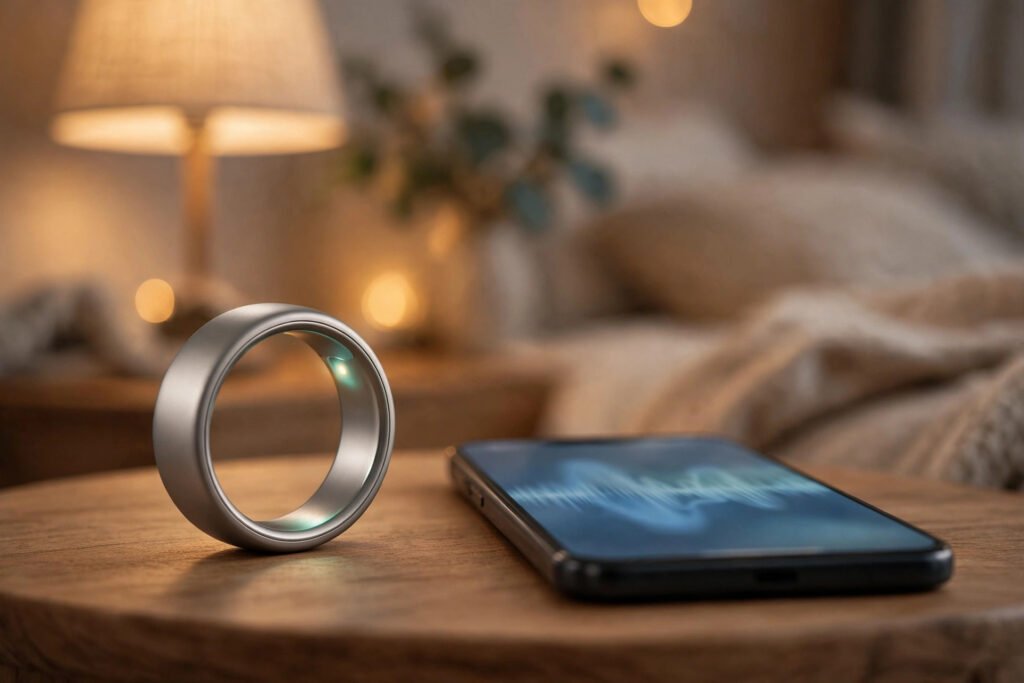
Sleep-tracking smart rings — small rings worn on your finger that monitor sleep, activity, and body signals — have become hugely popular, with the Oura Ring among the best-known. They promise detailed nightly reports: how long you slept, how much deep or REM sleep you got, and a daily “readiness” score telling you how recovered you are.
But how do these devices actually work, how accurate are they, and are they worth it? This guide explains the technology, what the evidence says, and how to use a sleep ring sensibly if you decide to get one.

What Sleep-Tracking Smart Rings Are
A smart ring is a compact wearable — roughly the size of a wedding band — packed with sensors. Unlike wrist watches or fitness bands, rings measure signals from the finger, where blood flow is relatively easy to detect. Popular models include the Oura Ring, Samsung Galaxy Ring, and similar devices from other manufacturers.
Typical features include:
- Sleep tracking: total sleep time, sleep stages (light, deep, REM), time awake in bed, and bedtime patterns.
- Physiological monitoring: resting heart rate, heart-rate variability (HRV), body temperature trends, blood-oxygen estimates, and respiratory rate.
- Activity and recovery scores: daily step estimates and “readiness” or “recovery” scores summarizing how well-rested your body appears.
- Companion app: charts, trends, and lifestyle suggestions delivered on your phone.
How They Work
Smart rings use several sensing technologies:
- Photoplethysmography (PPG): tiny LEDs shine light into the finger; a sensor measures how the light is absorbed by blood with each heartbeat. This tracks heart rate and heart-rate variability.
- Accelerometer: detects movement to estimate when you fall asleep, wake up, and how restless you are.
- Temperature sensors: track skin-temperature trends, which shift with sleep stages and illness.
- Algorithms: the device combines these signals with machine-learning models to estimate sleep stages. It cannot measure brain waves like a clinical sleep study (polysomnography) — it infers sleep stages from movement, heart rate, and temperature patterns.
This distinction matters: a ring measures proxies for sleep stages, not the brain activity itself. Its estimates are educated calculations, not medical-grade measurements.
What the Evidence Says
Independent validation studies of consumer sleep wearables, including rings, generally find:
- Sleep vs. wake: rings are reasonably good at distinguishing sleep from wakefulness — usually close enough for everyday use.
- Total sleep time: estimates are generally within a reasonable range of clinical measurements for healthy sleepers.
- Sleep stages: accuracy is noticeably lower. Devices often overestimate deep sleep and struggle to distinguish light sleep from wakefulness or REM. Stage-by-stage numbers should be taken with a generous margin of error.
- Heart rate and HRV: resting heart-rate readings tend to be fairly accurate; HRV and blood-oxygen estimates are more variable.
- Population limits: most validation research is done in healthy young adults. Accuracy may be lower in people with sleep disorders, irregular schedules, or certain heart conditions.
In short: useful for trends and habits, but not a substitute for a clinical sleep study when a sleep disorder is suspected.
Potential Benefits
- Awareness: many people improve their sleep simply by paying attention to it — consistent bedtimes, less late caffeine — after seeing their data.
- Early illness signals: sustained rises in resting heart rate or temperature deviations have, in some cases, coincided with infections before symptoms appeared.
- Recovery guidance: readiness scores may help athletes and active people balance training with rest.
- Comfort: a ring is less bulky than a watch, making it easier to wear overnight.
- Long-term trends: months of data can reveal seasonal changes, travel effects, or the impact of lifestyle experiments.
Limitations and Risks
- Accuracy limits: sleep-stage data can be misleading; don’t make medical decisions from it.
- Orthosomnia: an emerging concern — becoming anxious and obsessive about “perfect” sleep scores, which ironically worsens sleep.
- False reassurance or alarm: a good score doesn’t rule out sleep apnea; a bad score doesn’t mean you’re ill.
- Cost: rings are expensive, and some require ongoing subscriptions for full data access.
- Battery and fit: sensors need a snug fit and regular charging to work well.
- Privacy: sleep and health data are sensitive — review the manufacturer’s privacy policy before buying.
How to Use a Sleep Ring Safely and Sensibly
- Wear it consistently: trends matter more than single nights; wear it for at least a few weeks before drawing conclusions.
- Focus on basics: use the data to support consistent bedtimes, morning light, and sensible caffeine habits — not to micro-optimize unimportant metrics.
- Watch trends, not spikes: one bad night means nothing; a two-week drift toward later bedtimes or rising resting heart rate is worth acting on.
- Don’t diagnose yourself: if you suspect sleep apnea, insomnia, or another disorder, see a doctor. A ring cannot diagnose or rule out these conditions.
- Set healthy boundaries: check your data once a day, not obsessively; consider taking ring-free breaks if the scores are causing anxiety.
- Keep software updated: manufacturers periodically improve algorithms through firmware updates.
When to See a Doctor Instead of Relying on a Device
See a doctor promptly if you experience:
- Loud snoring with breathing pauses or gasping at night
- Severe daytime sleepiness affecting safety or work
- Persistent insomnia lasting more than a month
- Morning headaches, very dry mouth, or waking unrefreshed despite adequate time in bed
- Any concerning heart-rate readings combined with symptoms such as chest pain or palpitations
Frequently Asked Questions
Are smart rings more accurate than smartwatches for sleep?
Rings have some advantages — the finger’s blood vessels are close to the surface, and rings are comfortable for overnight wear. In practice, accuracy is broadly similar between good rings and good watches; both are trend tools, not medical devices.
Can a sleep ring detect sleep apnea?
Some rings flag possible breathing irregularities using blood-oxygen and movement data, but they cannot diagnose sleep apnea. Only a clinical sleep study can do that. Treat ring alerts as a prompt to see a doctor, not a diagnosis.
Do I need a subscription?
It depends on the brand. Some rings require a monthly subscription to unlock full sleep insights; others include everything with the purchase. Check before buying.
Can a sleep ring replace a sleep study?
No. Clinical sleep studies measure brain waves, breathing effort, oxygen, and muscle activity directly. A ring estimates sleep from indirect signals and is not a medical diagnostic tool.
Key Takeaways
- Smart rings estimate sleep from heart rate, movement, and temperature — useful for trends, not medical diagnosis.
- They’re reasonably good at total sleep time but less reliable for sleep-stage detail.
- Best used to support healthy habits: consistent schedule, morning light, sensible caffeine.
- Don’t let scores cause anxiety (orthosomnia) — how you feel during the day matters most.
- Persistent sleep problems deserve a doctor’s evaluation, whatever your ring says.
Disclaimer: This article is for informational purposes only and is not a substitute for professional medical advice, diagnosis, or treatment. Please consult a qualified doctor for personal health concerns.