
Medically reviewed by Dr. Ata Ullah, MD (Medicine), Physician Consultant.
Fitness trackers have moved far beyond counting steps. Modern wearable devices — from smartwatches to screenless bands like WHOOP — now monitor heart rate around the clock, estimate sleep stages, and measure recovery, strain, and blood oxygen. Millions of people check these numbers every morning before they check the news.
But what do these measurements actually mean, and how much should you trust them? This guide explains what health-tracking wearables measure, what the science says about their accuracy, where they genuinely help, and where their limits lie.

What Is Health Tracking Wearable Technology?
A health-tracking wearable is a small device worn on the wrist, finger, or arm that uses sensors to monitor the body continuously. Most use a technology called photoplethysmography — green LED lights that detect blood flow changes under the skin — to estimate heart rate. More advanced devices add accelerometers for movement, temperature sensors, and sometimes electrical sensors for heart rhythm or skin conductance.
Devices fall into two broad styles. Smartwatches combine health tracking with apps, notifications, and screens. Screenless bands, such as WHOOP-style devices, focus purely on physiological monitoring: they collect data day and night and present it through a phone app, often with subscription-based coaching insights. Both aim to turn raw body signals into understandable trends about activity, sleep, and recovery.
What Do These Devices Measure?
Heart rate and resting heart rate
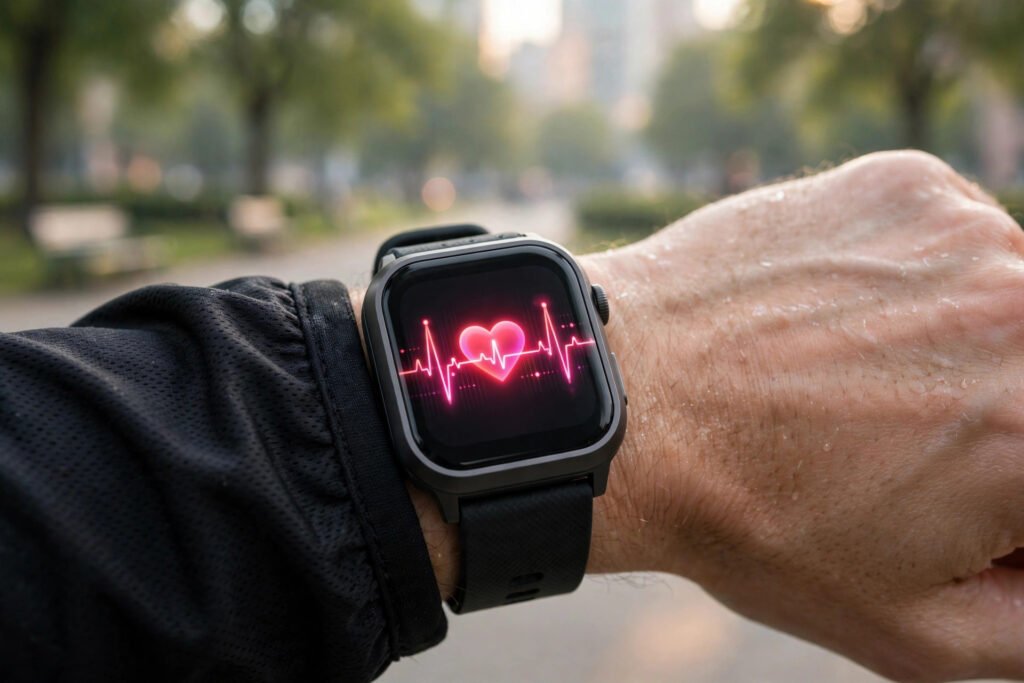
Continuous heart rate tracking shows how your heart responds to exercise, stress, and rest. Resting heart rate — measured during deep rest, often overnight — is one of the most reliable metrics wearables provide. A gradually lowering resting heart rate over weeks can reflect improving cardiovascular fitness.
Heart rate variability (HRV)
HRV measures the tiny variations in time between heartbeats. Higher HRV during rest is generally associated with good cardiovascular fitness and recovery, while suppressed HRV can appear during illness, stress, or overtraining. It is a trend metric — single readings matter less than the pattern over time.
Sleep duration and stages
Wearables estimate total sleep time and divide it into light, deep, and REM stages using movement and heart rate patterns. They are reasonably good at detecting when you fall asleep and wake up, but less accurate at classifying exact sleep stages compared with clinical sleep studies.
Activity, strain, and calories
Devices estimate daily movement, exercise intensity (“strain” or “training load”), and calories burned. Step counts and active minutes are fairly accurate; calorie estimates are rough approximations and can be off by a meaningful margin.
Blood oxygen and respiratory rate
Many devices now estimate blood oxygen saturation during sleep and track breathing rate. These are wellness indicators, not diagnostic tools — they cannot diagnose sleep apnea or lung disease.
What the Evidence Says
Research on wearable accuracy paints a nuanced picture. Studies comparing wearables with clinical equipment find that heart rate measurements are generally accurate during rest and moderate activity, though accuracy drops during very intense exercise or with loose-fitting bands, tattoos, or darker skin tones in some devices.
Sleep tracking research suggests wearables detect sleep versus wake time reasonably well but overestimate sleep and misclassify stages. In other words, the total hours are usually close, but the detailed breakdown of deep versus REM sleep should be taken lightly.
On behavior, research suggests that wearing a tracker can modestly increase physical activity, especially in the first months of use — the feedback loop of visible progress motivates movement. Whether trackers improve long-term health outcomes on their own is less clear; the device is a tool, and results depend on how the user acts on the data.
Benefits of Health Tracking
- Awareness: seeing real numbers makes abstract habits — sleep, activity, resting heart rate — concrete and trackable.
- Trend spotting: a rising resting heart rate or falling HRV over several days can be an early hint of illness, stress, or overtraining, prompting timely rest.
- Sleep insight: consistent bedtime and wake-time data helps people notice patterns, like how late caffeine or alcohol disrupts their sleep.
- Training guidance: recovery scores can help athletes balance hard sessions with rest days more objectively.
- Motivation: streaks, goals, and visible progress encourage consistent movement.
Limitations: These Are Not Medical Devices
This is the most important section of this guide. Consumer wearables are wellness products, not medical instruments. Key limitations include:
- They do not diagnose disease. A wearable cannot diagnose arrhythmia, sleep apnea, anemia, or any other condition, even if it flags something unusual.
- Accuracy varies. Skin tone, tattoos, fit, motion, and temperature can all distort readings.
- Scores are estimates. “Recovery scores,” “sleep scores,” and “readiness” numbers are proprietary formulas, not clinical measurements. Two brands can give the same person very different scores.
- Anxiety risk: some users become fixated on nightly data — a phenomenon sometimes called orthosomnia — where worry about perfect sleep scores actually harms sleep.
- They can miss real problems: normal-looking data does not rule out a medical condition. Symptoms like chest pain, fainting, or persistent fatigue deserve medical evaluation regardless of what a device says.
When to see a doctor: If your device repeatedly flags an irregular heart rhythm, very high or low heart rates at rest, or concerning blood oxygen readings — or if you have symptoms such as chest pain, palpitations, dizziness, or fainting — see a doctor promptly. Bring your device data along, but let the doctor decide what it means. Never adjust prescribed medication based on wearable readings.
How to Use the Data Wisely
- Watch trends, not single days: one bad night of HRV or sleep means little; a two-week pattern means a lot.
- Wear it consistently and snugly: accuracy depends on good skin contact, especially during sleep and workouts.
- Pair data with how you feel: the best use of a tracker is confirming what your body tells you, not overriding it. If the app says you are recovered but you feel exhausted, rest.
- Use it to test habits: keep everything else steady and change one thing — bedtime, evening screen use, alcohol — then watch the data for a week or two.
- Don’t chase perfect scores: aim for consistency and gradual improvement, not a flawless nightly report.
Tip: The most valuable wearable metrics for most people are the simplest: daily movement, sleep duration and regularity, and resting heart rate trend. You don’t need to optimize every advanced metric to benefit.
Frequently Asked Questions
Are smartwatch heart rate readings accurate?
Generally yes at rest and during moderate activity, based on validation studies. Accuracy can decline during intense exercise, with a loose band, or when the sensor moves on the wrist.
Can a fitness tracker detect sleep apnea?
No. Trackers can show disrupted sleep patterns or low overnight oxygen estimates, but diagnosing sleep apnea requires a clinical sleep study ordered by a doctor.
What is a good HRV?
There is no universal “good” number — HRV varies widely between individuals by age, fitness, and genetics. What matters is your own baseline and how it trends over time.
Do I need a subscription-based band or is a smartwatch enough?
It depends on your goals. Smartwatches suit most casual users. Screenless bands with subscriptions appeal to people who want deep recovery and strain analytics without distractions. Neither is medically superior.
Can tracking my sleep make my sleep worse?
For some people, yes. If checking your sleep score creates anxiety that keeps you up, consider tracking less often or focusing only on bedtime consistency.
Key Takeaways
- Wearables reliably track heart rate, movement, and sleep timing; detailed sleep stages and calorie counts are rough estimates.
- Research suggests they can motivate activity and reveal useful trends in resting heart rate, HRV, and sleep patterns.
- They are wellness tools, not medical devices — they cannot diagnose conditions and should never replace medical evaluation.
- Use trends over weeks, wear the device consistently, and always weigh the data against how you actually feel.
- See a doctor for persistent abnormal readings or any concerning symptoms, regardless of what the device shows.
Disclaimer: This article is for informational purposes only and is not a substitute for professional medical advice, diagnosis, or treatment. Please consult a qualified doctor for personal health concerns.