
Introduction
E. coli is in the news again for a grim reason: a pumpkin-farm outbreak in California has killed one child and spread to a preschool. Most E. coli bacteria are harmless and live quietly in your gut, but a few strains make a toxin that can cause bloody diarrhoea and kidney failure. This guide explains what an E. coli infection is, how you catch it, its symptoms, and how it is tested and treated. Medically reviewed by Dr. Ata Ullah, MD (Medicine).
What Happened in November 2026
In San Luis Obispo County, five cases are linked to Brookshire Farms, plus ten probable cases. One patient, an 18-month-old child, has died, and a sixth case appeared on 14 November in a preschool — a person who never visited the farm. The source has still not been found. The same week brought seven cases linked to a baby goat at an Illinois farm and nine children ill at a California beach. E. coli is not rare: the CDC estimates more than 265,000 such infections a year in the US.
What Causes an E. coli Infection
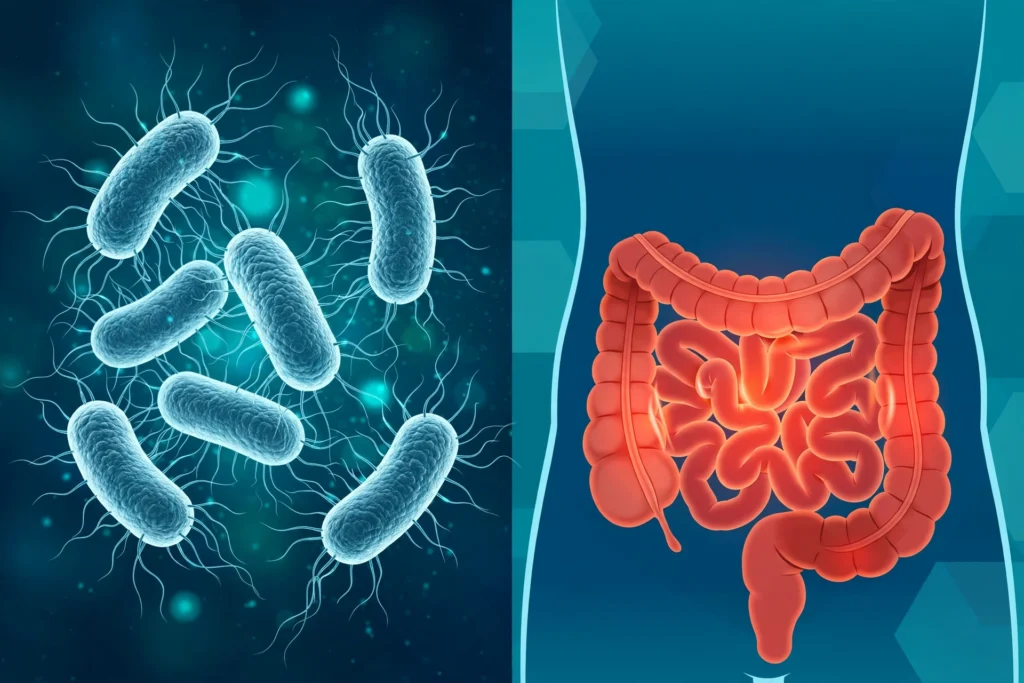
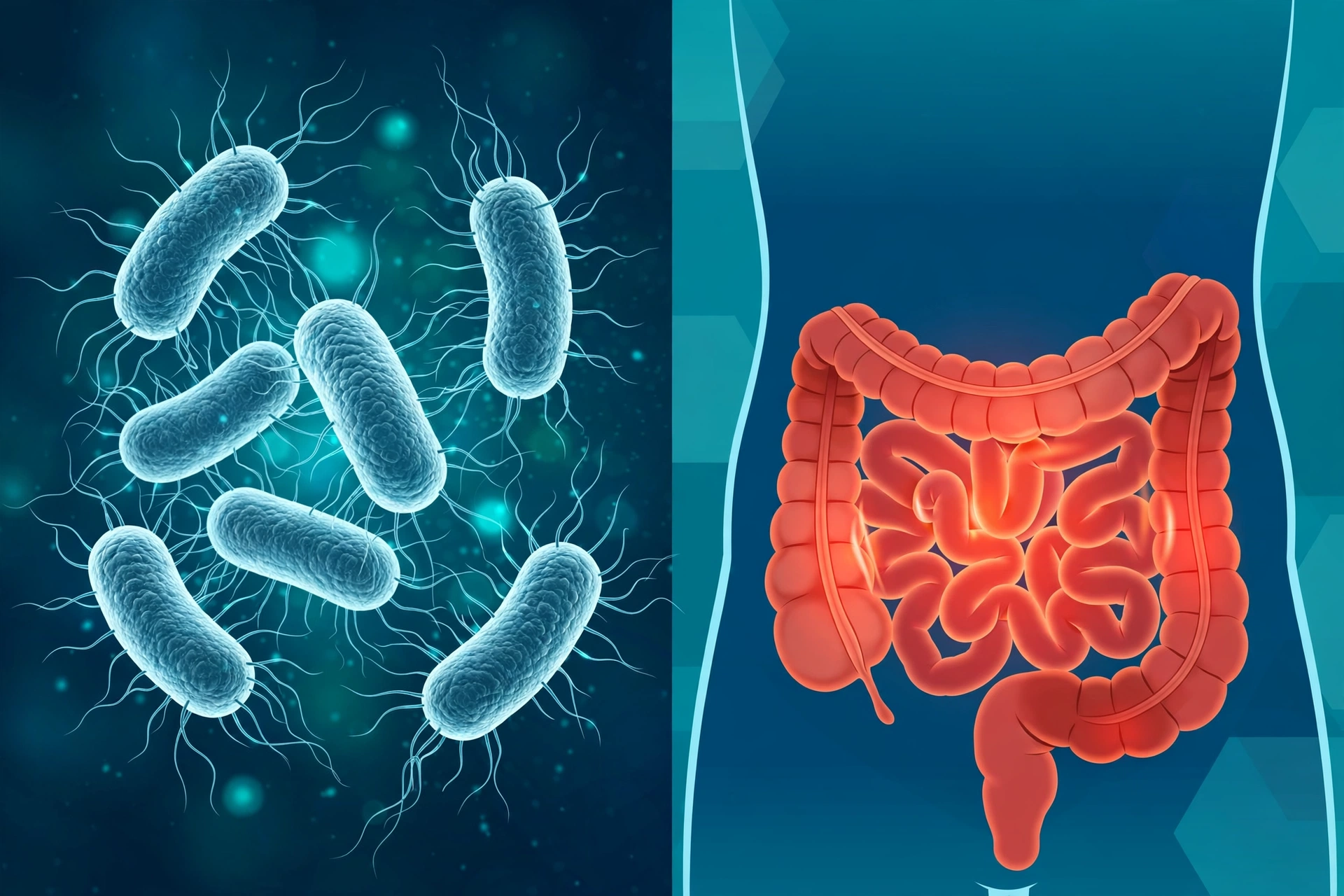
E. coli — short for Escherichia coli — is a group of bacteria found in the environment, in food and water, and in the intestines of people and animals. Most kinds are harmless and part of a healthy gut. The trouble starts with a small group of strains that produce a poison called Shiga toxin — Shiga toxin-producing E. coli, or STEC. The best-known is O157:H7; the 2026 raw-milk-cheese outbreak was caused by O26:H11.
You get infected by swallowing the bacteria, in amounts too small to see. The commonest routes are undercooked ground beef, raw milk and juice, raw vegetables washed in contaminated water, and drinking or swimming in contaminated water. Cattle and other farm animals carry STEC without being ill, which is why petting zoos and pumpkin farms appear in outbreak reports. Person-to-person spread happens through unwashed hands, shared towels, or childcare settings — exactly as happened at the San Luis Obispo preschool.
Anyone can catch E. coli, but children under five, adults over 65, people with weakened immune systems and international travellers are most likely to become seriously ill, according to the CDC. Young children are most at risk of the kidney complication below.
How E. coli Develops in the Body
Once swallowed, the bacteria settle in the large intestine and attach to the gut wall. STEC strains anchor themselves to the lining of the colon and release Shiga toxin, which damages the intestinal wall. The gut responds with inflammation, cramping and diarrhoea — watery at first, often turning bloody within a couple of days. The illness typically begins three to four days after exposure, although it can start as early as one day or as late as ten days afterwards.
In most people the infection stays in the gut and clears within about a week. In a minority, the toxin escapes into the bloodstream and attacks the smallest blood vessels: red blood cells are shredded, platelets are used up, and the kidneys begin to fail. This is haemolytic uraemic syndrome, or HUS, and it usually appears about a week after the diarrhoea starts, often just as the diarrhoea seems to be improving. Around 5 to 10 percent of people diagnosed with STEC develop HUS, and the death rate among those who do is 3 to 5 percent. Most people with HUS recover, but some are left with lasting kidney damage. This is why bloody diarrhoea is never something to wait out at home.
Prevention: How to Protect Yourself and Your Family
Prevention works because infection is almost always a matter of swallowing the bacteria. Cook ground beef thoroughly: whole cuts can be cooked rare because the bacteria sit on the surface, but ground beef mixes the surface through the whole patty, so it must reach 160°F (71°C) all the way through, with no pink in the middle. The same applies to burgers, meatballs and sausages. Avoid raw or unpasteurised milk, cheese and juice entirely.
Wash your hands properly and often: after using the toilet, after changing a nappy, after touching animals, and before preparing or eating food. Soap and running water for at least twenty seconds is the standard; hand sanitiser is a backup, not a replacement. Wash fruit and vegetables under running water, keep raw meat away from ready-to-eat food with separate boards and knives, and never put cooked food back on a plate that held raw meat. Refrigerate food promptly, and when swimming, avoid swallowing the water.
At farms and petting zoos, supervise children closely: they should wash their hands as soon as they leave the animal area and before eating anything, and not eat, drink or put their fingers in their mouths near the animals. If anyone in the household has diarrhoea, they should not prepare food for others, and children with diarrhoea should stay home until free of symptoms for at least two days. The same care protects against other foodborne illness; our food poisoning guide covers the wider picture.
Symptoms and Identification: What an E. coli Infection Feels Like
Symptoms usually begin three to four days after exposure, often starting slowly: mild stomach pain or watery diarrhoea that worsens over one to three days. The full picture is severe stomach cramps, diarrhoea that is watery at first and often becomes bloody, nausea and vomiting, and a low fever or no fever at all. Most healthy adults feel better within five to seven days.
The timeline: days one to three after exposure are usually silent, cramps and watery diarrhoea appear on day three or four, and bloody diarrhoea usually follows on day two or three of the illness. HUS, when it occurs, develops on average seven days after the first symptoms. Children can keep passing the bacteria for up to two weeks after they recover, so hand hygiene must continue after the symptoms stop.
| Stage | Timing | What to expect |
|---|---|---|
| Incubation | 1–10 days after exposure (usually 3–4) | No symptoms |
| Early illness | Days 1–3 of symptoms | Mild cramps, watery diarrhoea |
| Peak illness | Days 2–5 of symptoms | Severe cramps, bloody diarrhoea, vomiting |
| Recovery | Usually 5–7 days | Diarrhoea settles; tiredness may linger |
| HUS (5–10% of cases) | About 7 days after diarrhoea starts | Urinating less, tiredness, pale skin |
Seek urgent care at once for bloody diarrhoea, diarrhoea lasting more than three days, a high fever, vomiting so severe you cannot keep fluids down, signs of dehydration such as very dark urine or dizziness, or any sign of HUS — urinating much less often, extreme tiredness, or losing the pink colour in the cheeks and inside the lower eyelids. These red flags are most urgent in children under five, older adults and anyone with a weakened immune system. Our guide to stomach pain after eating covers other causes — but bloody diarrhoea always deserves same-day medical advice.
Tests and Diagnosis: The Stool Test
An E. coli infection is diagnosed from a stool sample, taken as soon as bloody diarrhoea is reported, ideally while the diarrhoea is still active. In the laboratory the sample is cultured — grown on a special plate that picks out E. coli O157 — and tested for Shiga toxin, either by detecting the toxin itself or by a molecular test (PCR) for the toxin genes. The CDC recommends both tests: the toxin test says whether a dangerous strain is present, and the culture names the strain.
A positive toxin test with a matching culture confirms the infection and names the strain. A negative result usually rules it out, but a sample taken too late can miss it, so the test may be repeated. Results typically take one to three days. If the case is part of an outbreak, the laboratory may read the full genetic code of the bacteria — whole-genome sequencing — to see whether cases share a source.
If HUS is suspected, blood tests are added: a full blood count to look for destroyed red blood cells and low platelets, and kidney tests — creatinine and urea — to see how well the kidneys are filtering. A urine test checks for blood and protein. These tests do not diagnose the infection; they catch the kidney complication early. Your doctor may also test for other causes of bloody diarrhoea, such as Salmonella or Shigella, because they need different treatment — which is why a stool sample beats a guess.
Treatment: What Helps, and What to Avoid
There is no drug that kills E. coli in the gut and shortens the illness. Treatment is supportive care: rest, and replacing the fluid and salts lost in the diarrhoea. Drink water, clear broth and oral rehydration drinks, which replace the salts the body needs to hold onto water. Most healthy adults recover in five to seven days. If you cannot keep fluids down, you will need intravenous fluids in hospital.
Antibiotics are NOT used for a Shiga toxin-producing E. coli infection. They have no proven benefit, and there is evidence they may increase the risk of HUS. The same applies to anti-diarrhoeal medicines, which slow the gut and keep the toxin in contact with the gut wall. This is why a stool test matters: knowing the cause changes the treatment.
From the Clinic: What a Physician Would Tell You
Do not treat this yourself with leftover antibiotics or anti-diarrhoeal tablets — both can make things worse. Do get a stool test early if the diarrhoea is bloody. Do watch the week after the diarrhoea starts: a child unusually pale, very tired, or urinating much less is an emergency.
Emergency Medicines Guide
There is no emergency medicine that cures an E. coli infection. The classes below are what doctors use — always as prescribed. Dosage must come from your doctor or pharmacist.
| Symptom | Medicine class |
|---|---|
| Dehydration | Oral rehydration salts class; IV fluids in hospital |
| Cramping pain or low fever | Pain-relief class |
| Bloody diarrhoea | No antibiotic or anti-diarrhoeal class |
| Signs of HUS | Hospital care only — transfusion and dialysis |
| Cannot keep fluids down | Emergency care at once |
What to Eat
While the diarrhoea is active, the goal is simple: replace fluid and salts, and eat foods gentle on a raw gut. Oral rehydration drinks are the first choice, because they contain the right balance of salt and sugar to help the body absorb water — plain water alone does not replace the salts you lose. Clear broth, weak tea and diluted fruit juice are also useful, taken in small amounts often. Once you can eat, choose bland, low-fibre foods: white rice, plain toast, boiled potatoes, bananas, plain crackers and clear soups. These give energy without irritating the gut lining.
As you recover, protein helps the gut lining repair itself — eggs, plain yoghurt, well-cooked chicken or fish, and lentils are good choices once the worst of the diarrhoea has passed. Yoghurt also contains live cultures that may help restore the normal gut bacteria, although the evidence for probiotics shortening an E. coli infection is limited. Cooked carrots and sweet potato supply vitamin A, which the gut lining needs to heal, while bananas replace potassium lost in the diarrhoea. Eat small meals often, and keep drinking even after the diarrhoea stops. If appetite is low, do not worry: a few days of light eating is normal.
What to Avoid
Do not take antibiotics or anti-diarrhoeal medicines on your own for a suspected E. coli infection — both can increase the risk of the kidney complication, and they need a doctor’s decision. Do not drink alcohol while you are ill: it dehydrates you further and irritates an already raw gut. Avoid caffeine-heavy and very sugary drinks, which can worsen the diarrhoea. Skip dairy foods, spicy food, fatty fried food and raw vegetables during the worst of the illness, and reintroduce them gradually once the stool is normal again.
Do not eat undercooked meat, raw milk or unwashed produce while you are recovering, and do not prepare food for other people until free of symptoms for at least two days. Do not go swimming until at least two weeks after the symptoms have stopped. And do not dismiss bloody diarrhoea as a bad meal: it always deserves same-day medical advice.
Frequently Asked Questions
How long does an E. coli infection last?
Most healthy adults recover in five to seven days without specific treatment. Symptoms usually start three to four days after exposure, and the diarrhoea often turns bloody on the second or third day of illness. The exception is HUS, the kidney complication, which can appear about a week after the diarrhoea starts — so watch for pale skin, extreme tiredness and urinating less even after the diarrhoea improves.
Is E. coli contagious from person to person?
Yes. The bacteria pass in stool, so they spread through hands not washed after the toilet, shared towels and surfaces, and childcare settings. The November 2026 California outbreak showed this clearly: a preschool case caught it from someone who had visited the pumpkin farm, without ever visiting it. Children can keep passing the bacteria for up to two weeks after they recover, so keep washing hands after the symptoms stop.
Can E. coli be treated with antibiotics?
No — antibiotics are not recommended for Shiga toxin-producing E. coli infections. They have no proven benefit, and there is evidence they may increase the risk of haemolytic uraemic syndrome, the kidney complication, by releasing more toxin as the bacteria break apart. Anti-diarrhoeal medicines are also not recommended. Treatment is supportive care in hospital or at home: rest, fluids and oral rehydration salts.
What is the difference between E. coli and food poisoning?
E. coli is one cause of food poisoning, not a separate thing. Food poisoning is the general term for illness caused by germs or toxins in food — Salmonella, Campylobacter, norovirus and others, as well as E. coli. What sets E. coli apart is the Shiga toxin, which can cause bloody diarrhoea and the kidney complication HUS. Our food poisoning guide explains the wider picture.
When should I go to the emergency department for E. coli?
Go at once for bloody diarrhoea, diarrhoea lasting more than three days, a high fever, vomiting so severe you cannot keep fluids down, or signs of dehydration such as very dark urine or dizziness. Go immediately too for signs of HUS: urinating much less often than usual, extreme tiredness, or losing the pink colour in the cheeks and inside the lower eyelids. These signs are most urgent in children under five and older adults.
Can my child catch E. coli from a pumpkin patch or petting zoo?
Yes — and November 2026 gave two examples. In California, five cases were linked to a pumpkin farm, and in Illinois seven were linked to a baby goat at a petting zoo. Farm animals carry these bacteria without being ill, and children pick them up by touching animals, fences or soil and then putting their hands in their mouths. Wash hands with soap and water as soon as you leave the animal area, and do not let children eat or drink near the animals.
A Final Word
E. coli is a small bacterium with a serious punch, but also one of the most preventable infections. Cook meat through, wash your hands, wash your produce, and treat bloody diarrhoea as the red flag it is.
Medical Reviewer
Dr. Ata Ullah, MBBS, MD (Medicine) — Physician Consultant, Senior Medical Officer at DHQ Hospital, Layyah, Pakistan.
Motto: “Your Health, Our Responsibility.”
Online Consultation: Dr. Ata Ullah (MBBS, MD Medicine), Physician Consultant / Medical Specialist — WhatsApp: 0315 7148181 — Consultation Fees: $30
Pingback: Antimicrobial Resistance (AMR): Why Antibiotics Stop Working (2026) - CureWiser