
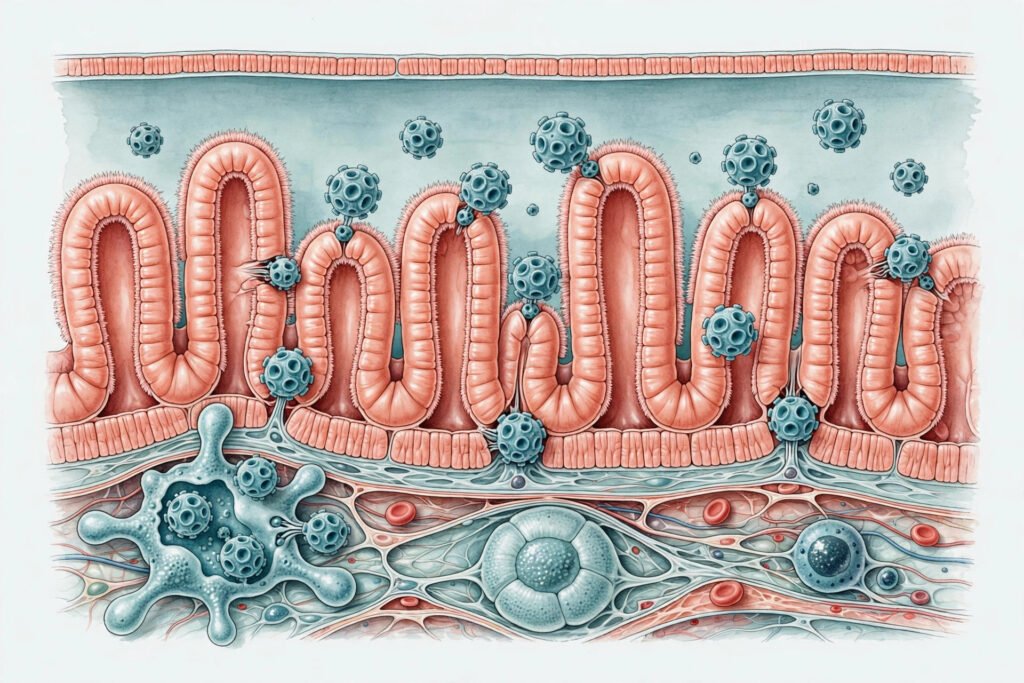
Norovirus Symptoms: How Long It Lasts, Treatment & Prevention
Norovirus is the leading cause of sudden vomiting and diarrhoea worldwide — the illness behind most cruise-ship outbreaks and the miserable 48 hours many people remember as the “stomach flu.” Despite the nickname, it is unrelated to influenza: a gut infection caused by an exceptionally contagious virus, where swallowing only a few dozen particles can make you ill. Medically reviewed by Dr. Ata Ullah, MD (Medicine).
This guide covers what norovirus is, how it spreads, symptoms and duration, diagnosis, treatment, prevention, and red-flag signs for seeing a doctor.

Quick facts: Symptoms usually appear 12–48 hours after exposure and last 1–3 days. There is no specific antiviral medicine for norovirus; treatment focuses on replacing lost fluids. It peaks in winter — the “winter vomiting disease.”
What Is Norovirus?
Norovirus is a highly contagious virus from the Caliciviridae family that infects the stomach and intestines, causing acute gastroenteritis. Globally it causes an estimated 685 million cases each year — about 1 in 5 cases of acute gastroenteritis worldwide.
A few features make norovirus unusually hard to avoid:
- Tiny infectious dose. Swallowing as few as 18–100 viral particles can cause infection, while an infected person sheds billions of particles in stool and vomit.
- Environmental toughness. The virus survives on surfaces for days to weeks and resists many common disinfectants and alcohol-based hand sanitisers.
- Prolonged shedding. People can keep shedding the virus in stool for up to two weeks after they feel better, and sometimes longer.
- Repeated infections. Immunity after infection is short-lived and incomplete, and the virus exists in many genetic variants — so you can catch norovirus more than once.
Outbreaks cluster wherever people live, eat, or travel in close quarters: cruise ships, schools, childcare centres, nursing homes, dormitories, restaurants, and hospitals.
Causes & Risk Factors
Norovirus spreads through the faecal–oral route and through aerosolised vomit. The main transmission paths are:
- Contaminated food — the most common outbreak source: shellfish eaten raw (especially oysters), leafy greens, fresh fruit, or any ready-to-eat food handled by an infected person.
- Contaminated water — drinking water, ice, or recreational water tainted with sewage or vomit.
- Contaminated surfaces — the virus survives on door handles, handrails, and bathroom fixtures for days; touching a surface and then your mouth completes the chain.
- Close contact — caring for someone ill, sharing utensils or towels, or being near someone who vomits; vomit droplets settle on nearby surfaces.
Key risk factors include:
- Living or working in close quarters: childcare, schools, care homes, cruise ships, military barracks
- Being a food handler or healthcare worker
- Age extremes: young children and adults over 65 are more likely to become dehydrated
- A weakened immune system (longer, sometimes chronic infection is possible)
- The winter season: in the northern hemisphere, cases surge from November to April
Symptoms
The typical picture, 12–48 hours after exposure:
- Sudden, forceful vomiting — often the most dramatic symptom and the reason norovirus spreads so efficiently
- Watery, non-bloody diarrhoea
- Stomach cramps and abdominal pain
- Nausea
- Low-grade fever and chills
- Headache, muscle aches, and general fatigue
Bloody stools are not typical of norovirus — their presence points to a different cause and warrants medical evaluation.
How Long Does Norovirus Last?
For most healthy people, the acute illness lasts 1 to 3 days. Vomiting usually settles within the first 24 hours, while diarrhoea and cramps may linger a little longer. Full energy and appetite typically return over the following week, though mild digestive sensitivity is common for a few days.
Contagiousness outlasts the symptoms: you are most infectious from the moment symptoms begin through the first few days of recovery, but stool can remain infectious for up to two weeks after you feel well. Stay home and avoid preparing food for others for at least 48 hours after symptoms stop.
Tests & Diagnosis
In most cases, doctors diagnose norovirus clinically — the sudden onset of vomiting and diarrhoea, especially when others around you are ill or there is a known outbreak, is distinctive enough that no test is needed. Laboratory testing is reserved for outbreak investigations, hospitalised patients, and public health surveillance.
When testing is done, it uses a stool sample:
- RT-PCR (reverse transcription polymerase chain reaction) — the gold standard. It detects norovirus genetic material with very high sensitivity and can identify the viral genogroup, which helps trace outbreaks.
- Norovirus antigen tests (EIA/ELISA) — faster and cheaper than PCR but less sensitive; mainly used in outbreak settings where several samples can be tested together.
- Multiplex gastrointestinal PCR panels (for example, the BioFire FilmArray GI Panel) — test a single stool sample for many gut pathogens at once, useful in hospitals when the cause of severe diarrhoea is unclear.
In severe cases doctors may check blood electrolytes and kidney function to assess dehydration — these measure the illness’s consequences, not the virus itself. Imaging is not used to diagnose norovirus.
Norovirus vs. food poisoning: the two overlap heavily, since contaminated food can cause either. A useful clue is timing and company — norovirus usually appears 12–48 hours after exposure and often strikes several people who shared food or space, with prominent vomiting. Bacterial food poisoning (e.g. Salmonella, Campylobacter) more often brings high fever and sometimes bloody stools. Only laboratory testing can confirm which one you have.
Treatment Options
There is no specific antiviral drug for norovirus, and antibiotics are useless against it — they target bacteria, not viruses, and taking them can do more harm than good. Treatment is supportive: help the body through the illness while preventing dehydration.
- Rehydration is the cornerstone. Sip small, frequent amounts of water, clear broths, or oral rehydration salts (ORS) — the WHO-formula sachets that replace water, sodium, potassium, and glucose in the right proportions. For children and older adults, ORS is preferable to plain water or sugary drinks.
- Intravenous fluids in hospital or urgent care for anyone who cannot keep fluids down or shows signs of significant dehydration.
- Anti-nausea medication such as ondansetron may be prescribed for severe, unrelenting vomiting — it can make the difference between managing at home and needing hospital fluids.
- Anti-diarrhoeal medicines such as loperamide can reduce diarrhoea in adults, but should be avoided in children and in anyone with bloody stools or high fever; ask a pharmacist or doctor first.
- Paracetamol (acetaminophen) for fever, headache, and muscle aches. Avoid NSAIDs like ibuprofen on an empty, irritated stomach if they worsen nausea.
As appetite returns, eat lightly — rice, toast, bananas, soup — and avoid alcohol, caffeine, and fatty or spicy foods until your stomach settles. Most people recover fully without lasting effects.
Lifestyle Management & Prevention
Because norovirus is so contagious and there is no vaccine in routine use, prevention is almost entirely about hygiene:
- Wash hands with soap and water for at least 20 seconds after using the toilet and before eating or preparing food — hand sanitisers are much less effective against norovirus.
- Disinfect with bleach-based cleaners. Standard surface sprays often fail against norovirus; use a sodium hypochlorite (bleach) solution or a product specifically labelled effective against norovirus on bathrooms, kitchens, and high-touch surfaces.
- Handle vomit and laundry safely. Wear disposable gloves (and a mask if available) when cleaning up vomit or diarrhoea, double-bag waste, and wash contaminated laundry on the hottest cycle with detergent.
- Cook shellfish thoroughly and wash fruit and vegetables carefully. Be cautious with raw oysters in particular.
- Stay home while ill — and 48 hours beyond. Do not prepare food for others, attend work or school, or visit hospitals and care homes until at least two full days after symptoms resolve.
- Food handlers who fall ill should stay away from work for the same 48-hour window after recovery; many outbreaks trace back to an infected person returning to the kitchen too soon.
Researchers are working on norovirus vaccines — several candidates are in clinical trials — but as of 2026 none has been licensed for general use, so hygiene remains the only real defence.
When to See a Doctor — Red Flags
Most norovirus infections resolve on their own, but seek medical care promptly if you or someone you care for develops:
- Signs of dehydration: dizziness or fainting, very dark urine or not urinating for 8+ hours, extreme thirst, dry mouth, rapid heartbeat, confusion
- In children: sunken eyes, no tears when crying, fewer wet nappies than usual, unusual sleepiness or irritability
- Bloody stools or vomit, or vomit that looks like coffee grounds
- Severe or worsening abdominal pain
- High or persistent fever
- Vomiting that prevents keeping any fluids down for more than 24 hours
- Symptoms lasting longer than 3 days without improvement
- Illness in an infant under 6 months, a frail older adult, a pregnant woman, or anyone immunocompromised
Key Takeaways
- Norovirus is an extremely contagious stomach virus — the top cause of sudden vomiting and diarrhoea worldwide, unrelated to influenza.
- Symptoms appear 12–48 hours after exposure and usually last 1–3 days; you stay contagious for up to two weeks after recovery.
- It spreads through contaminated food, water, surfaces, and close contact — cruise ships, schools, and care homes are classic outbreak settings.
- Diagnosis is usually clinical; stool RT-PCR is the gold-standard test, used mainly in outbreaks and hospitals.
- There is no antiviral cure — treatment is rehydration (ORS, fluids, IV if needed) plus symptom relief — and hand sanitisers do not reliably kill it, so soap, water, and bleach-based disinfection are essential.
Frequently Asked Questions
Can you get norovirus twice?
Yes. Immunity after infection is partial and short-lived, and many strains circulate — repeat infections are common, sometimes within the same season.
Does hand sanitiser kill norovirus?
Not reliably. Alcohol-based sanitisers are much less effective against norovirus than against many other germs. Washing with soap and water for at least 20 seconds is the recommended method.
How long should I stay off work with norovirus?
Stay home while symptomatic and for at least 48 hours after symptoms fully stop — especially if you handle food or care for vulnerable people.
Reviewed by Dr. Ata Ullah
Dr. Ata Ullah — MBBS, MD Medicine, Physician Consultant. Dr. Ata Ullah is a Senior Medical Officer with extensive experience in internal medicine, dedicated to helping patients understand their health through clear, evidence-based guidance.
“Your Health, Our Responsibility.”
Medical Disclaimer: This article is for informational purposes only and is not a substitute for professional medical advice, diagnosis, or treatment. Always seek the advice of your physician or another qualified health provider with any questions you may have regarding a medical condition. Never disregard professional medical advice or delay seeking it because of something you have read on this site.
Online Consultation: Dr. Ata Ullah (MBBS, MD Medicine), Physician Consultant / Medical Specialist — WhatsApp: 0315 7148181 — Consultation Fees: $30